A shopper finds the ring she wants on a Tuesday night, opens six more tabs comparing metal and carat, and closes her laptop without buying. She comes back on Saturday, can't remember which listing it was, and gives up halfway through the search. That's not a weak product or a pricing problem. It's a lost wishlist, and in jewellery, that loss is more expensive than in almost any other category.
Jewellery converts differently than the rest of ecommerce. Average conversion rates for high-value jewellery stores sit under 1%, against a general ecommerce average closer to 2.5 to 3%, and that gap comes down to how the purchase gets made. A jewellery buyer often visits a site five or more times before deciding, weighs metal, carat, and certification, and frequently needs to loop in a partner or a budget before saying yes. None of that happens in one session, which means the brands that win are the ones that hold onto shopper intent across every visit, not just the first one.
This post covers fifteen ways jewellery brands are using wishlists to do exactly that, from ring-size and metal saving to gift hinting, VIP segmentation, and demand signals for made-to-order pieces. By the end, you'll have a clear set of tactics built specifically around how jewellery actually gets bought, not a generic list borrowed from fashion retail.
TL;DR
- Jewellery buyers research across multiple visits, and a wishlist gives that research a fixed place to pick up from.
- Saving the exact metal, carat, and ring size prevents shoppers from having to reconfigure a piece on return visits.
- Shareable wishlists let recipients hint at exactly what they want, reducing mismatched gift purchases.
- Routing high-value wishlist saves to a sales team enables the kind of personal follow-up big-ticket purchases often need.
- Back-in-stock alerts bring shoppers back automatically when limited or handcrafted pieces become available again.
- Price drop alerts convert price-sensitive shoppers waiting for a discount on a big-ticket item.
- Occasion-based reminders tied to wishlist saves land with better timing than generic marketing emails.
- Guest wishlist support captures intent from first-time visitors not ready to create an account for a major purchase.
- Wishlist save counts offer an early demand signal before committing to made-to-order or limited production.
- Segmenting by wishlist value identifies high-spend customers worth VIP treatment and personal outreach.
- Surfacing wishlisted pieces at checkout prompts matching add-on purchases like sets and pairs.
- Keeping saved pieces visible in the account page prevents them from being forgotten during a long consideration window.
- Wishlist-to-purchase analytics reveal which designs are converting and which are stalling.
- AI-generated wishlist pages preserve the visual trust that luxury and fine jewellery brands depend on.
- Wishlist migration tools preserve high-value customer intent when switching apps.
Shopify wishlist strategies for jewellery brands to increase conversions
1. Capture intent across the long, multi-visit research cycle
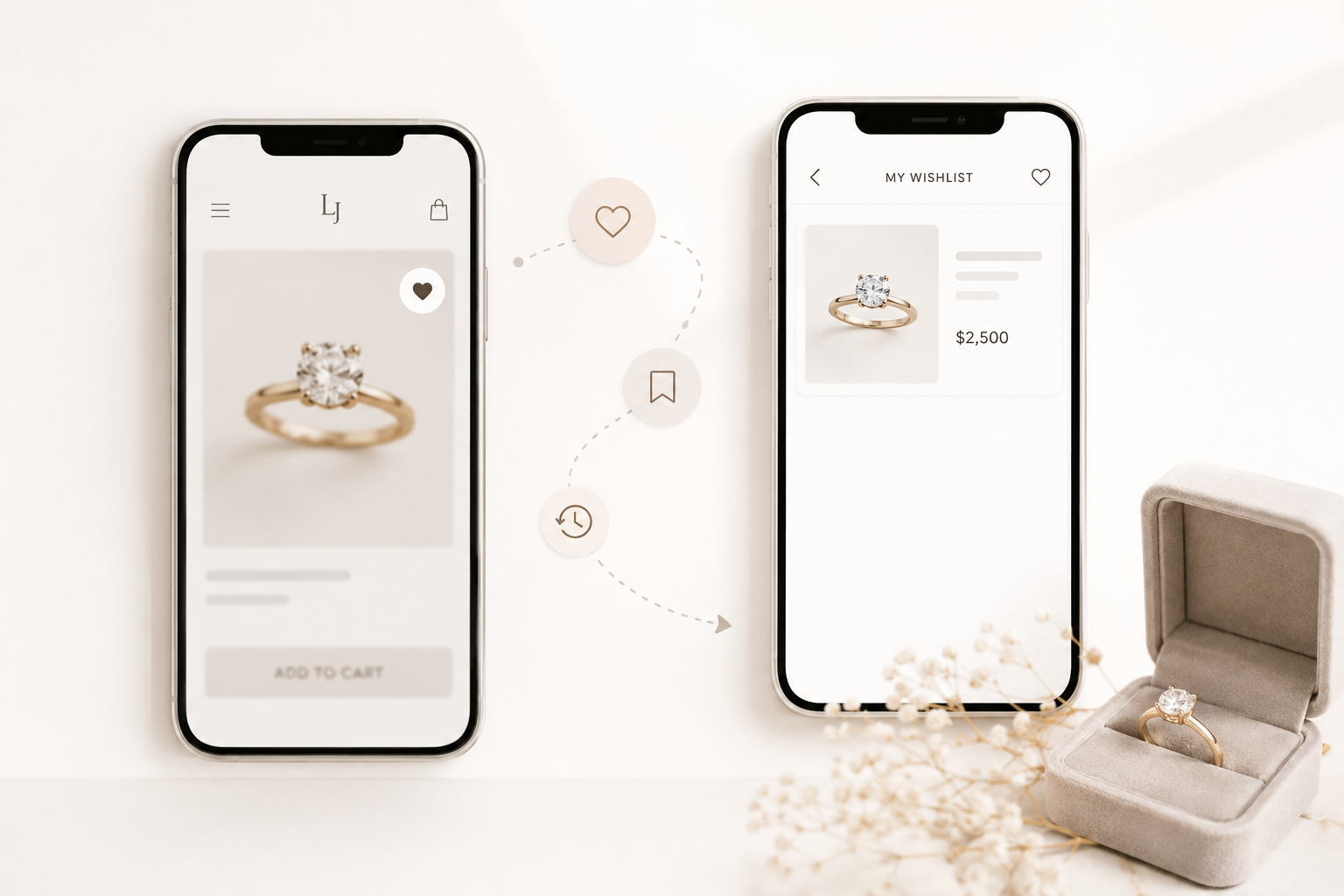
Jewellery buyers rarely decide in one sitting. A $2,500 ring gets researched, compared, and reconsidered over days or weeks, often across multiple devices. Without a wishlist, every one of those return visits starts from zero, with the shopper re-searching for a piece they already found once.
A Shopify wishlist button gives that research a fixed home. They save the ring the first time they see it, and every return visit picks up exactly where they left off instead of restarting the hunt. For a category where the average shopper needs five or more visits before converting, that alone recovers a meaningful share of intent that would otherwise evaporate between sessions.
2. Save the exact metal, carat, and ring size, not just the design
A ring listing usually hides a dozen real variations inside it: white gold or yellow gold, 14k or 18k, half a dozen carat weights, and a full range of ring sizes. A wishlist that only remembers "this ring," without the specific configuration a shopper selected, sends them back to square one every time they reopen it.
Variant-level saving solves this by capturing the exact metal, carat, and size at the moment they save it. When they come back, whether it's the next day or after finally confirming a partner's ring size, the piece is ready to add to cart exactly as they configured it, with nothing left to re-decide.
3. Turn the wishlist into a gift hint, not just a personal save
Jewellery is one of the few categories where the shopper and the buyer are frequently different people. A woman builds a wishlist of pieces they love; their partner, parent, or friend is the one who actually places the order, often without knowing their size, style, or metal preference well enough to guess confidently.
A shareable wishlist link turns that gap into an advantage instead of a barrier. They share their list directly, whether through text, email, or a private link, and the gift-giver buys with total certainty instead of guessing and risking a return. This single feature addresses one of the most common reasons jewellery gifts get returned: the giver picked the wrong style, metal, or size.
4. Send back-in-stock alerts for limited and handcrafted pieces
Jewellery inventory often runs thinner than fashion or beauty, especially for handcrafted, limited-run, or made-to-order pieces where restocking isn't as simple as reordering from a factory. A shopper who wishlists a sold-out piece and finds no way to track its return has little reason to keep checking back.
Back-in-stock alerts close that gap automatically. The moment a wishlisted piece is available again, whether restocked or newly crafted, they get notified directly, without needing to remember to check. For limited pieces especially, this alert can also create genuine urgency, since they know the piece may not stay available long a second time.
5. Use price drop alerts to convert big-ticket, price-sensitive shoppers
Price is often the last barrier standing between a wishlisted piece and a completed order, more so in jewellery than in most other categories, where a single item can represent a meaningful purchase decision. Some shoppers are waiting specifically for a sale, a seasonal discount, or a bundle offer before committing.
A price drop alert notifies them the instant a wishlisted piece is discounted, catching them at the exact point they’re most ready to buy. One jewellery retailer that automated price-drop alerts for wishlisted items saw wishlist-to-purchase conversion climb from 8% to 22%, with the average time from save to purchase dropping from 45 days to 18. That's the kind of shift a passive wishlist never produces on its own.
6. Tie wishlist saves to occasion-based reminders
Jewellery purchases cluster around dates: anniversaries, birthdays, engagements, Valentine's Day, Mother's Day. A piece saved months ago is often tied to a specific date the shopper already has in mind, even if they haven't bought yet.
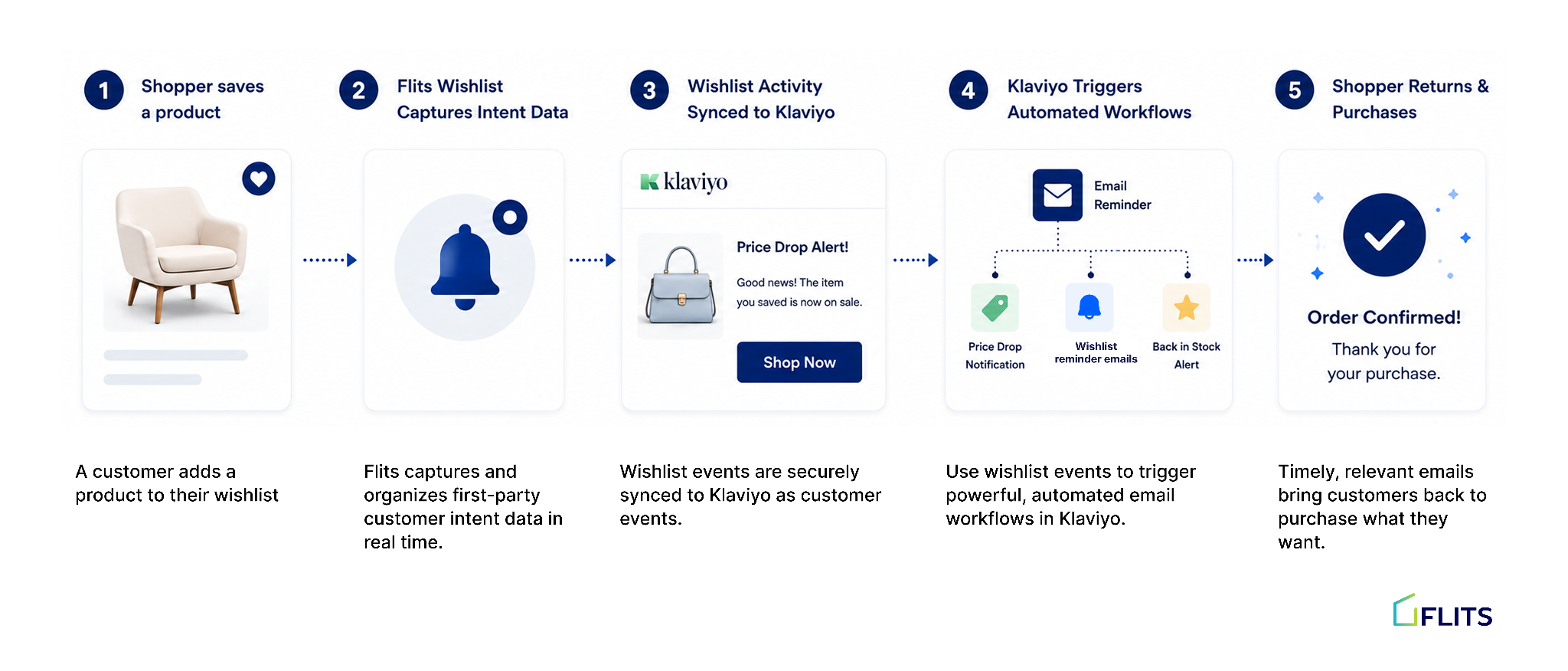
Connecting wishlist data to an email platform like Klaviyo makes it possible to send a reminder timed to a known occasion, rather than a generic "come back and buy" email. A reminder that lands two weeks before an anniversary, referencing the exact piece they saved, reads as helpful timing rather than a sales push, and it catches them while there's still enough lead time to order and ship.
Also Read: Flits Wishlist × Klaviyo Integration for Shopify
7. Flag high-value wishlist saves for personal follow-up
Not every wishlist save deserves the same response. A $60 pair of studs and a $4,000 tennis bracelet represent very different purchase decisions, and the second one often benefits from a human touch that automated email alone can't provide.
Routing high-value wishlist activity to a sales or customer service team, so a real person can follow up with details on financing, certification, or customization, mirrors how in-store jewellery sales actually work. It turns the wishlist from a passive save button into a signal that triggers the kind of assisted selling that big-ticket jewellery purchases usually need to close.
8. Let guest shoppers save pieces before creating an account
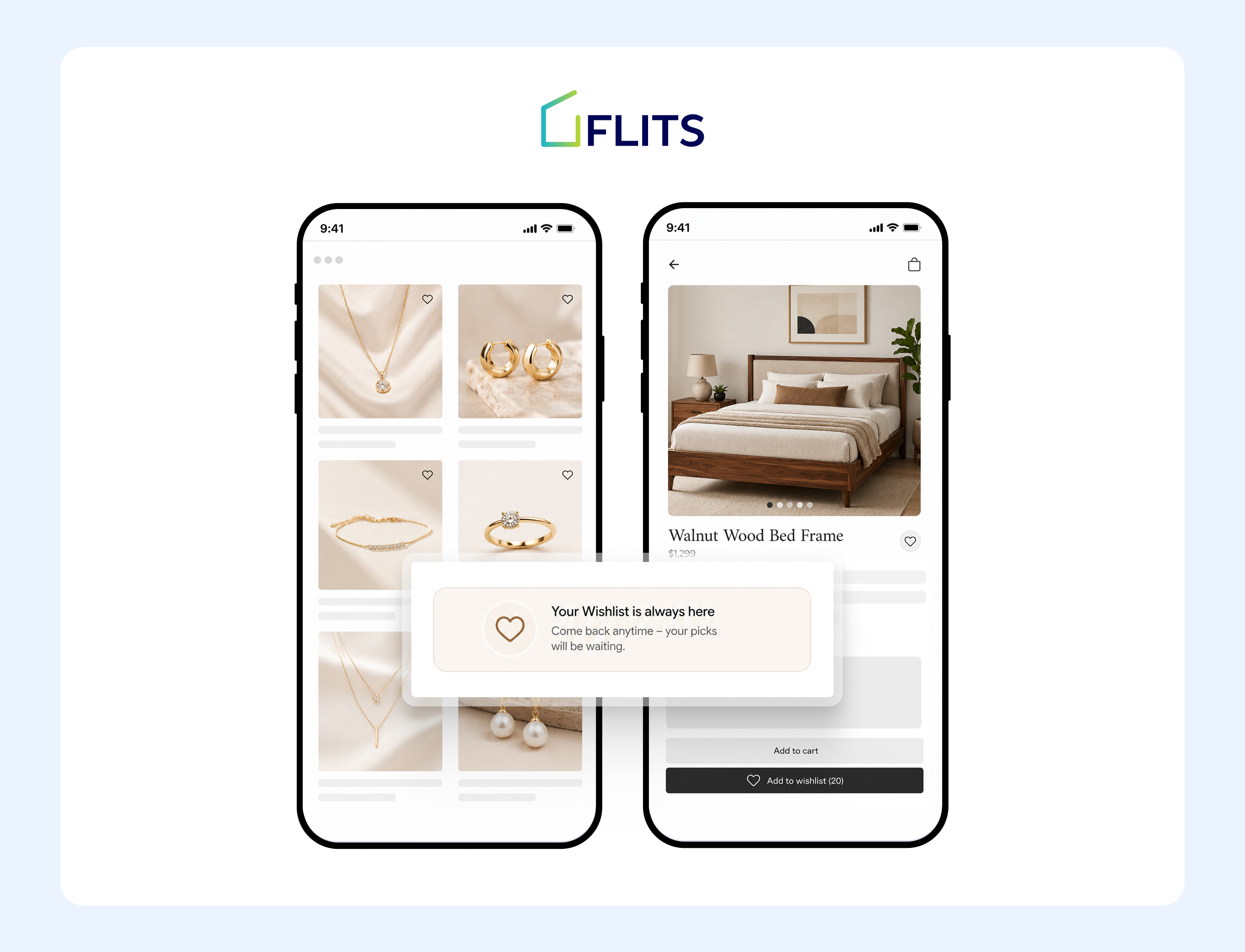
A first-time visitor comparing engagement rings across several sites isn't likely to create an account on their first visit, especially for a purchase this significant. If saving a piece requires signing up first, most shoppers simply won't bother, and the visit leaves no trace.
Shopify guest wishlist support removes that barrier. They can save pieces immediately while browsing, and account creation becomes a natural step later, typically when they’re ready to check out or want their saved list to follow them across devices.
Also Read: Convert Guest Users to Sign-Ups with Flits Wishlist
9. Use wishlist save counts to gauge demand before committing to production
Made-to-order and limited-run jewellery carries real production risk. Committing to cast a design in a specific metal and carat weight, without knowing whether there's real demand for it, ties up capital in pieces that might not sell.
Wishlist save counts offer an early demand signal before that commitment gets made. A design that's been wishlisted by dozens of shoppers, even before it's officially available or restocked, is a stronger case for production than one guessed at from instinct alone.
This is one of the Shopify wishlist best practices turning a lightweight, real-time input for merchandising decisions that would otherwise rely on lagging sales data.
10. Segment high-value wishlist customers for VIP treatment
A customer who's wishlisted several pieces above your average order value is a meaningfully different segment than someone browsing your lowest-priced items. Treating them the same in email marketing wastes an opportunity to build the kind of relationship that drives repeat, high-ticket purchases.
Segmenting customers by the value of what they've saved, not just what they've bought, lets you route high-intent, high-spend shoppers into a different track: early access to new collections, personal outreach from a sales associate, or invitations to private trunk shows. This kind of segmentation turns wishlist data into a tool for building the relationship-driven loyalty that fine jewellery brands depend on.
Also Read: Increase Sales with Wishlist Retargeting in 7 Ways
11. Surface wishlisted pieces at checkout to prompt matching add-ons
A shopper checking out with a pendant might have matching earrings sitting on their wishlist from an earlier visit. If that saved item stays hidden, they have to remember it exists and go find it separately, which most shoppers simply won't do mid-checkout.
Showing wishlisted items in the cart or checkout flow puts that saved piece back in front of them exactly when they’re already committed to buying. For jewellery, where sets and matching pieces are a natural upsell, this turns a passive save into a low-effort way to increase order value without a separate marketing push.
12. Keep saved pieces visible across the long consideration window
Given how long jewellery decisions typically take, a wishlist buried three clicks deep gets forgotten between visits. Showing saved pieces directly in the customer account page and mini-cart drawer keeps them visible every time they log back in, not only when they remember to check a dedicated wishlist page.
That visibility matters more here than in faster-turnover categories, because the gap between a shopper's first save and their eventual purchase can stretch across weeks. The easier the saved piece is to find again, the less likely that gap ends in them forgetting about it entirely.
13. Track wishlist-to-purchase conversion to see what's actually closing sales
A save count on its own doesn't tell you whether your follow-up is working. What matters is how many wishlisted pieces convert into orders, and how long that typically takes from save to purchase. Shopify wishlist analytics that track both numbers turn the wishlist into a measurable part of your funnel rather than a feature you assume is helping.
This data also flags problems early. A design with a high save count but a low conversion rate might be facing a price objection, a sizing concern, or missing trust signals like certification details, and that's worth investigating before it shows up as a broader sales dip.
14. Use an AI-built wishlist page that matches a luxury brand aesthetic
Jewellery sells on visual trust as much as on the product itself. Photography, layout, and finish all signal quality before a shopper reads a single word of copy. A wishlist page that looks generic or mismatched from the rest of the store undercuts that trust at exactly the point a shopper is deciding whether to come back and buy.
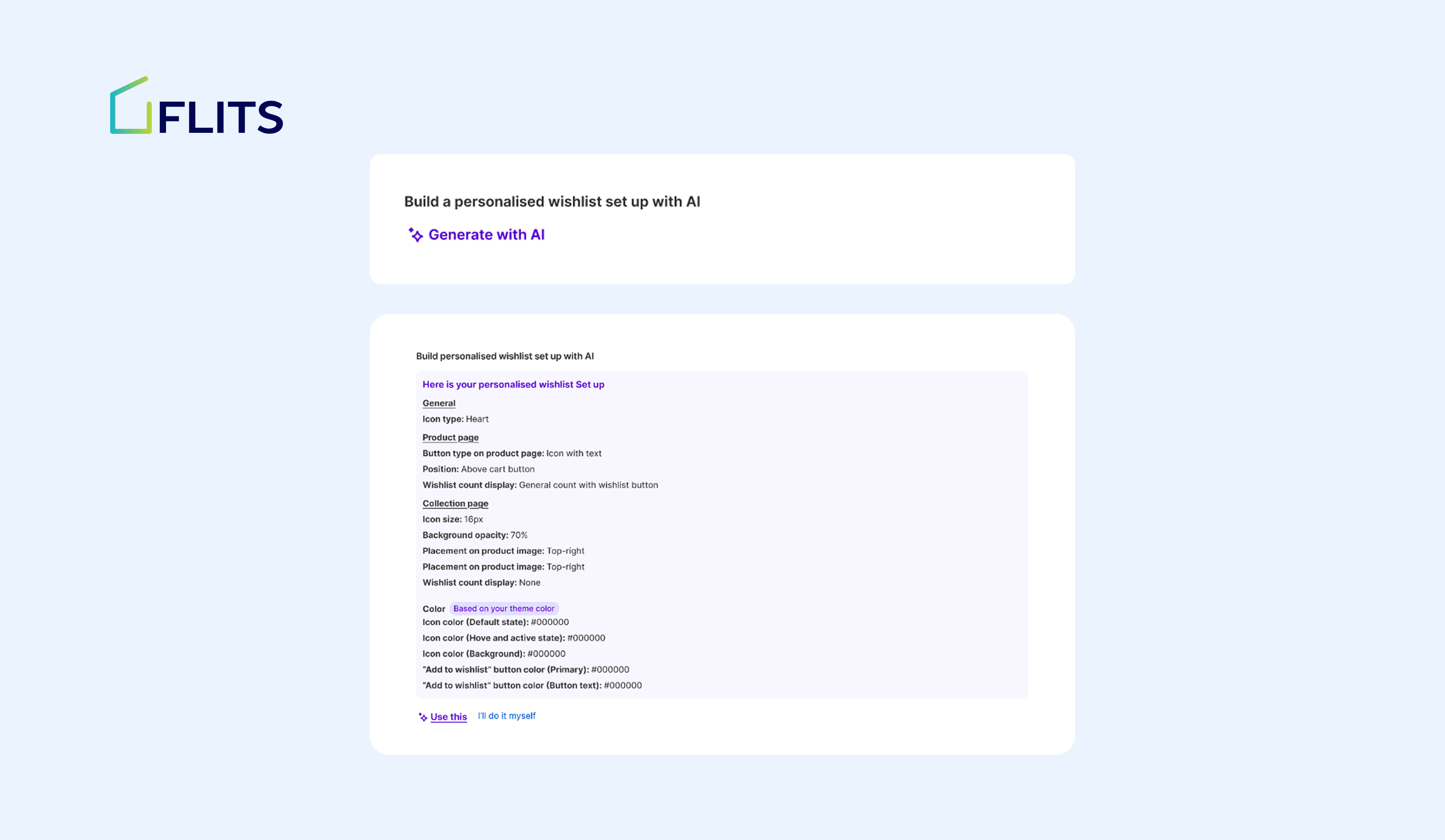
An AI-generated wishlist page and flow builder adapts automatically to match your existing theme, so the saved-items page reads as an extension of the brand rather than a bolted-on utility feature. For a category where perceived quality directly affects willingness to spend, that consistency carries more weight than it would elsewhere.
15. Migrate wishlist data when switching apps, without losing high-value customer intent
Jewellery brands hesitant to switch wishlist apps are often worried about losing exactly the kind of data covered in this list: saved metals, sizes, and high-value pieces tied to specific customers. Losing that on migration doesn't just mean losing data, it means losing weeks or months of purchase intent that took real research to build.
A proper migration path, typically a CSV export handled by the new app's support team, preserves that saved data instead of wiping it. That means switching to a better wishlist setup doesn't cost you the high-value intent your best customers have already invested time building.
Getting started
Jewellery converts on trust, patience, and precision, not impulse, and a wishlist built for that reality needs to do more than save a product name.
Guest wishlist support, variant-level saving for metal and size, back-in-stock and price drop alerts, Klaviyo integration for occasion-based reminders, and analytics that show what's actually converting all matter more here than in faster-moving categories.
Flits Wishlist covers this full set on a single $19/month Unlimited plan, with no feature gates and no pricing that climbs as your store grows, giving jewellery brands the complete toolkit whether they're processing ten orders a month or ten thousand.
FAQ
Do wishlists actually improve conversion rates for jewellery stores?
Yes, particularly when paired with back-in-stock and price drop alerts. One jewellery retailer that automated price-drop emails for wishlisted items saw wishlist conversion rise from 8% to 22%, with time to purchase dropping from 45 days to 18. The wishlist itself captures intent, but the follow-up automation is what converts it.
Why does ring size matter for a jewellery wishlist specifically?
Ring listings often bundle multiple sizes, metals, and carat weights into one product. If the wishlist only saves the product and not the exact configuration, the shopper has to reselect everything on her return visit, which adds friction to a purchase that already involves a long decision process.
How can a wishlist help with jewellery gifting?
A shareable wishlist lets the intended recipient build her own list and send it directly to whoever's buying, removing the guesswork around size, metal, and style that leads to returned or exchanged jewellery gifts.
Should high-value wishlist saves be treated differently from low-value ones?
Often yes. A save on a $3,000 piece represents a different kind of purchase decision than a save on a $50 item, and routing high-value saves to a sales team for personal follow-up mirrors the assisted selling that fine jewellery purchases typically respond to.
Can wishlist data help decide what jewellery pieces to produce or restock?
Yes. For made-to-order or limited-run pieces, wishlist save counts offer an early read on real demand before committing production resources, which reduces the risk of casting pieces that don't sell.
Why do jewellery shoppers need more visits before converting compared to other categories?
Jewellery purchases usually involve comparing metal, carat, and certification, and often require confirming a size or consulting a partner before buying. That naturally extends the decision timeline, which is why capturing and holding intent across visits, rather than only during a single session, matters more in this category than in faster-turnover ones.