Most Shopify merchants add a wishlist feature on a hunch. It feels like something shoppers want, competitors have one, and it seems better than losing a visitor who isn't ready to buy today. That hunch happens to be backed by real data, but the data is scattered across cart abandonment research, email marketing benchmarks, and a handful of consumer surveys that rarely talk to each other.
We pulled together the numbers that actually hold up: verified figures from Baymard Institute, Klaviyo, Deloitte, McKinsey, Bizrate Insights, and Salesforce, plus an independent analysis of live Shopify stores. This is what the evidence supports about how shoppers browse, save, hesitate, and eventually buy.
Key Takeaways
- Roughly 3 in 10 online shoppers actively use wishlists, but nearly half say they never use one at all, so the feature earns its place through the right shoppers, not universal appeal [Bizrate Insights]
- Only about 3.2% of Shopify stores had a wishlist app installed at the time of one independent study, and adoption climbed sharply as store traffic grew, which points to real headroom for smaller stores [StoreInspect]
- The average cart abandonment rate sits at 70.22%, and forced account creation alone accounts for a meaningful share of that, which is exactly the friction a guest wishlist removes. [Baymard Institute]
- Wishlist-adjacent triggered emails, like abandoned cart and back-in-stock flows, consistently outperform standard marketing sends by a wide margin when they're built on real behavioural data.
How Many Shoppers Actually Use a Wishlist?
Bizrate Insights surveyed online shoppers directly about their wishlist habits and found that 30.41% save items to a wishlist to purchase later, while 16.77% use one mainly to track price changes and 7.49% use it to keep an eye on items that are out of stock. The same survey found that 49.04% of respondents say they never use a wishlist at all.
That split matters more than it looks. A wishlist isn't a feature every visitor will touch, and treating it that way sets the wrong expectations. But for the roughly third of shoppers who do use one, it's doing real work: comparing prices, monitoring restocks, or simply parking something they're not ready to commit to yet.
Age plays a bigger role than most merchants assume. Among 18 to 29-year-olds, 27.86% said wishlist availability influences where they shop, compared to just 10.92% of shoppers 65 and older. If your customer base skews younger, a visible, easy-to-find wishlist is closer to an expectation than a nice-to-have.
Also Read: The Complete Guide to Shopify Wishlist for Merchants
Most Shopify Stores Still Don't Have the Wishlist Feature
An independent analysis of 192,464 live Shopify stores found that only 3.2% had a wishlist app installed at the time of the study. We're flagging this as a single, independently run study rather than an industry-wide census, but the pattern inside it is worth paying attention to: adoption wasn't flat across store sizes. It rose steadily with traffic.
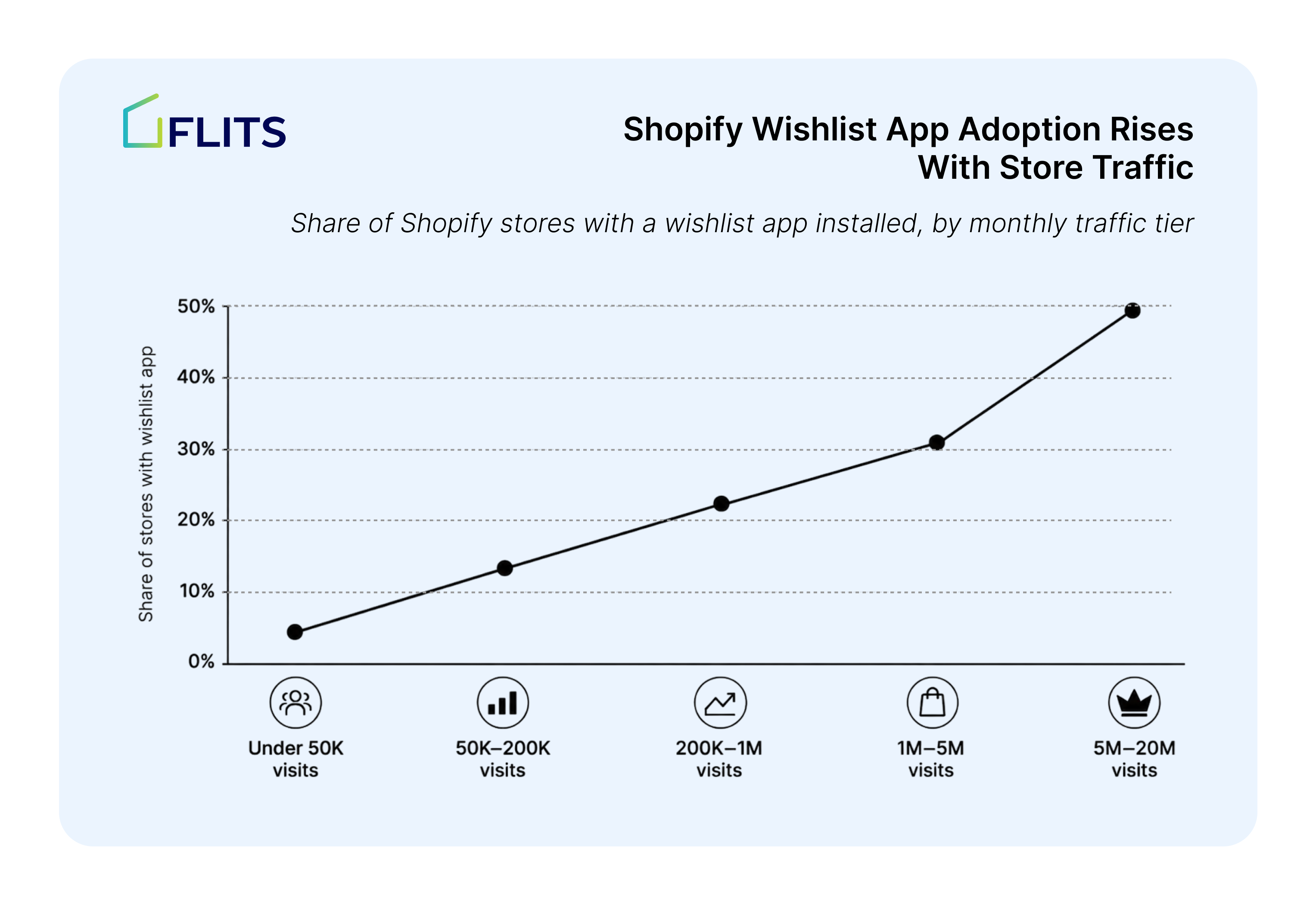
Stores pulling in 5 to 20 million visits had a wishlist installed at roughly 43%, compared to about 2% for stores under 50,000 visits. Read one way, that's larger stores figuring out something smaller ones haven't gotten to yet. Read another way, it's an open gap: most growing stores are still asking customers to either buy right now or lose the product entirely, with nothing in between.
The Real Reasons Carts Get Abandoned
The average cart abandonment rate across eCommerce, aggregated from 50 individual studies, is 70.22%. That figure gets quoted everywhere, often stripped of the context that actually helps a merchant do something about it.
Baymard's research also breaks down why people leave without buying, and the list is a lot more actionable than the headline number:
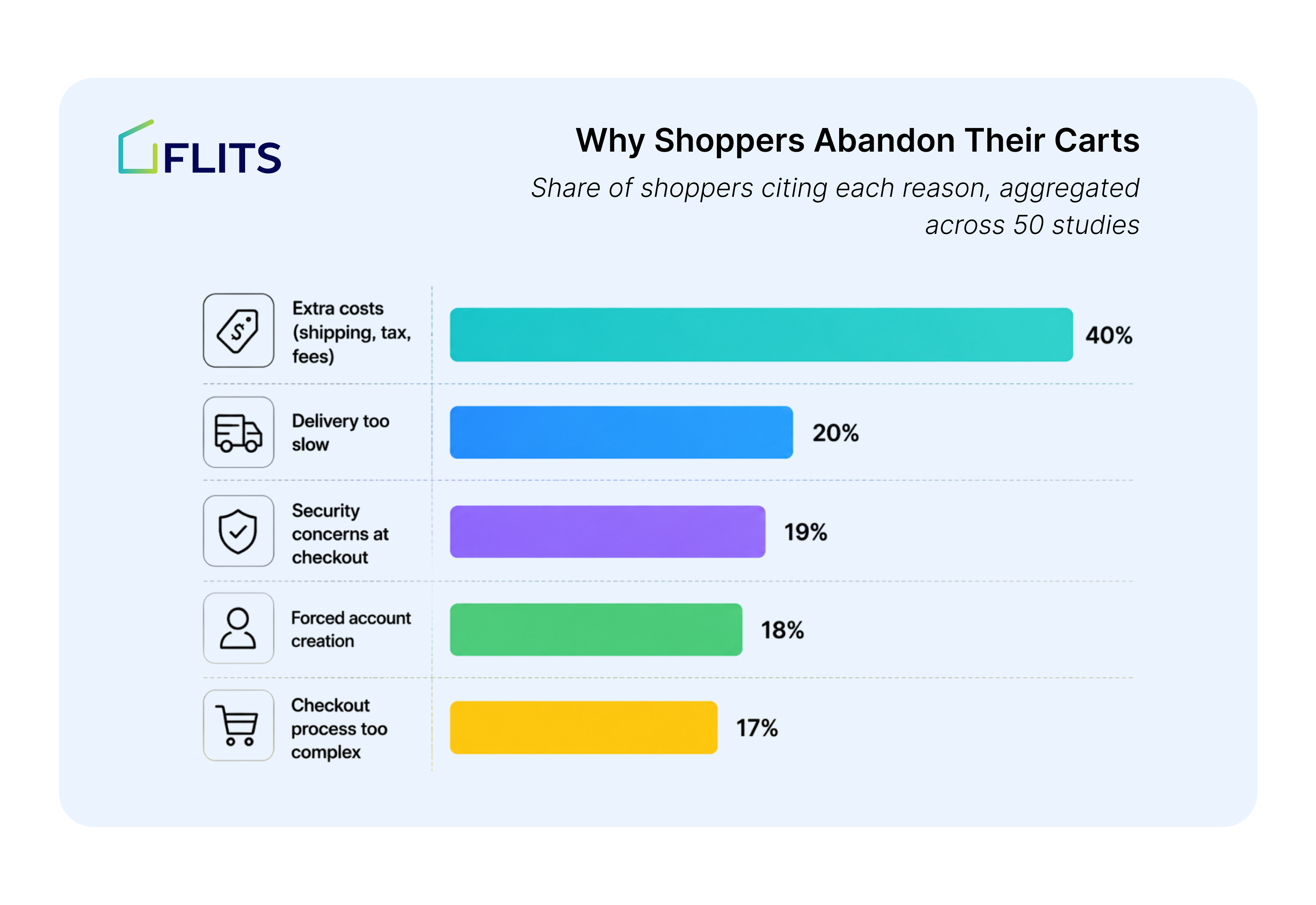
Forced account creation sits at 18%, and a separate Baymard study zeroed in on that specific friction point: 24% of US shoppers said they'd abandoned at least one cart in the past quarter for that reason alone.
That's the part worth sitting with. A shopper who isn't ready to create an account isn't necessarily a lost sale. They might just want to save the product and come back once they've decided, or once payday hits, without being told to sign up first. A wishlist that works for guests, not just logged-in customers, catches exactly that shopper instead of pushing them off the site entirely.
Also Read: 15 Ways Fashion Brands Can Use Wishlists to Increase Sales
What Happens When You Actually Email People About Their Wishlist
Saving a product is only half the story. What happens after someone saves it, and whether you follow up in a way that brings them back, makes the bigger difference.
Klaviyo's benchmark data, drawn from more than 143,000 abandoned cart email flows, gives a clear picture of what's achievable when that follow-up is done well:
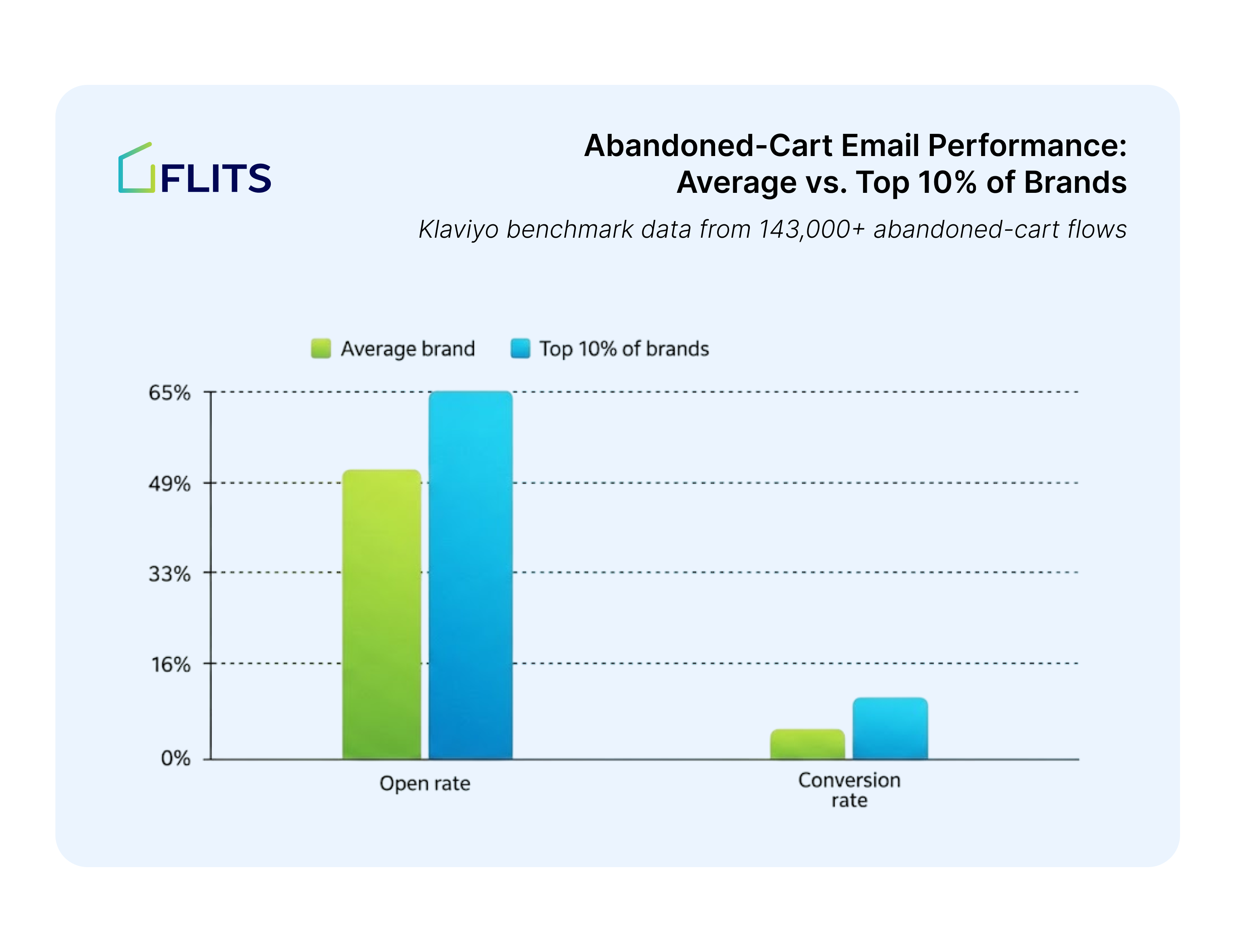
The average brand sees a 50.5% open rate and a 3.33% conversion rate on these flows. The top 10% of brands push that to 65.34% and 7.69%. Revenue per recipient tells a similar story: $3.65 on average, versus $28.89 for the top performers, nearly eight times higher.
That gap usually comes down to data quality. A generic "you left something behind" email performs worse than one built on specific, structured signals about what someone actually cared about. This is where a Shopify wishlist earns its keep beyond the save button itself. Every save is a piece of first-party intent data. When that data flows into an email platform as a real customer event instead of sitting inside the app, it becomes something you can act on: a back-in-stock alert, a wishlist reminder, a flow timed to when that shopper is actually likely to buy.
Back in Stock, Back in Their Cart
One of the earliest documented studies on back-in-stock emails, a case study on Birkenstock's ecommerce arm 2011, found a 36.5% open rate, a 26% click-through rate, and a 22.45% conversion rate over a 30-day test period. We're citing the year deliberately. That study is over a decade old, and we couldn't find a comparably rigorous, independently published benchmark that's more recent, which says more about how under-researched this specific channel is than about whether it still works.
What hasn't changed is the underlying logic. A shopper who asked to be told when something's back in stock has already decided they want it. Sending them a restock notice is closer to keeping a promise than making a pitch, which is a fundamentally easier email to write and a fundamentally warmer audience to send it to than a cold promotional blast.
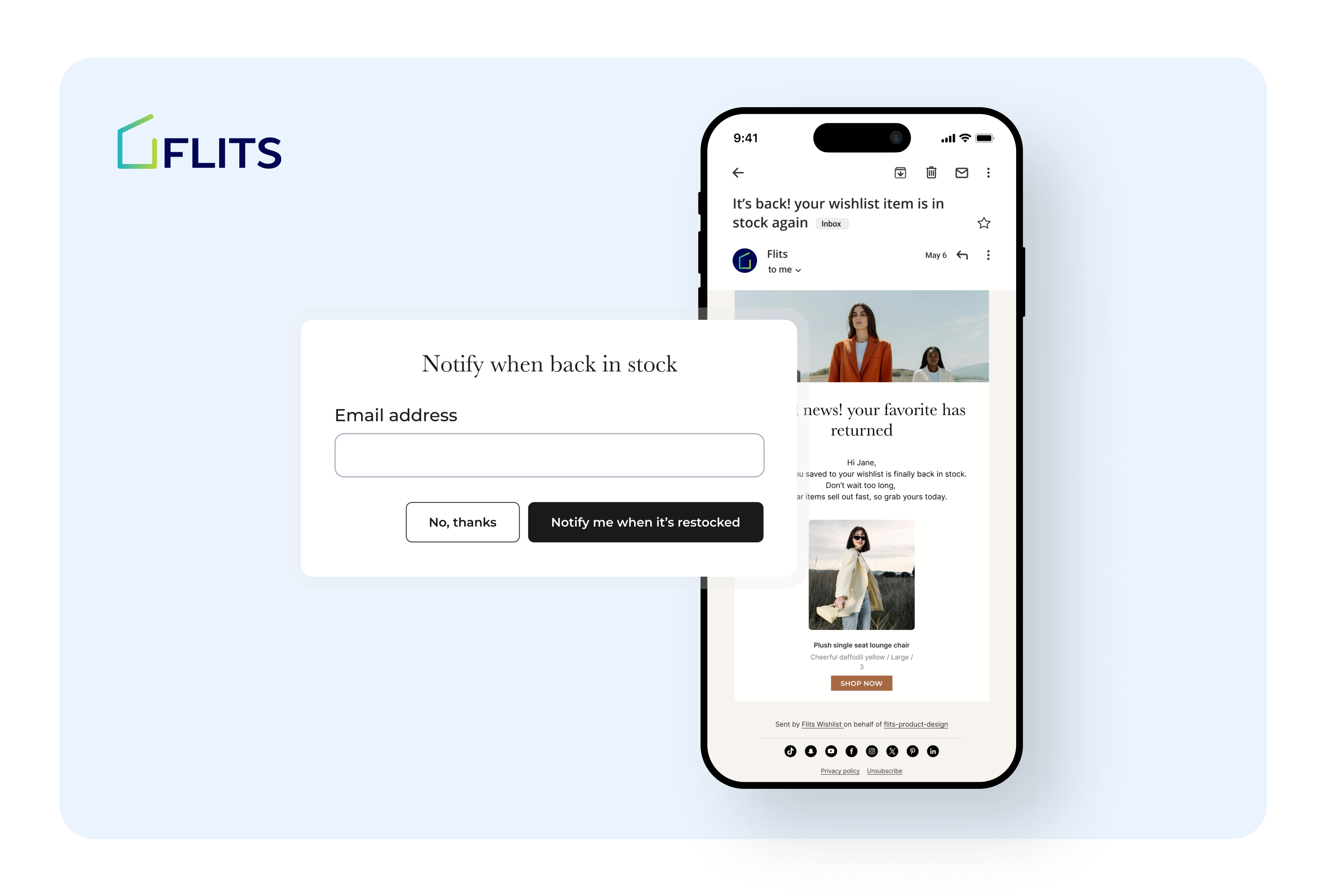
Merchants often treat back-in-stock notices and wishlists as separate systems, but they're really the same behaviour looked at from two angles. Someone hits "notify me" because the size or color they wanted sold out; someone else adds the same product to a wishlist because they're waiting on a price drop or just aren't ready yet. Both are a shopper telling you exactly what they want, in advance, for free. Flits Wishlist treats both as native, built-in features rather than a workaround. Restock alerts are live out of the box, with no separate app or automation platform required to wire them up.
Mobile Shoppers and the Personalization Gap
Mobile is no longer a channel merchants optimize for later. It's most of the traffic. Mobile devices accounted for 56.4% of all online holiday sales across the November through December 2025 season, up from 54.5% the year before.
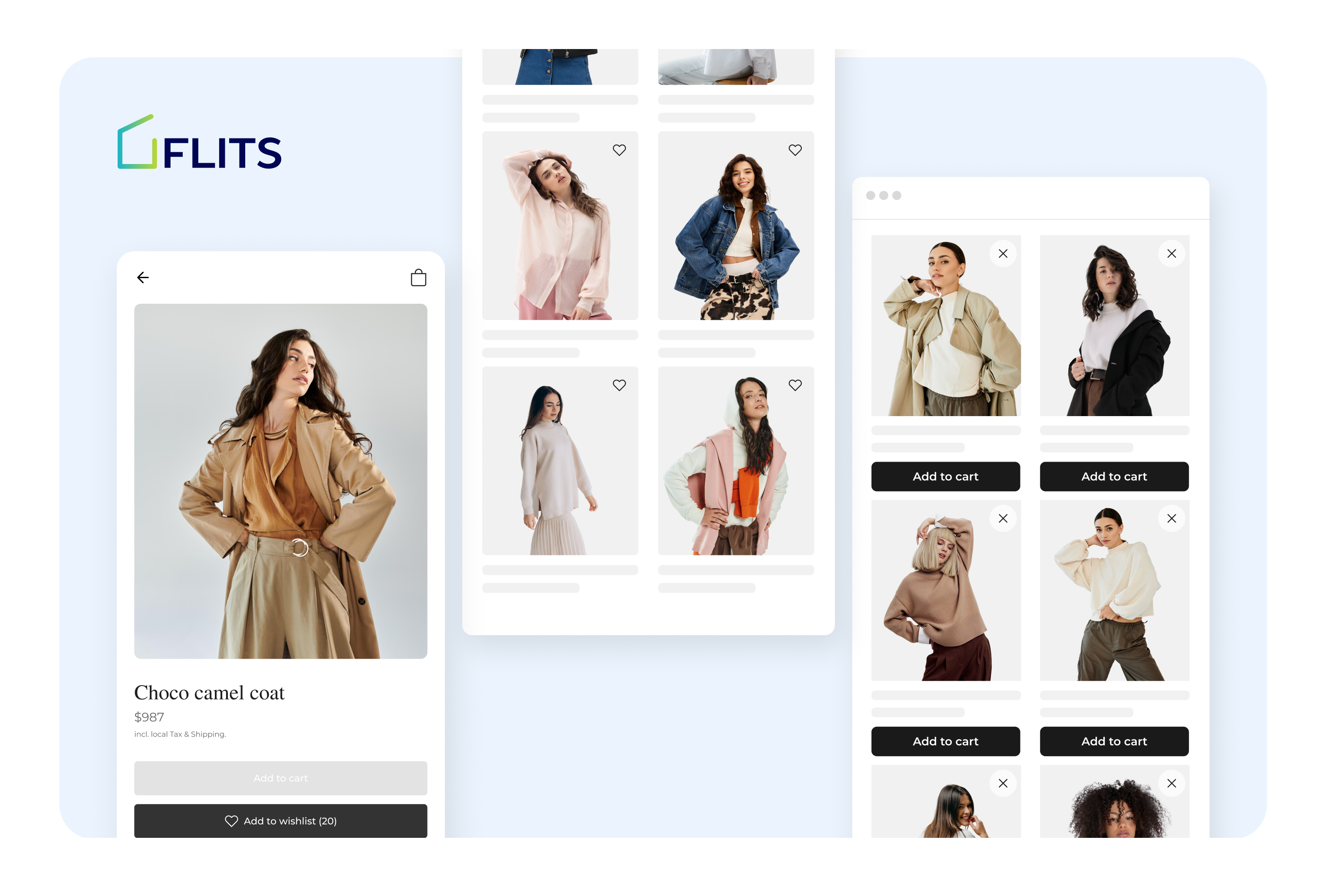
That shift raises the bar for how easy saving and returning to a wishlist needs to be on a small screen. A wishlist buried three taps deep, or one that requires logging in just to view, loses most of its value on mobile, where friction gets punished immediately.
Personalization expectations have moved in the same direction. In a widely cited 2021 McKinsey study, 71% of consumers said they expect the brands they buy from to personalize their interactions, and 76% said they get frustrated when that doesn't happen. That's older data, but the underlying expectation hasn't reversed in the years since, and if anything it's become more baseline than aspirational. A Shopify wishlist is one of the more direct signals a merchant gets for personalization that isn't guesswork: it's the customer explicitly telling you what to follow up about.
Shoppers Are Cautious Heading Into 2026
Consumers are still spending, but they're doing it more carefully. Deloitte's 2025 holiday retail survey found planned holiday spending averaging $1,595, down 10% year over year, with 77% of shoppers expecting prices to be higher and 70% actively engaging in deal-seeking behaviour regardless of income level. Despite the caution, 82% still planned to shop over the Black Friday to Cyber Monday window.
McKinsey's ongoing State of the Consumer research found that roughly 1 in 4 shoppers plan to spend less this holiday season than last, while 46% expect no change to their budget.
Put those together and a pattern shows up: shoppers aren't disengaging, they're delaying and price-checking. That's precisely the behaviour a Shopify wishlist is built to capture. A visitor who bounces off a product page because a purchase doesn't feel right today isn't gone for good. If they've saved the item, you have a channel to reach them the moment it's back in stock or their budget resets next month, instead of hoping they remember to come back on their own.
What This Means for Your Shopify Store
Line up the data and the case for a wishlist stops being a hunch.
- Roughly a third of shoppers actively use one.
- Most Shopify stores still don't offer one.
- Forced account creation is costing real abandoned carts
- Triggered emails built on real behavioural signals convert at multiples of generic campaigns.
- Shoppers are more price-cautious than they were a year ago
All of this combined makes the wishlist feature more valuable, not less.
The practical question is what a Shopify wishlist needs to actually do to capture that value, based on what the data above points to:
- Work for guests, not just logged-in accounts, since forced account creation is a documented abandonment driver.
- Show up where shoppers actually browse, on product pages, collection pages, and the account area, not buried in a menu.
- Feed a real email or SMS platform, since the return on a wishlist mostly shows up in what happens after the save, not the save itself.
- Work as well on mobile as desktop, given mobile now carries more than half of holiday ecommerce traffic.
Flits Wishlist was built around exactly that list. Guest wishlist support catches shoppers who aren't ready to create an account. Back-in-stock alerts are live and built in, with no third-party automation tool needed to trigger them. Every wishlist action, saves, shares, and restock triggers, syncs to Klaviyo as a real customer event, so the flows you build are based on what shoppers actually saved, not a generic template. Product pages, collection pages, the customer account area, and a dedicated wishlist page are all covered, and an AI-assisted page and flow builder handles the setup work so you're not designing the experience from scratch.
Flits Wishlist carries a 5/5 rating on the Shopify App Store. And the Flits Team has been building for the Shopify ecosystem for more than 9 years.
On pricing: the free plan is genuinely generous and covers core wishlist functionality. When a store needs the full feature set, including guest wishlist, that's the Unlimited plan at $19 a month, flat, whether the store processes 10 orders a month or 10,000. There's no tier above it and no feature gated behind a higher price point later.
A useful comparison point: Wishlist Plus, one of the more established players in this category, starts around $19.99 a month and gates guest wishlists and email alerts behind paid tiers, with additional cost as a store scales. Flits' Unlimited plan is the complete product at a single, flat price.
Related Reads:
- 9 Best Swym Wishlist Plus Alternatives for Shopify Stores
- 9 Best Swish Wishlist Alternatives for Shopify Stores
- 9 Best Wishlist Hero Alternatives for Shopify Stores
Where the Data Points
Shoppers aren't browsing less. They're deciding more slowly, price-checking more, and expecting brands to remember what they cared about instead of starting from zero every visit. A wishlist doesn't force a purchase. It gives a hesitant shopper somewhere to put their intent instead of losing it entirely, and it gives a merchant a real signal to follow up on instead of a guess.
Most Shopify stores still don't have one. Based on the data above, that's less a sign the feature isn't worth it and more a sign there's still room to be one of the stores that does it well.
Try Flits Wishlist for free today!
Frequently Asked Questions
Does adding a wishlist actually reduce cart abandonment?
Yes, indirectly. A wishlist itself doesn't force anyone to buy, but it gives undecided shoppers a way to save an item and leave without abandoning your store entirely. Since guest wishlist works without account creation, it removes a major friction point that drives drop-offs. And because that saved intent syncs to Klaviyo, you can follow up and convert it later instead of losing it for good.
Is a wishlist worth adding for a small or newer Shopify store?
Yes. The adoption data suggests smaller stores are the ones most likely to be leaving this on the table. It can reduce the amount of the lost sales helping increase the revenue.
What's the difference between a wishlist and a "save for later" cart feature?
A save-for-later feature typically lives inside the cart and requires an item to have been added to cart first. A wishlist works earlier in the browsing journey, directly from a product or collection page, before a shopper has committed to adding anything to their cart at all. Most shoppers who want to bookmark something browsing casually reach for a wishlist icon well before they reach for "add to cart."
How much does a Shopify wishlist app typically cost?
Pricing varies by provider and by how features are split across tiers. Flits offers a generous free plan covering core wishlist functionality, with a single paid tier, the Unlimited plan, at $19 a month for the complete feature set including guest wishlist, with no additional cost as order volume grows.
Can a wishlist integrate with my email marketing tool?
It depends on the app. Flits connects directly to Klaviyo, syncing wishlist saves, shares, and back-in-stock triggers as customer events you can build flows around, which is part of why the Klaviyo benchmark data on triggered-email performance is directly relevant to wishlist strategy.