Baby and kids brands sell into a market that changes shape every few months. A newborn outgrows a swaddle size before the return window even closes, a diaper size shift can happen overnight, and a toddler's interests shift completely between one birthday and the next.
That constant change is actually good news for repeat purchases, since parents are never done buying, but it also means a static product catalog can't keep up with how fast a customer's needs evolve.
A wishlist gives parents, and the extended family shopping alongside them, a way to track what's needed next instead of starting the search over every time.
TL;DR
- Baby and kids purchasing involves a wider buyer group than most categories, with grandparents, aunts, uncles, and friends making up a meaningful share of purchases alongside parents.
- Repeat purchases in this category come from two different sources: consumables that run out on a schedule and gear that gets outgrown on a schedule, and a wishlist should serve both.
- Baby showers and milestone events like first birthdays generate a large share of total category revenue, and 25-35% of baby product purchases are gifts rather than parent self-purchases.
- Safety-driven research means parents often take longer to decide, making saved, precise product selections more valuable than in lower-stakes categories.
- Wishlist sharing and guest access matter enormously here, since much of the buying happens on behalf of someone else, not by the account holder themselves.
- Timing matters more in this category than almost any other, since a child's needs shift on a predictable growth curve that brands can plan around.
10 Ways Baby & Kids Brands Can Use Wishlists
1. Save products by size and stage, not just by item
A crib mattress pad, a swaddle, or a pack of onesies means something different depending on whether a baby is two weeks old or six months old, and a wishlist that only saves the general product misses the detail that actually matters. Variant-level saving keeps the exact size or stage attached to the saved item, so a parent who wishlisted the 0-3 month pack in October isn't stuck manually re-filtering for the right size in January when they finally come back to buy it. Given how quickly babies grow through sizes, this kind of precision saves real time for a customer segment that is chronically short on it.
Also Read: Shopify Wishlist Statistics 2026: What Consumer Shopping Behaviour Data Actually Shows
2. Let extended family shop the list without creating an account
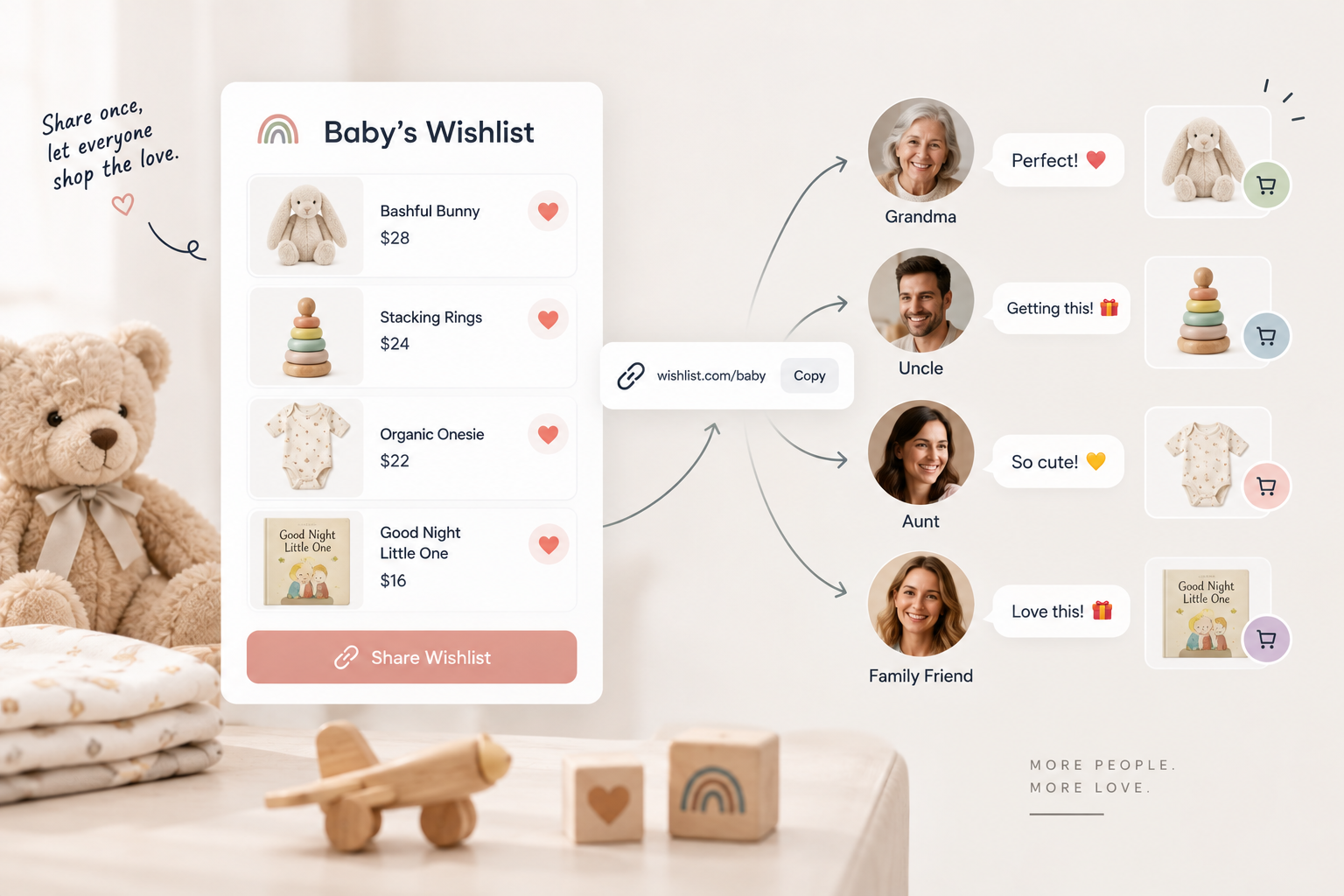
Baby product purchases don't come only from parents. Grandparents, aunts, uncles, and close friends make up a real share of the buyer base, especially around a baby shower or a birth announcement, and most of them are one-time or occasional shoppers who have no interest in creating a permanent account just to buy a gift. Guest wishlisting removes that barrier by letting anyone browse and save items without signing up first, and it matters just as much for the person purchasing off someone else's shared list as it does for the parent building it. Flits supports guest wishlisting on its paid plan, which fits a category where a meaningful share of transactions come from someone other than the primary account holder.
3. Use wishlist collections for households with more than one child
Families with two or three kids at different ages are juggling separate needs simultaneously, a toddler who needs the next shoe size and an infant who needs a new formula stage at the same time. Lumping everything into one flat wishlist gets confusing fast, especially when a grandparent or babysitter is trying to help with a purchase and can't tell which item belongs to which child. Wishlist collections let a parent organize saved products by child, which keeps shopping manageable and makes it far easier for someone else to shop accurately on the family's behalf.
4. Recover sales lost to stockouts on consumables and safety gear
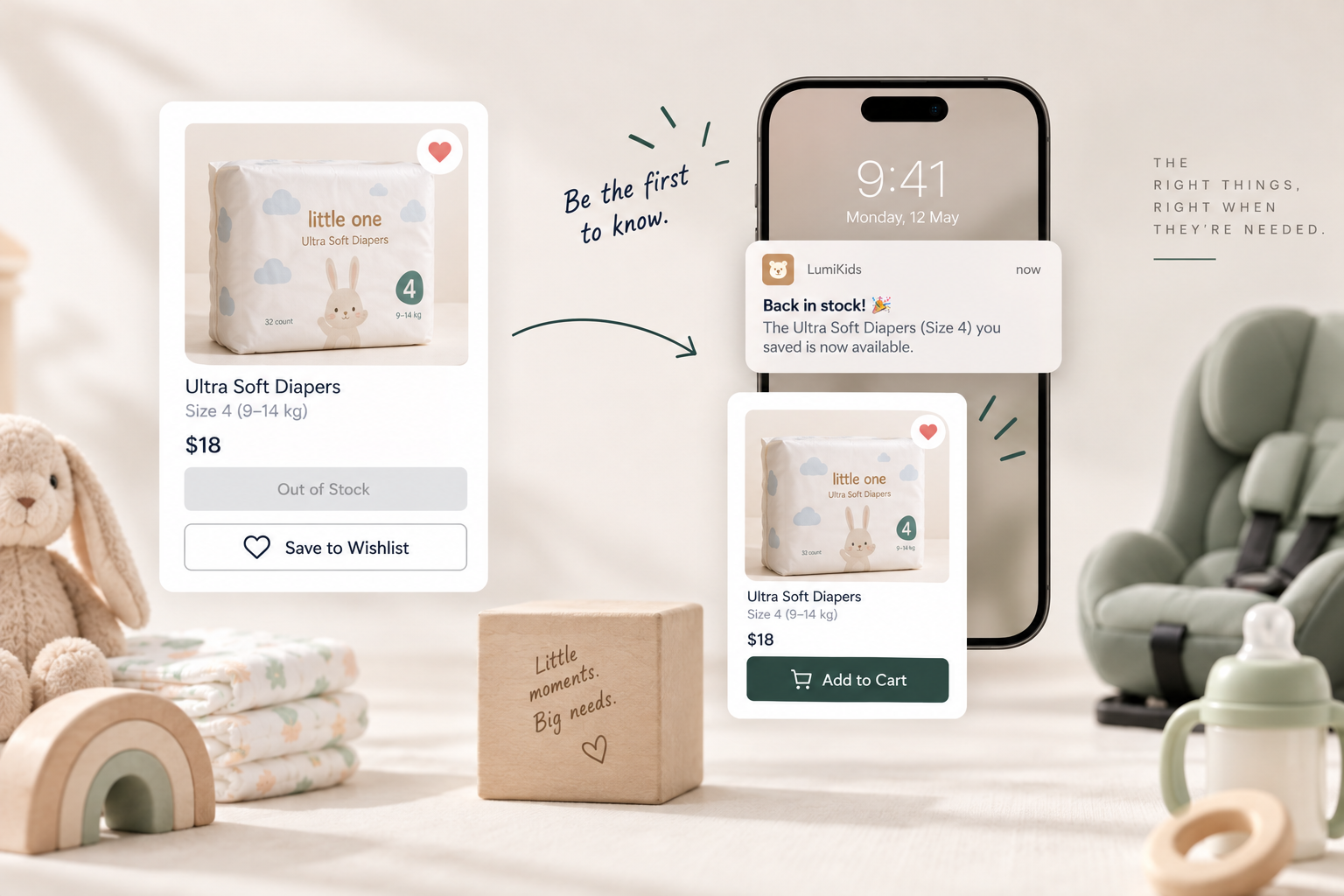
Baby and kids retail has two categories of product that are especially painful to lose to a stockout. The first is consumables like a specific diaper size or a particular infant formula, where a parent generally can't just substitute a different brand without hesitation. The second is safety-critical gear like a specific car seat model, where parents who've done their research often won't accept a different option even temporarily. A back-in-stock alert tied to the wishlist keeps that sale alive by notifying the customer the moment the exact item they need is available again, which matters far more here than in categories where a substitute purchase is an easy fallback.
5. Turn milestone events into shareable gift lists
First birthdays, baby showers, christenings, and the start of daycare all generate predictable spikes in baby product gifting, and a shareable wishlist gives parents a direct way to guide that gift-giving instead of receiving duplicate outfits in the wrong size. Wishlist sharing via link or social media lets a parent circulate their list to an entire group ahead of one of these occasions, which increases the odds that gifts actually match what the family needs rather than what a well-meaning but uncertain gift-giver guessed at.
6. Time email flows around predictable growth stages
A baby's needs change on a schedule that's unusually easy to predict compared to most retail categories. A parent who bought newborn-size clothing two months ago is very likely shopping for the next size up soon, and a parent who purchased a specific formula a month ago is due for a reorder around the same time each cycle. Wishlist activity synced to email marketing lets a brand time outreach around these patterns instead of guessing. Flits syncs every wishlist save, share, and back-in-stock trigger to Klaviyo as a structured customer event, which means a brand can build a flow that reminds a parent about the next size up on a saved item right as that transition is likely to happen, rather than sending a generic promotional email disconnected from where that specific child actually is developmentally.
7. Use wishlist data to spot which stage-specific products need better visibility
Baby and kids brands often carry a wide catalog spanning newborn through early childhood, and it's easy for stage-specific products to get buried once they're no longer the newest launch. Wishlist analytics that surface which products are being saved heavily, and which of those saves aren't converting, give a brand a clear signal about where a bundle, a clearer size guide, or a small promotion might close the gap. This is particularly useful for identifying which specific stage transitions, like the jump from infant to toddler sizing, are generating hesitation that a small nudge could resolve.
8. Make reordering consumables nearly effortless
Parents of young children are managing constant demands on their attention, and anything that adds friction to a routine purchase like diapers or wipes risks losing that reorder to whichever brand is fastest and easiest, even if it isn't the one they'd otherwise prefer. Letting a parent add a wishlisted consumable straight to cart from the wishlist page, without navigating back through the full product page, shortens a reorder that should be nearly automatic. For a category built heavily on replenishment purchases, removing even small amounts of friction from that reorder path compounds into meaningfully better repeat purchase rates over time.
9. Keep the wishlist visible where tired, time-pressed parents already are
A lot of baby product shopping happens in short bursts, during a nap, late at night, or in the few minutes a parent has between other tasks. If a saved wishlist isn't immediately visible when a parent logs back in, they're unlikely to spend the time hunting for it, and the sale quietly slips away to whichever brand made the reorder easier. Placing the wishlist inside the customer account page and the mini account drawer means a returning parent sees exactly what they saved the moment they log in, without needing to remember product names or dig back through order history during a shopping window that might only last a few minutes.
10. Match the wishlist experience to a warm, trustworthy brand feel
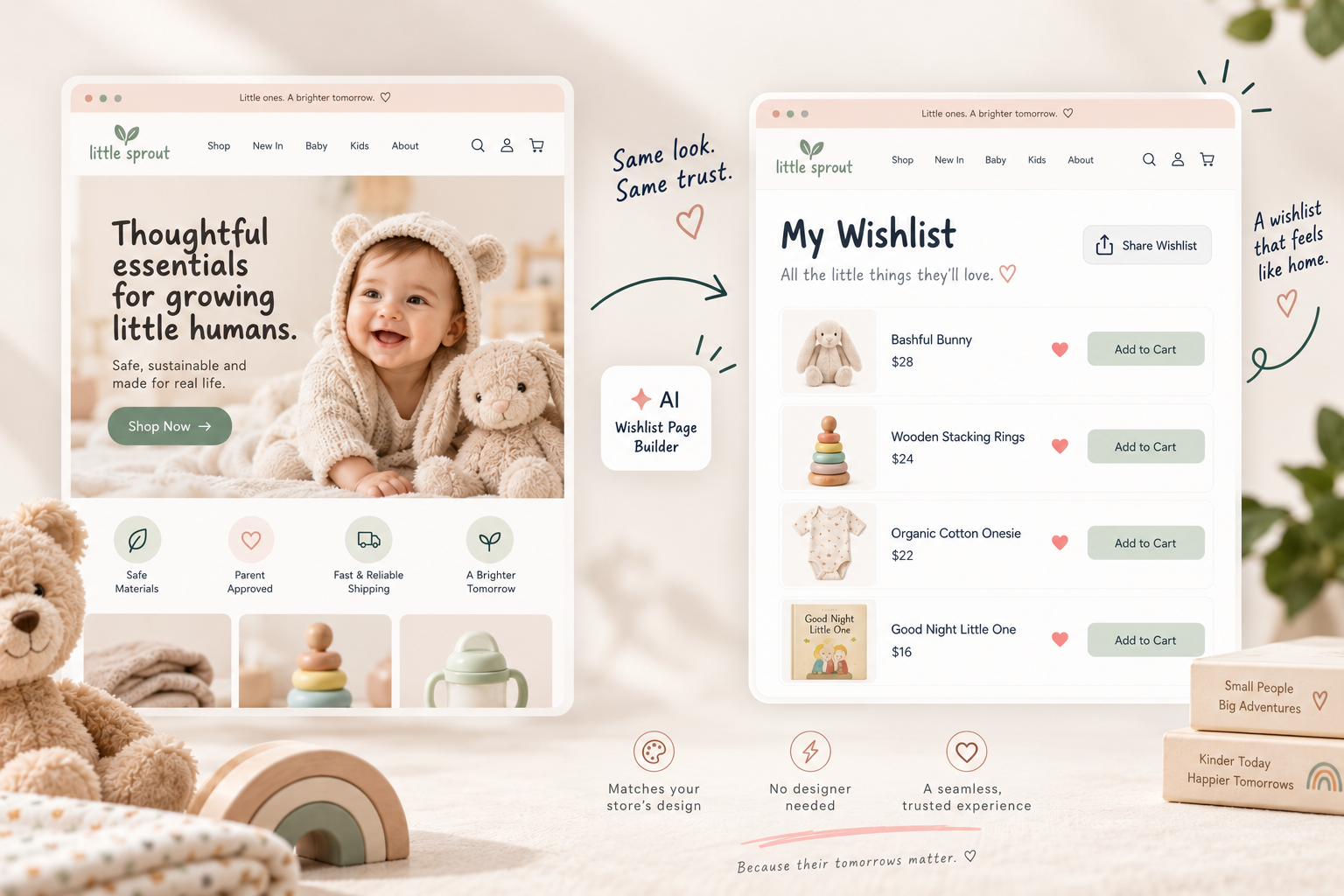
Parents are unusually cautious shoppers in this category, largely because the stakes feel higher when the product is for a child, and that caution extends to how much they trust the brand itself. A wishlist page that looks disconnected from the rest of a carefully designed, warm, trustworthy storefront can undercut that trust at exactly the point where a purchase decision is being made. Flits includes an AI-generated wishlist page and flow builder that automatically matches a store's existing theme, which lets baby and kids brands offer a consistent, polished wishlist experience without needing a dedicated designer to build it separately.
Bringing it together
Repeat purchases in baby and kids retail come from two very different rhythms happening at once. Consumables run out on a predictable schedule, and gear gets outgrown on an equally predictable one, and a wishlist that accounts for both gives parents, and the extended family shopping alongside them, a reliable way to stay ahead of what's needed next. Guest access, precise size and stage saving, sharing for milestone gifting, and timely back-in-stock alerts all address specific friction points unique to how this category actually gets shopped.
Flits delivers all of this as a single Shopify wishlist app for $19 a month, with no feature restrictions and no pricing that increases as a store's order volume grows. For a category where trust and consistency drive fiercely loyal repeat customers once earned, that straightforward, complete offering is easy for a growing baby or kids brand to build around.
FAQs
Why does gifting matter so much for baby and kids brands specifically?
Roughly 25-35% of baby product purchases are gifts rather than parent self-purchases, concentrated heavily around baby showers, births, and milestone events, which makes shareable wishlists especially valuable in this category.
Can a wishlist help with products a baby will outgrow quickly?
Yes, when it supports variant-level saving. Keeping the exact size or stage attached to a saved item means a parent doesn't have to reconfigure their selection every time they return, which matters given how often sizing needs shift in the first year.
Do grandparents and other family members need an account to shop from a baby registry-style wishlist?
Not with guest wishlisting enabled. It lets anyone save or shop from a shared list without creating an account first, which fits how much baby product buying happens on behalf of someone else.
How does a wishlist help with reordering diapers or formula?
Add-to-cart directly from the wishlist page shortens the reorder path for consumables, and back-in-stock alerts recover the sale automatically if a specific size or formula temporarily sells out.
Does Flits connect wishlist activity to email marketing?
Yes. Flits syncs wishlist saves, shares, and back-in-stock triggers to Klaviyo as customer events, allowing brands to time outreach around predictable growth stages rather than sending generic promotions.