Winning a brand-new customer is expensive, and you already know it. What is odd is how many stores put everything into getting that first order, then go dead quiet the moment it ships. The second sale, the one that actually turns a profit, gets ignored. It is where a customer retention strategy does its work.
That is exactly what we are sorting out here. We will show you 13 ways to increase customer retention, plus the 5 metrics that tell you they are working. You will also see 4 mistakes that send regulars elsewhere. Most of it works on any Shopify store, and nearly all of it comes down to earning that repeat purchase without slashing your prices to get it.
13 Customer Retention Strategies That Drive Repeat Orders

These thirteen make up the working part of your customer retention strategy, and each does something the others don't. For most direct-to-consumer brands, around 60% of sales come from repeat buyers, so this stretch of your customer retention strategy is the half worth obsessing over. Work down the list – don't skip anything.
1. Launch a Points-Based Loyalty Program
People don't return out of love for your logo. But hand them points that grow with every order, and shopping somewhere else suddenly means giving up something they have already earned.
That little pang is what a loyalty program is really for. Retaining existing customers is almost always more cost-effective than constantly chasing new ones. Done well, a points program builds a loyal customer base instead of encouraging one-time bargain hunters.
- Map out your earn-and-redeem rules before launch using a proven launch checklist.
- Award points for purchases and reviews, then let shoppers redeem them at checkout.
- Show each customer their points balance on the account page and in emails.
- Add bonus-point days around slow weeks to pull orders forward on the calendar.
2. Refund to Store Credit Instead of the Card
Refund someone to their card and that money is gone, most likely straight to a competitor. Send it back as store credit instead, and it stays in your ecosystem. So a return becomes another visit rather than a clean loss. Most shoppers won't fight you on it, especially when the credit lands instantly.
- Offer store credit as the default refund, with a cash option one click away.
- Add a small bonus so picking credit over a cash refund is worth their while.
- Push the credit balance to their account page so they see it every visit.
- Email a gentle reminder before the store credit is set to expire.
A quick, practical note on the first two. Loyalty and store credit usually get skipped for one reason: the setup, not the idea. That is the gap Flits fills.
It adds a points-based loyalty program to your Shopify store, where shoppers earn points for orders and reviews. Store credit is built in too, so a refund can go back as credit instead of the card. You can switch on VIP tiers, so your biggest spenders unlock better perks.
The sticky loyalty widget keeps those rewards visible. It appears on every page, showing a shopper their points and store credit balance while they browse, so the next order stays in view. Two strategies, one app. No custom build required.
3. Turn the Account Page Into a Reason to Return
The default Shopify account page is a bit depressing, just an address and a password. Give people an actual reason to log in, though. Put order history and a saved wishlist right there, and it starts earning its place. It also keeps customers engaged and reduces routine customer support requests about orders and returns.
- Add order history with product images so reordering the right item takes seconds.
- Show a saved wishlist and recently viewed items to spark the next order.
- Let people save addresses and cards so a repeat checkout takes two taps.
- Display their rewards balance prominently every time they log in.
4. Make Reordering a One-Click Job
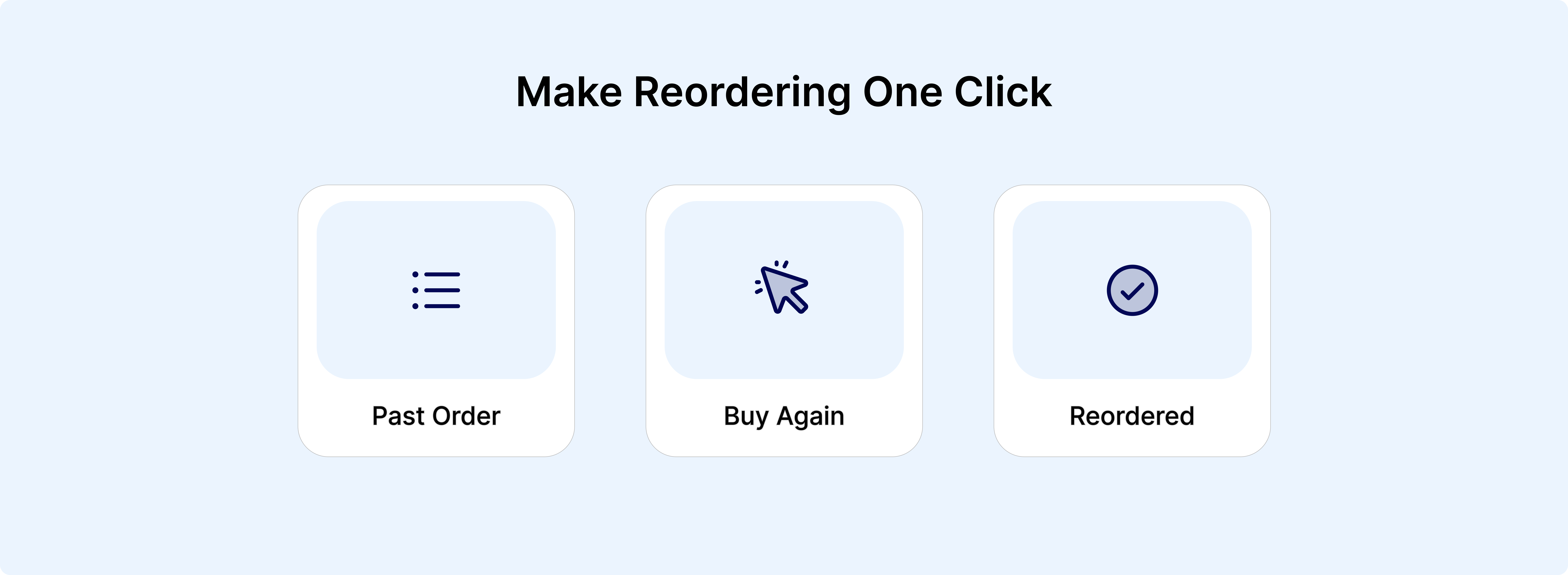
Some things people buy on a loop, the same beans or the same filters, month after month. Making them go through your catalog and rebuild that order every time is friction with no upside. A buy-it-again button cuts reordering down to a single tap. People will use it when it is that easy.
- Add a buy-again button to order history and the post-purchase email.
- Pre-fill the cart with a past order so quantities and variants carry over.
- Suggest a reorder right when the last batch is likely running low.
- Let customers reorder from their phone without going through old confirmation emails.
Reorder buttons are presented as the solution to everything that gets in the way of repeat business. They aren’t. They only matter for products people genuinely buy again, and a big portion of that is things that people rebuy because the old one finally gave out, not because they enjoy shopping for it.
And that is where the repeat sale actually gets lost. The bigger obstacle is usually confidence, not intent. The customer knows they need a new one. They just don't want to order the wrong size or the wrong fitment and deal with a return, so they delay the purchase or look elsewhere for reassurance.
You can see this challenge on sites like this golf cart wheel and tire store. A single cart model can support multiple wheel and tire combinations. So repeat buyers need to match products by cart model, tire size, lift kit, or wheel diameter rather than by product name alone.
When returning customers can narrow the catalog using those details, it becomes much easier to identify products that are likely to fit without trying to confirm compatibility for every option.
The takeaway isn't specific to golf carts. Any store selling fitment-dependent replacement products should make compatibility easy to confirm before checkout. The less time customers spend thinking, "Will this fit what I already have?" the easier it becomes for them to place another order.
5. Offer Subscribe-and-Save for Consumables
For anything people run through on a schedule, a subscription does the remembering for them. They stop reordering by hand, and you stop hoping they drift back. Best of all, that revenue turns into something you can forecast. You give up a small standing discount and get orders you can count on.
- Offer subscribe-and-save on consumables, with a clear discount for committing to repeat delivery.
- Let subscribers pause or swap their items straight from the account page, anytime.
- Handle the recurring billing and reminders with a subscription tool built for Shopify.
- Send a heads-up before each renewal so no charge ever comes as a surprise.
A subscription only works when it genuinely removes friction. The convenience disappears if customers still have to remember when they are running low or wonder whether they should reorder yet. Many stores add a subscription option but leave the rest of the experience unchanged.
Beauty and personal care subscriptions are a good example of why that matters. Unlike groceries or supplements, people don't always finish a bottle on the same schedule.
Preferences change. Seasons change. Sometimes customers simply want to try something different before the next shipment goes out. A rigid subscription quickly becomes something people cancel rather than keep.
That is one reason it is worth looking at how this monthly perfume subscription by Scentbird approaches recurring orders. Instead of treating a subscription as the same product delivered forever, the account experience gives members room to manage what comes next.
They can queue different fragrances or update future selections. The recurring order remains in place, but customers still feel in control of what arrives. That balance is worth paying attention to. The easier it is for shoppers to manage a subscription instead of canceling it, the more likely they are to keep buying over the long term.
6. Recommend the Next Buy From Order History
The easiest sale you will make this week is to someone who already bought from you. They trust you and their card is on file. And returning customers spend roughly 67% more than first-timers over time. The only real skill is pointing them at the right next thing, not a generic you-might-also-like row.
- Recommend complements to past orders based on customer data, like refills for a device they already own.
- Trigger a follow-up email suggesting the natural next product a week after delivery.
- Use AI to recommend products based on what each shopper has already bought and browsed.
- Place a goes-well-with row on the account page and the thank-you page.
7. Win Back Lapsing Customers Before They Churn
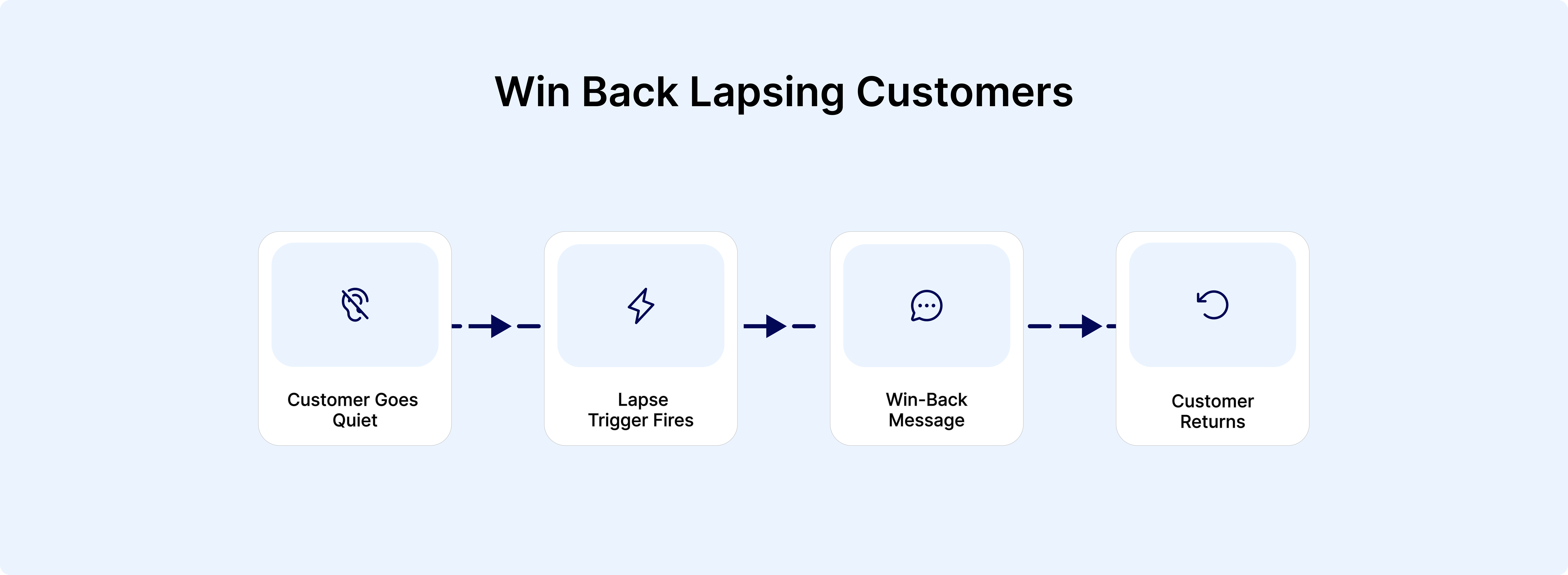
Everyone has a rhythm. When a regular sails past their usual reorder window, that is your early warning. Leave it too long, and they have already found a replacement and moved on. A reminder sent at the right moment reaches them while they still remember why they liked you. The goal is to retain customers before they quietly disappear for good.
- Define a lapse window per segment, then trigger a win-back flow when it's crossed.
- Lead the first message with help or a reminder, not a desperate discount.
- Escalate to a real incentive only if the first message gets no response.
- Suppress anyone who just reordered so active buyers never get a win-back email.
Win-backs are considered an email job. But plenty of your lapsed buyers stopped opening email long before they stopped buying. You can't win someone back with a message they never see.
That is why you should think about re-engagement across channels instead of relying on a single campaign. If someone ignores two emails, a well-timed reminder on the platform they already use has a better chance of bringing them back.
TikTok is one channel many eCommerce brands now include in that mix. As campaigns scale, though, the operational side starts to matter just as much as the creative. Running larger budgets or managing multiple client accounts can introduce account restrictions or approval delays that interrupt campaigns.
That is one reason some brands and agencies choose to run campaigns through TikTok agency ad accounts. The objective is not different advertising. It is simply to reduce account-related interruptions, so retargeting campaigns can continue running consistently once they are already part of the retention strategy.
8. Turn Happy Buyers Into Referrers
Loyal customers tend to recommend you, over text and in group chats, without you seeing a cent of credit for it. A referral program puts a handle on that word of mouth. A recommendation becomes a tracked new customer, and the person who sent them gets a proper thank-you. Referred buyers also tend to stick around.
- Reward both sides – a perk for the referrer and a discount for the friend.
- Trigger the referral ask right after delivery, when the energy is highest.
- Build the referral program so sharing takes one tap from the account page.
- Track which customers refer most, then give your best advocates something extra.
9. Reward Reviews and Act on the Feedback
A good review does two jobs at once. It gives the next shopper the push to buy, and it hands you a blunt list of what is annoying people. Successful stores treat that list as work to do, not a scoreboard. And initial customers absolutely notice when a gripe they raised actually gets fixed. That kind of follow-through has a direct effect on customer satisfaction over time.
- Ask for a review a few days after delivery, when the product is fresh.
- Reward reviews with points so writing one is worth the couple of minutes.
- Route recurring complaints to the customer service team that can actually fix the root cause.
- Reply publicly to customer complaints so future buyers see how you handle problems.
Collecting reviews is the easy half. Doing something with them is where most stores fail. A complaint about sizing has to reach the person who buys the stock and the person who writes the copy, and with no shared place for it, it just stays in someone's inbox. The fix isn't more feedback. It is one place where your team can see it and address customer pain points together.
That is why many teams build internal pages around recurring customer feedback. A shared page is much easier to revisit than a long Slack thread from three months ago. A SharePoint intranet software like ShortPoint makes those kinds of pages much faster to put together with prebuilt layouts and AI-assisted page creation, so documenting what customers are repeatedly telling you becomes less of a project.
The goal is simple: when the fiftieth customer points out the same issue, your team already knows where to find it and what to do next. The tool matters less than the habit, but the habit is easier to keep when the page builds itself.
10. Slip Surprise Extras Into Repeat Orders
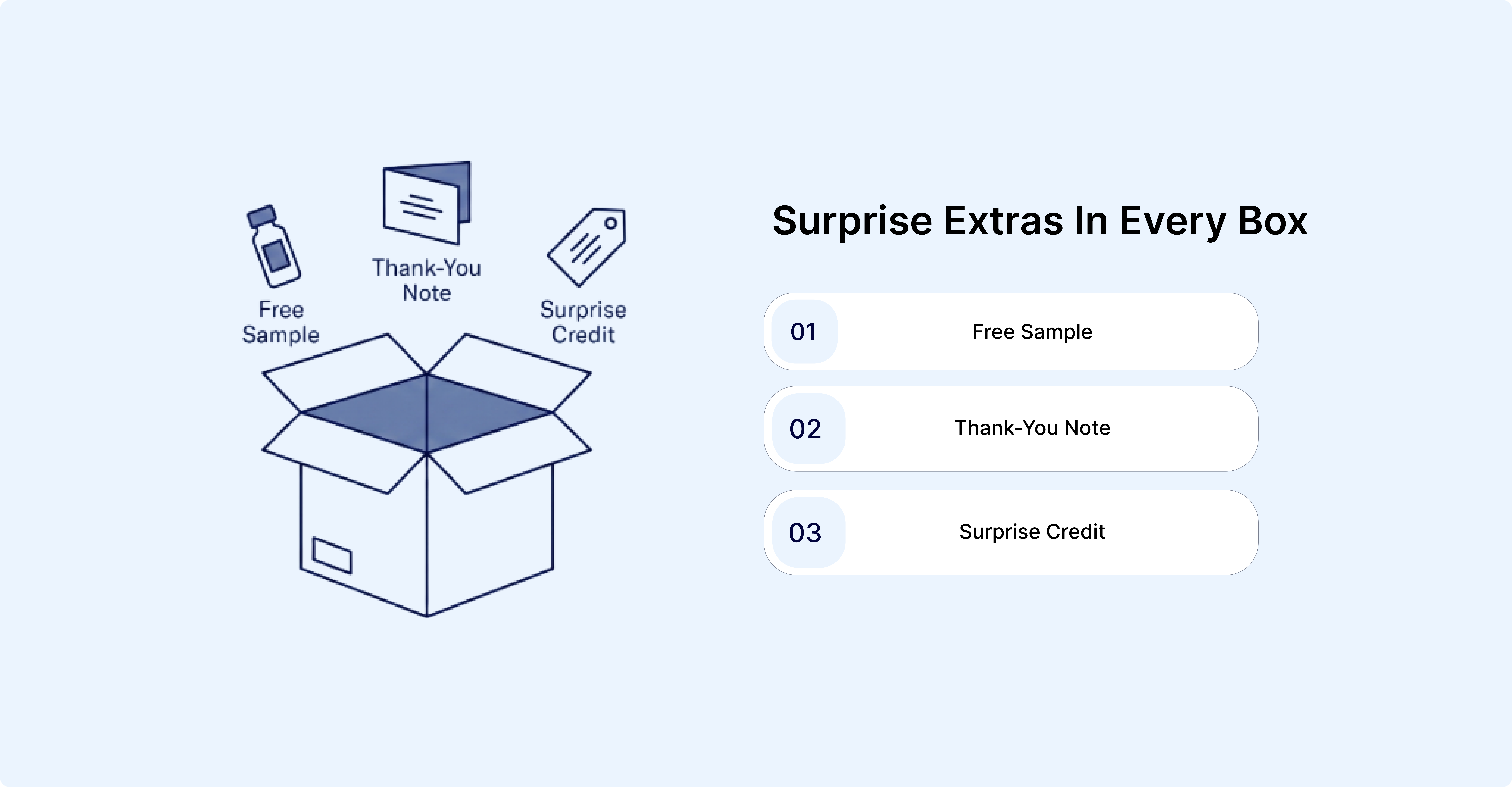
A reward people expect is fine. A reward they didn't see coming is the one they screenshot and send to a friend. Adding a small, unannounced extra into an order costs you almost nothing and buys a jolt of goodwill no scheduled promo can touch. The whole magic is in the not-expecting-it.
- Tuck a free sample of an untried product into a repeat customer's box.
- Add a handwritten thank-you note to first repeat orders from new customers.
- Upgrade a loyal buyer to faster shipping now and again, with no announcement.
- Include a surprise credit that only regulars ever receive, no strings attached.
11. Give Existing Customers Early Access to Drops
Few things are more frustrating than hearing your favorite brand had a big launch, and you missed it. Turn that around, let existing customers in first, and a past order suddenly comes with real perks. It reads as a genuine thank-you. It also spreads the demand out, so you don't get one frantic spike on launch day.
- Open new drops to past customers a full day before the public launch.
- Send an early-access link to your list, not a public social post.
- Reserve limited stock for repeat buyers so loyalty comes with a real perk.
- Frame it as a thank-you for past orders, not a generic promo blast.
12. Keep Buyers Informed After They Order
The phase between order placed and it-is-at-the-door is where trust gets built or blown. Go silent, and people get anxious, then start regretting the spend before it even shows up.
Customers expect timely updates at this stage. A steady drip of updates, plus a hand with actually using the thing, turns a jumpy first-timer into someone glad to order again. It is one small part of the entire customer journey, but it leaves a lasting impression.
- Send clear shipping and delivery updates without making the customer chase them down.
- Follow up after delivery with simple guidance on getting the most from it.
- Point buyers to genuinely useful how-to content, not a thin FAQ page.
- Set customer expectations on timing up front so a slow courier isn't your fault.
13. Build a Community Around Your Brand
Someone who feels part of something leaves far less often than someone who just bought a product. Give customers a place to exchange tips and talk to each other, and you have tied them to more than your prices. That kind of customer engagement builds a bond no rival can undercut with a 10%-off code. It might be the stickiest thing on this whole list.
- Create one owned space, a forum or group, where customers talk to each other.
- Give members a reason to show up beyond deals, like early expert tips.
- Feature customer stories and photos so regulars feel seen by the brand.
- Bring your own team in to answer questions so the space feels human.
Communities become even more valuable in enthusiast-driven industries where customers keep learning long after the first purchase. People don't just want products. They want trusted places to ask questions and learn from others who share the same interest. Brands that recognize this create customer loyalty by supporting those customer interactions.
This guide to tripe is a good example of this approach. Rather than focusing only on selling, it has become a trusted resource for chefs and culinary professionals because they know they will consistently find reliable and practical information. And it is the sort of reference people return to whenever they need a refresher, not just something they read once and forget.
That kind of ongoing interaction strengthens customer retention rate because people begin associating the brand with a trusted community they revisit regularly, not just a single purchase.
The lesson is not to turn every customer space into a product catalog. Build long-term customer relationships by giving them some place to learn from and solve the questions that naturally come up around what you sell.
The 5 Customer Retention Metrics Worth Watching
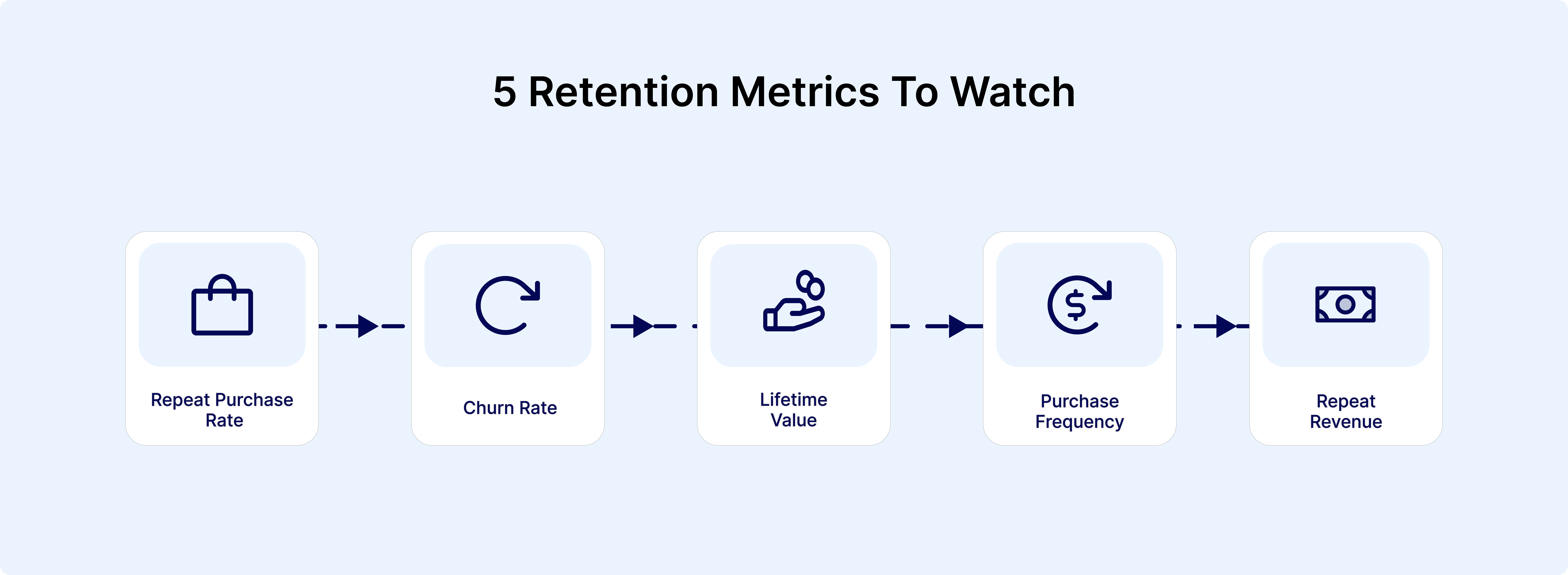
This rundown of retention metrics tells you whether your customer retention strategy is actually working or just keeping everyone busy. Here are 5 key metrics you can use to measure customer retention.
1. Repeat Purchase Rate
This is the cleanest customer insight into whether people like buying from you enough to do it twice. Across eCommerce, the average is at a modest 28.2%, so treat that as the floor you are clearing, not the goal. Loyalty and dead-simple reordering are what move it.
2. Customer Churn Rate
Churn is the number nobody enjoys opening, which is exactly why you should. Don't fixate on the headline figure – watch the direction and split it by group. A jump in one segment tells you precisely where you are springing a leak. Many stores also compare these numbers with customer satisfaction scores to spot problems earlier.
3. Customer Lifetime Value (CLV)
This is the one to build everything around, because it tells you what a kept customer is genuinely worth. Once you know that, you know how much you can spend to win one and keep one. Every other strategy here is really just a way to push this number up.
4. Purchase Frequency
Frequency answers a plain question: how often the same person comes back to buy. Increase it even a little, with a reminder here or a subscription there, and it adds up over a year. It is usually the quickest of these to move.
5. Revenue From Repeat Customers
This one reframes the whole business growth. Once you see what portion of your revenue comes from people buying again, retention turns into a line on the P&L. If that slice is small, you are renting customers, not keeping them.
4 Customer Retention Mistakes That Send Buyers Elsewhere
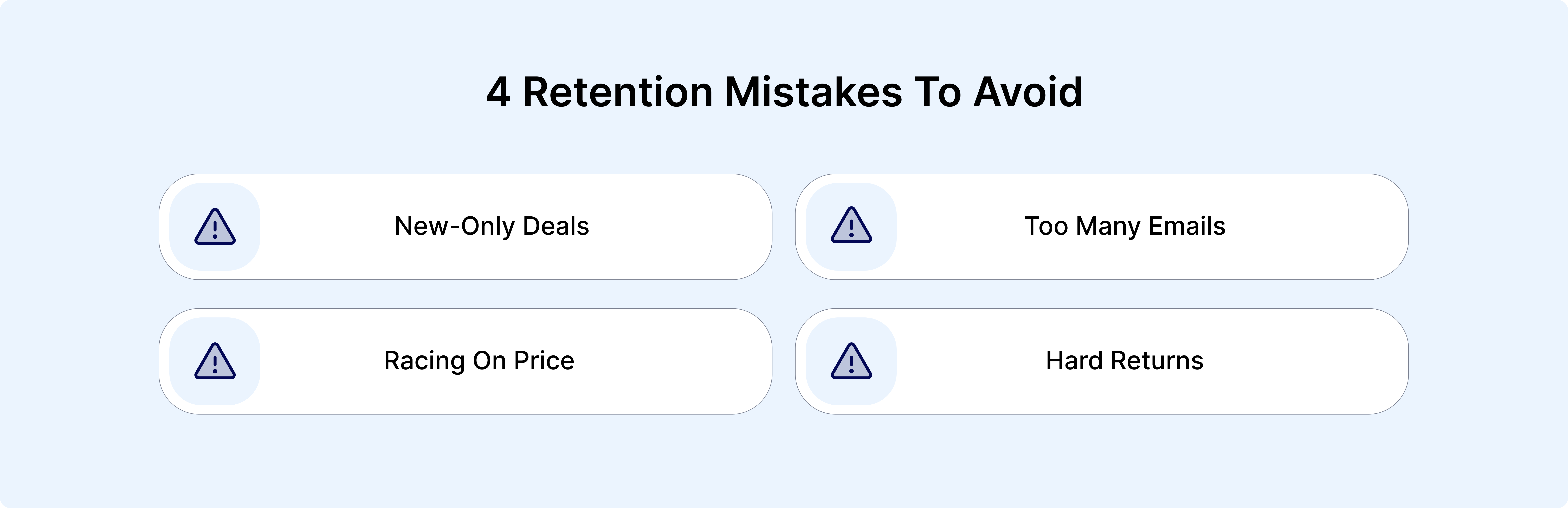
Even an effective customer retention strategy can spring a leak through a few unforced errors. Avoiding these mistakes can improve customer retention just as much as adding another tactic. None of these made the list above, which is exactly why they are so easy to walk straight into.
1. Saving Your Best Deals for New Shoppers Only
Nothing needles a loyal customer like a "20% off your first order" banner they no longer qualify for. Put your best offers into winning strangers while your regulars get nothing, and you have taught your most valuable people that sticking around was the wrong move.
How to Fix: Build a returning-customer offer that stacks up against what new buyers get. Brand loyalty should come with its own reason to feel good, not a quiet penalty.
2. Emailing So Often People Tune Out
You become the sender people auto-delete when you blast them daily. Frequency with nothing behind it trains customers to tune you out, and then the one email that actually mattered gets lost along with the rest.
How to Fix: Cap the sends and split your list by behavior, so each message has a point. Let what people actually open, not the calendar, decide who hears from you.
3. Making People Fight to Return or Cancel
A painful return or a cancel button you have three menus deep might save one order today. But it costs you the customer for good, plus the one-star review they leave on the way out. People remember a bad exit far longer than a smooth one.
How to Fix: Make returns and cancellations self-serve and easy to find. An exit that leaves no bruise is what makes someone comfortable coming back later.
4. Competing on Price Instead of Customer Experience
If you win someone on being the cheapest, you will lose them the second another store drops a dollar lower. Discounts buy visits, never loyalty. And a race to the bottom just teaches your whole audience to sit and wait for the next sale.
How to Fix: Compete on the things a coupon can't copy, like service and an account experience worth logging into. Keep discounts for a real reason, not a nervous reflex.
Conclusion
You won't run all thirteen of these, and you would burn yourself out trying. Pick the two or three that fit how people actually buy from you, get them working, then add the next. A customer retention strategy pays off by building up over time, not by launching everything at once.
That is why we built Flits. With it, you can give customers store credit instead of sending every refund back to their card. Customers can see their available balance inside their account and apply it toward future purchases.
We also make it easy to create VIP tiers around the behaviors that matter to your store. You can reward customers based on how much they spend or the points they earn over time. As customers move up, they automatically unlock the perks you decide to offer.
Get in touch with us, and we would be happy to walk you through it.