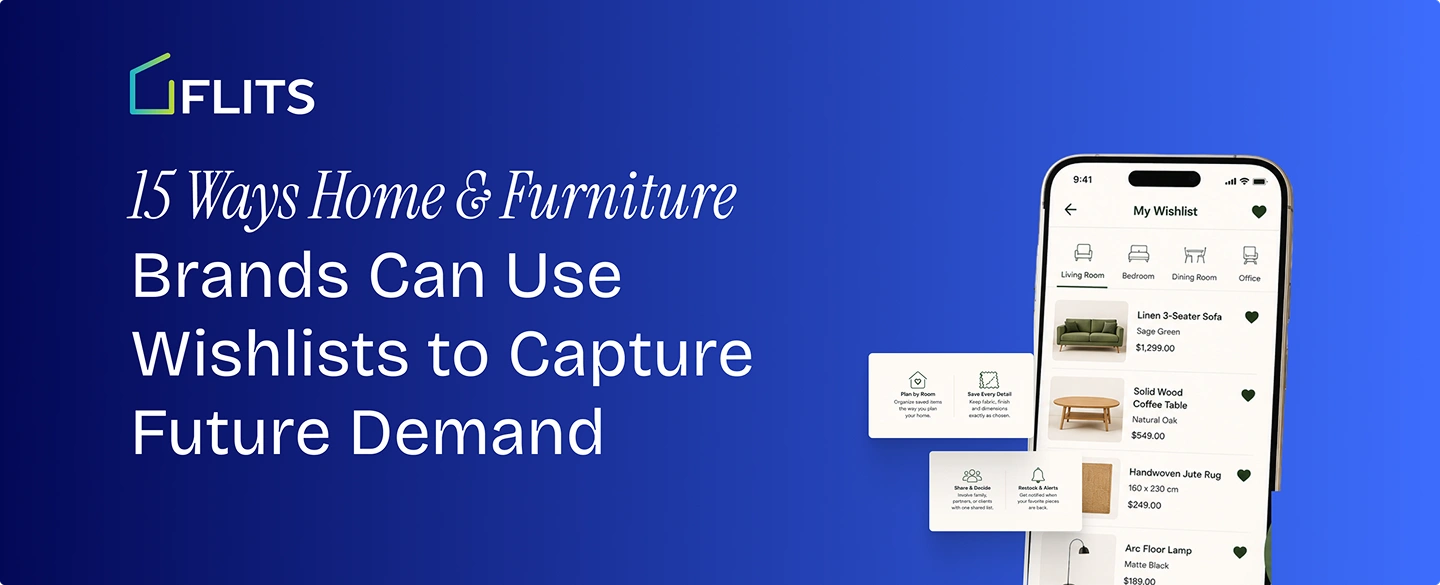
A shopper finds the sofa she wants in March, saves the tab, and doesn't actually buy until she moves into her new apartment in August. In furniture, that five-month gap isn't an edge case. It's closer to the norm. The purchase depends on a lease date, a room getting painted, a budget clearing, or a partner finally agreeing on the fabric, and none of those things resolve on the shopper's first visit to your site.
That long runway is exactly why furniture and home brands lose so much demand that was never actually lost interest, just lost tracking. A shopper who loved a dining set in spring has no reliable way to find it again in summer unless your store gave her a place to keep it. Multiply that across every shopper mid-way through furnishing a room, and you're looking at a large pool of future revenue with no system tracking it.
This post covers fifteen ways home and furniture brands are using wishlists to capture that future demand, from room-based collections and fabric-level saving to backorder alerts, trade buyer use cases, and demand signals for restocking. By the end, you'll have a set of tactics built around how furniture actually gets bought, over months, across multiple decision-makers, and often one room at a time.
TL;DR
- Room-based wishlist collections let shoppers organize saved pieces the way they're actually planning their space.
- Saving the exact fabric, finish, and dimension prevents shoppers from reconfiguring a piece on return visits.
- Shareable wishlists let every decision-maker in a household review and weigh in on the same saved list.
- Backorder and restock alerts bring shoppers back automatically for long lead-time pieces.
- Follow-up timed to life events like moves or renovations lands better than generic reminder emails.
- Price drop alerts convert shoppers who were deliberately waiting for a sale event.
- Guest wishlist support captures intent from shoppers comparing multiple retailers before committing.
- Wishlist save counts offer an early demand signal for restocking and production decisions.
- Surfacing wishlisted pieces at checkout prompts complementary add-on purchases like room sets.
- Segmenting by active wishlist category reveals which room a customer is actually furnishing right now.
- Wishlist-to-purchase analytics show conversion and time-to-purchase across furniture's long consideration cycle.
- A dedicated wishlist workflow supports interior designers and trade buyers building out project specs.
- Keeping saved pieces visible in the account page prevents them from being forgotten over long gaps between visits.
- AI-generated wishlist pages preserve the visual identity that home and furniture brands sell on.
- Wishlist migration tools preserve in-progress room plans and saved demand when switching apps.
Shopify wishlist strategies for home and furniture brands to capture demand
1. Let shoppers build room-by-room wishlist collections
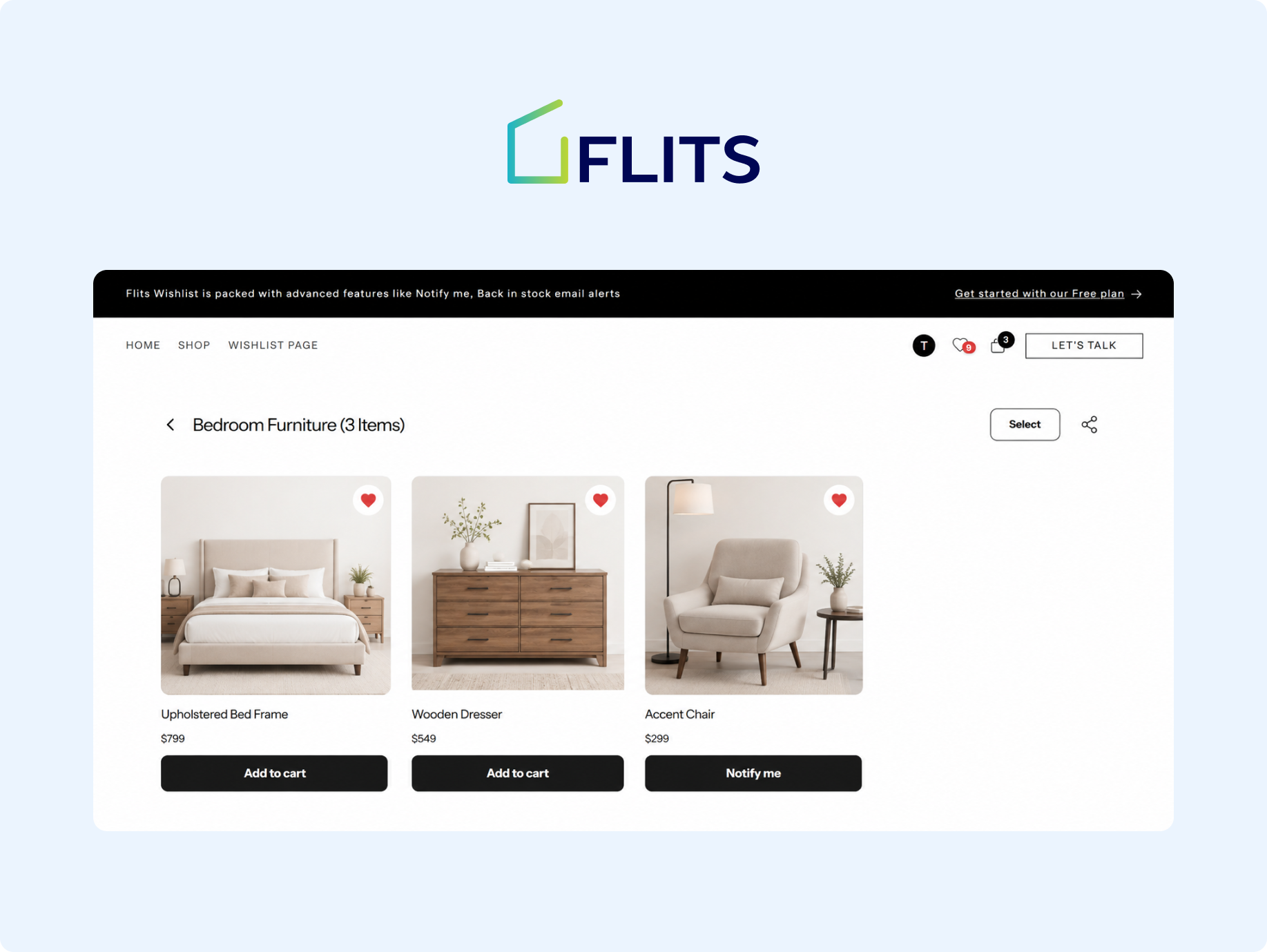
Furnishing a home rarely happens as one purchase. It happens room by room, sometimes over a year or more, with a living room sofa this quarter and a bedroom set once the budget resets. A single flat wishlist forces the shopper to mentally sort their own saved items by room every time they open it.
Wishlist collections let them organize saved pieces into named groups, a living room list, a bedroom list, a home office list, so the wishlist mirrors how they are actually planning the space instead of dumping everything into one undifferentiated pile. That structure alone makes it far more likely they'll return to finish a specific room, since the list itself carries the plan.
2. Save the exact fabric, finish, and dimension, not just the piece
A single sofa listing can hide dozens of real configurations: multiple upholstery options, several leg finishes, and sometimes different dimensions for the same silhouette. A wishlist that only remembers "this sofa" forces the shopper to reselect every option from scratch when they finally come back to buy, often weeks or months later.
Variant-level saving fixes this by capturing the exact fabric, finish, and size they configured at the time of saving. When they return, whether it's the next day or after finally settling on a paint color for the room, the piece is ready to add to cart exactly as they left it, with no re-deciding required.
Also Read: Multiple Wishlist Options on Shopify: What You Need
3. Share a wishlist across everyone involved in the decision
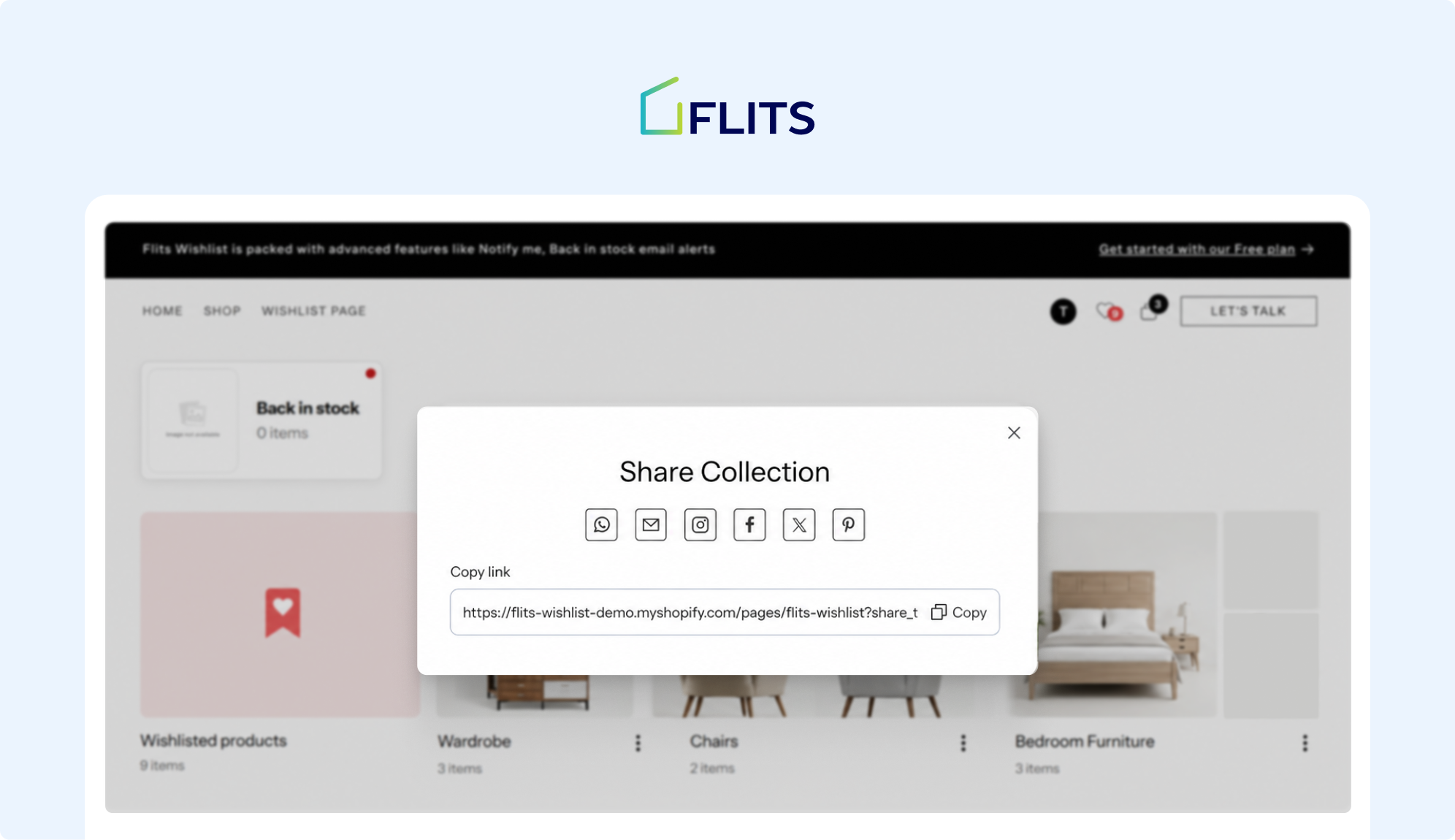
Furniture purchases rarely get made by one person alone. A couple furnishing a first home, roommates splitting a living room budget, or a parent and adult child agreeing on a bedroom set all need to align before anyone checks out. If the Shopify wishlist only lives on one person's account, the other decision-makers are stuck reviewing screenshots or separate links.
A shareable wishlist solves this directly. One person builds the list, and everyone with a say in the decision can view it, add to it, or weigh in, all from the same saved collection. For a category where purchases regularly stall on getting a second opinion, giving that second person direct access to the actual list, not just a description of it, removes a real source of delay.
4. Send backorder and restock alerts for long lead-time pieces
Furniture lead times run longer than almost any other retail category, especially for made-to-order or imported pieces where restocking can take weeks. A shopper who finds their ideal dining table sold out, with no way to track when it's back, has little reason to keep checking and every reason to buy something available elsewhere today.
5. Time follow-up around major life events, not just save dates
Furniture demand clusters around specific life moments: a new lease, a move-in date, a renovation, a new baby's nursery. A shopper who wishlists a crib in month five of a pregnancy has an implicit timeline that a generic "come back and buy" email completely ignores.
Connecting wishlist activity to an email platform like Klaviyo makes it possible to build follow-up sequences timed around these known windows rather than firing on a fixed schedule. A reminder that lands as moving season approaches, or as a stated move-in date gets closer, reads as useful timing instead of a sales push, and it reaches the shopper exactly when their circumstances are catching up to their earlier interest.
6. Use price drop alerts around major sale periods
Furniture is one of the categories where shoppers most deliberately wait for a sale. Black Friday, end-of-season clearance, and holiday promotions are well-known moments in this category, and a meaningful share of wishlist saves are shoppers who've already decided to buy, just not yet at full price.
A price drop alert notifies them the moment a wishlisted piece goes on sale, which is especially effective when a large batch of saved items drops in price at once during a major sale event. Instead of hoping they remember to check your site during the sale, the alert brings the sale directly to the piece they already want.
7. Let guest shoppers save pieces before creating an account
Someone furnishing a new home is often comparing multiple retailers before committing to any one of them. Requiring an account before they can save anything on your site puts you at a disadvantage against competitors who let them save first and decide later.
Guest wishlist support removes that requirement. They can save pieces immediately while comparing options, and account creation becomes a natural step later, typically when they’re ready to check out or wants their saved list to sync across the devices they’re using to plan the room.
With a Shopify wishlist app like Flits Wishlist, you can easily convert your guest visitors to sign up users.
8. Use wishlist data to plan restocks and production runs
Furniture inventory decisions carry real financial weight. Committing warehouse space or production capacity to a piece, without a clear read on demand, is a costly guess. Wishlist save counts offer a leading indicator of that demand before it shows up in sales data.
It’s one of the Shopify wishlist best practices to have a sold-out sectional with a higher wishlist count prioritized for a restock than one guessed at from instinct or general sales trends. This matters even more for made-to-order and imported furniture, where production and shipping lead times mean the restocking decision has to be made well before actual demand plays out at checkout.
9. Surface wishlisted pieces at checkout to prompt complementary purchases
A shopper checking out with a coffee table might have matching side tables or a rug saved from an earlier session. If those saved pieces stay buried on a separate wishlist page, they have to remember they exist and go looking for them, which they often won't do mid-checkout.
Showing wishlisted items in the cart or checkout flow puts those saved pieces back in front of them exactly when they’re already committed to buying. For furniture, where room sets and complementary pieces are a natural add-on, this turns a passive save into a low-effort way to increase order value.
10. Segment customers by the room or category they're actively furnishing
Purchase history tells you what a customer already owns. Wishlist saves tell you what room they’re actively working on right now, which is a much sharper signal for planning what to send them next. A customer with five items saved from your bedroom collection is a far stronger target for a bedroom-focused email than someone chosen purely because they bought a lamp last year.
Building segments from active wishlist categories, rather than relying on order history alone, lets marketing teams follow the shopper's actual project instead of guessing at it from past purchases.
11. Track wishlist-to-purchase conversion across the full consideration window
A save count alone doesn't tell you whether shoppers are actually coming back to buy. What matters is how many wishlisted pieces convert, and how long that typically takes given furniture's naturally long consideration cycle. Shopify wishlist analytics that track saves, conversions, and average time-to-purchase turn the wishlist into a measurable part of the funnel rather than a feature you assume is working.
This data also flags friction early. A piece with a high save count but a low conversion rate might be facing a shipping cost objection, a sizing concern, or missing information about assembly and lead time, all worth investigating before the pattern spreads across the catalog.
12. Support trade and interior design buyers with a dedicated wishlist workflow
Interior designers and trade buyers often build out full room or project specs before a client ever sees pricing. Without a way to save and organize those selections, the designer is left managing spreadsheets or screenshots separately from your actual product catalog.
A wishlist that supports building and sharing curated project lists serves this buyer directly, letting a designer assemble a room's worth of pieces, share it with a client for approval, and return to check out once sign-off comes through. For furniture brands courting trade or B2B buyers, this is a meaningfully different use case from a typical consumer wishlist, and one that's often underserved.
13. Keep saved pieces visible across long gaps between visits
Given how much time can pass between a furniture shopper's first save and their eventual purchase, a wishlist buried behind extra clicks gets forgotten. Showing saved pieces in the customer account page and mini-cart drawer keeps them visible every time they log back in, not only on the rare occasion they navigate to a dedicated wishlist page.
That visibility matters more in this category than in faster-turnover ones, since a shopper might not return to your site for weeks while they wait on a moving date or finishes another part of the room. The easier the saved piece is to rediscover, the less likely that wait ends in them forgetting it altogether.
14. Use an AI-built wishlist page that matches your store's visual identity
Home and furniture brands sell heavily on room aesthetic, whether that's modern organic, mid-century, or a curated minimalist look. A wishlist page that looks generic or mismatched from the rest of the store breaks that visual consistency right when a shopper is deciding whether to come back and complete a room they’re been planning.
An AI-generated wishlist page and flow builder adapts automatically to match your existing theme, so the saved-items page feels like a natural extension of the store's aesthetic rather than a separate utility bolted on top of it.
15. Migrate wishlist data when switching apps, without losing in-progress room plans
Furniture brands hesitant to switch wishlist apps often worry about losing exactly the kind of data covered here: room collections, saved fabrics and finishes, and shared lists tied to specific customers mid-way through furnishing a space. Wiping that during a migration doesn't just lose data, it loses months of an in-progress project the customer was building toward you.
A proper migration path, typically a CSV export handled by the new app's support team, preserves that saved data instead of erasing it. That means switching to a better wishlist setup doesn't cost you the room plans and future demand your customers have already invested time building.
Getting started
Furniture and home decor sell on a longer timeline than almost any other retail category, and a wishlist built for that reality needs to support room-based planning, not just a single flat list.
Guest wishlist support, variant-level saving for fabric and finish, back-in-stock and price drop alerts, Klaviyo integration for life-event timing, and analytics that show what's converting all matter more here than in faster-moving categories.
Flits Wishlist covers this full set on a single $19/month Unlimited plan, with no feature gates and no pricing that climbs as your store grows, giving home and furniture brands the complete toolkit whether they're processing ten orders a month or ten thousand.
Try Flits Wishlist for free today!
FAQ
Why does furniture need a different wishlist approach than other retail categories?
Furniture purchases typically stretch over weeks or months, tied to events like moving, renovating, or budget timing, and often require more than one decision-maker. A wishlist built for this category needs to support long gaps between saves and purchases, shared access across a household, and room-based organization, not just a single flat save-for-later list.
How can a wishlist help with room planning specifically?
Wishlist collections let shoppers group saved pieces by room, living room, bedroom, home office, so the list mirrors how they're actually furnishing the space rather than mixing everything into one undifferentiated list. That structure makes it easier to return and complete a specific room later.
Do backorder alerts matter more for furniture than other product categories?
Yes. Furniture lead times, especially for made-to-order or imported pieces, run longer than most retail categories. A shopper who can't track when a sold-out piece will return has little reason to keep waiting, so an automatic restock alert directly protects a sale that would otherwise go to a competitor.
Can a wishlist support interior designers or trade buyers?
Yes, when it supports building and sharing curated project lists. A designer can assemble a full room's worth of pieces, share the list with a client for approval, and return to purchase once sign-off comes through, all within the same wishlist workflow used by regular shoppers.
Should furniture wishlists be shareable with other household members?
Yes. Furniture purchases are rarely made by one person alone. A shareable wishlist lets everyone with a say in the decision, a partner, a roommate, a parent, view and weigh in on the same saved list instead of relying on screenshots or a verbal description.
How can wishlist data help with furniture inventory and restocking decisions?
Wishlist save counts on sold-out or low-stock items offer an early signal of real demand before it shows up in sales data. Given how far in advance furniture production and shipping decisions need to be made, that early signal helps prioritize which pieces to restock or reproduce first.