Outdoor gear wears out and gets outgrown, seasons change what's needed, and most athletes end up juggling more than one sport at a time. That combination should make sports and outdoor one of the easiest categories to build repeat purchases in, yet the average outdoor brand retains only around 32% of customers annually, and 44% of consumers replace their gear on a 2-3 year cycle that most brands never plan around proactively. A wishlist gives outdoor brands a way to stay attached to a customer through that entire cycle, from the first big purchase through every seasonal swap and eventual upgrade that follows it.
TL;DR
- Outdoor gear follows a predictable replacement cycle, roughly every 2-3 years for most equipment, that most brands could plan retention strategy around but currently don't.
- The average outdoor enthusiast participates in three or more activities annually, which means a single customer often needs separate gear sets rather than one purchase.
- Seasonal demand swings sharply, with summer activities driving over half of annual sales and winter sports contributing a large secondary spike, making timing critical to repeat purchases.
- High-ticket items like bikes, skis, and technical outerwear require longer consideration windows, and customers who do return within six months carry an outsized lifetime value.
- Fit and sizing precision matters enormously in performance gear, where the wrong size isn't a minor inconvenience but a genuine safety or comfort issue.
- Gifting and gear upgrades both create natural reentry points into a customer's wishlist that most brands aren't currently capturing.
10 Ways Sports & Outdoor Brands Can Use Wishlists
1. Let customers organize gear by activity, not as one long list
Most outdoor enthusiasts aren't single-sport shoppers. Roughly 72% of people engaging in outdoor recreation take part in at least three activities a year, and each of those activities comes with its own gear list, its own sizing needs, and its own seasonal timing. A customer training for a spring trail race and planning a winter ski trip is managing two completely different sets of priorities at once, and dumping everything into a single flat wishlist makes it hard to track either one clearly. Wishlist collections solve this by letting a customer group saved items by activity, whether that's "running," "climbing," or "ski trip 2027," which keeps a multi-sport customer organized and makes it far easier for them to shop with intention rather than starting from scratch each time a new season approaches.
2. Give high-ticket item researchers a place to think without committing
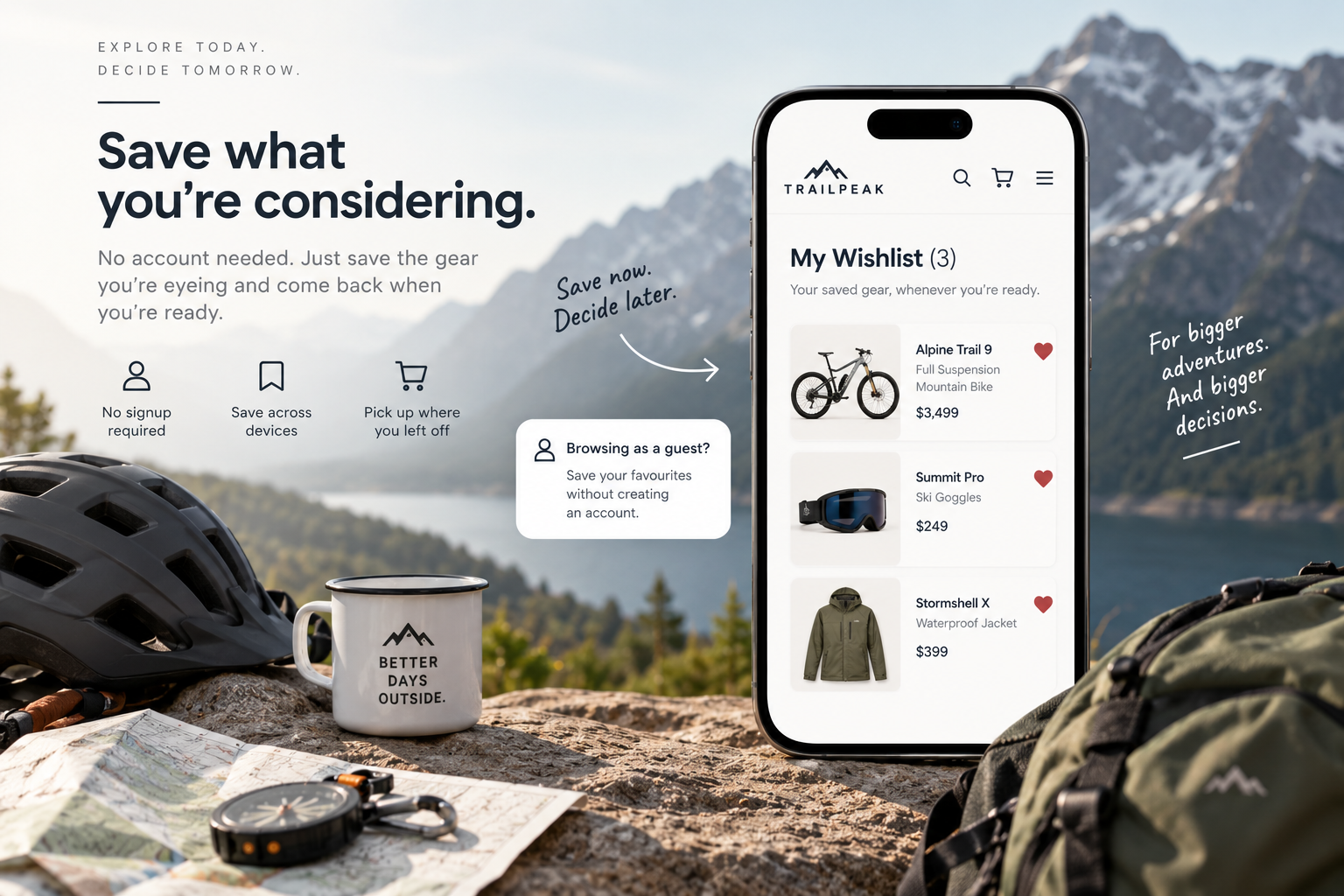
A bike, a pair of skis, or a technical shell jacket is rarely an impulse purchase. These are considered buys, often researched across multiple sessions and sometimes multiple retailers, and asking a shopper to create an account before they're ready to commit is enough friction to lose the sale to a competitor entirely. Guest wishlisting removes that requirement, letting a shopper save the exact bike model or ski length they're weighing without any signup step in the way. Flits supports guest wishlisting on its paid plan, which fits this category particularly well given how much of outdoor gear shopping involves genuine, extended deliberation before a customer is ready to buy.
3. Save the exact size and fit, not a general product listing
Performance gear sizing carries more weight than in most other categories. A wetsuit that's a size off affects buoyancy and warmth, a bike frame that's the wrong size affects comfort on long rides, and a hiking boot that doesn't fit correctly can cause real injury on the trail. When a customer saves a general product page instead of the specific size or fit they researched, they're forced to redo that research from scratch when they return, and any uncertainty they'd resolved gets reopened. Variant-level wishlist saving keeps the exact selected size, length, or fit attached to the saved item, so a customer who wishlisted a size 10.5 trail runner in a specific width comes back to exactly that configuration rather than a generic listing.
Also Read: Shopify Wishlist Statistics 2026: What Consumer Shopping Behaviour Data Actually Shows
4. Time back-in-stock alerts around the seasonal calendar
Outdoor gear demand doesn't spread evenly across the year. Summer activities drive over half of annual sales volume, winter sports contribute a large secondary spike, and popular sizes in seasonal categories like ski boots or wetsuits routinely sell out before the season even peaks. A shopper who finds their size out of stock right before a planned trip or the start of a season often can't simply wait, since the gear needs to arrive in time to be useful. A back-in-stock alert tied to the wishlist recovers that sale automatically the moment inventory returns, which matters more in this category than in one where a customer's timeline is flexible, since a missed restock window here often means a lost sale entirely rather than a delayed one.
5. Turn wishlist sharing into a gifting and team-gear channel
Sports and outdoor gear is a genuinely popular gift category, particularly around the winter holidays when ski, snowboard, and cold-weather gear demand peaks, but gift-givers rarely know the exact model, size, or spec an athlete actually wants. A shareable wishlist solves this directly, letting the athlete specify exactly what they need and letting friends or family purchase with confidence instead of guessing. This same mechanic extends beyond individual gifting too. A coach or team captain can use a shared list to coordinate team gear orders, or a group of friends planning a trip together can compare and align on compatible equipment before a shared outing.
6. Sync wishlist data to plan around the gear replacement cycle
Most outdoor gear follows a fairly predictable lifespan before it needs replacing, whether that's a pair of trail shoes wearing out after several hundred miles or a jacket losing its waterproofing after a few seasons of hard use. A brand that only markets reactively, waiting for a customer to come back on their own, misses the chance to be top of mind exactly when that replacement need arises. Flits syncs wishlist saves, shares, and back-in-stock triggers to Klaviyo as structured customer events, which lets a brand build reminder flows timed around when a customer's gear is statistically likely to need replacing, rather than sending generic promotional emails disconnected from where that specific customer actually is in their gear lifecycle.
7. Use wishlist data to catch demand before a season starts
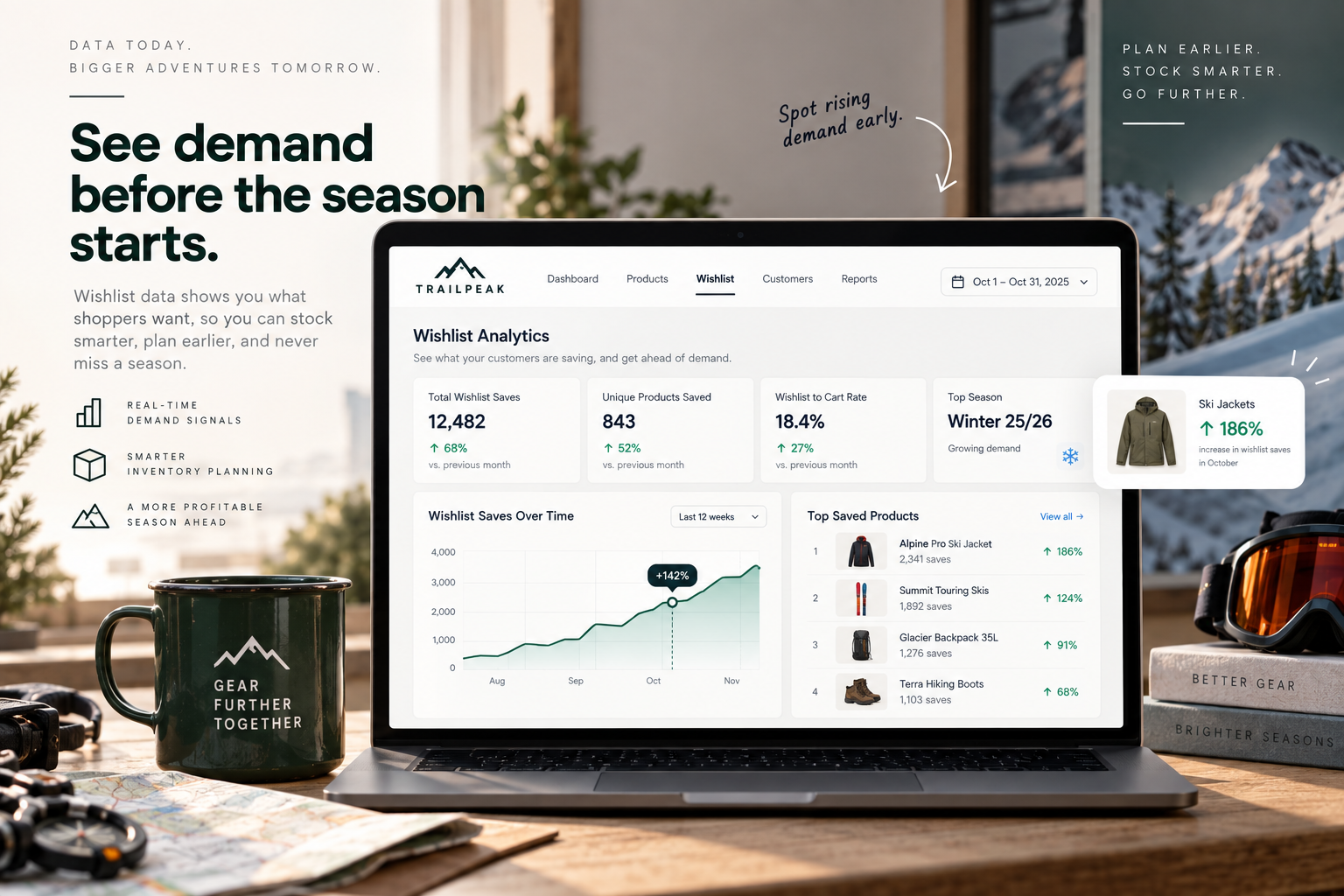
Anticipating seasonal demand accurately is one of the hardest parts of running an outdoor gear brand, since ordering too early ties up capital and ordering too late means missing the sales window entirely. Wishlist analytics that track which products are being saved heavily in the weeks leading into a season give a brand a real-time read on where demand is building, well before the sales data itself would show it. A spike in saves for a particular ski jacket in October, for instance, is a much earlier and more specific signal than waiting for December sales figures to confirm what's actually selling, and it gives a brand time to react with restocking or targeted promotion while the season is still ahead of them.
8. Shorten the path to purchase once a decision is finally made
High-ticket outdoor gear often involves a long research phase, but once a customer has actually decided, that's the worst moment to introduce friction. Letting a customer add a wishlisted item straight to cart from the wishlist page itself, without navigating back through a full product listing and re-selecting size or color, respects the fact that the decision has already been made. For a purchase that may have taken weeks of comparison to reach, removing even small extra steps at the final moment protects against last-minute hesitation creeping back in.
9. Keep saved gear visible right before a trip or event deadline
Outdoor purchases are often tied to a specific event or trip date, a race entry, a planned climb, or the opening weekend of ski season, and that deadline creates real urgency once it approaches. If a customer's saved wishlist isn't immediately visible when they log back in during that final planning window, they're forced to search for items again under time pressure, which increases the odds they either give up or buy a substitute from a competitor instead. Placing the wishlist inside the customer account page and the mini account drawer keeps saved gear front and center exactly when a customer is finalizing preparations for whatever they're training or traveling for.
10. Match the wishlist experience to a rugged, performance-driven brand feel
Outdoor and sports brands generally invest heavily in a distinct visual identity built around performance, durability, and often a rugged outdoor aesthetic, and a wishlist page that looks generic or disconnected from that identity can undercut the sense of technical credibility the brand has built. Smaller outdoor brands without a dedicated design team often either skip building a properly branded wishlist experience or end up with something visually inconsistent with the rest of the site. Flits includes an AI-generated wishlist page and flow builder that automatically matches a store's existing theme, letting outdoor brands offer a polished, on-brand wishlist experience without requiring extra development or design work.
Bringing it together
Sports and outdoor customers don't stop needing gear after their first purchase. They cycle through seasons, take up new activities, wear out equipment on a fairly predictable schedule, and buy gifts for training partners and family members who share the same interests. A wishlist that accounts for multi-activity organization, precise sizing, seasonal timing, and sharing gives a brand a structured way to stay connected through all of that, instead of relying on the customer to remember to come back once their next need arises.
Flits Wishlist delivers this as a single Shopify app at $19 a month, with no feature gating and no pricing that scales up as order volume grows. For a category where the customers who return within six months carry a lifetime value many times higher than the cost of acquiring them in the first place, that flat, predictable pricing is easy to justify against the repeat revenue a well-used wishlist can help protect.
FAQs
Why is a wishlist particularly useful for sports and outdoor brands?
Outdoor gear follows a predictable replacement cycle and strong seasonal demand pattern, and most customers participate in multiple activities at once, all of which a wishlist can help a brand track and respond to more precisely than generic marketing.
Can a wishlist help with sizing issues specific to performance gear?
Yes, when it supports variant-level saving. Keeping the exact size, length, or fit attached to a saved item means a customer doesn't have to redo sizing research they've already completed when they return to buy.
How does wishlist sharing work for team or group gear purchases?
A shareable wishlist lets one person specify exact models and specs, which teammates, coaches, or gift-givers can then purchase directly, reducing the guesswork involved in buying gear for someone else.
Does a wishlist help with seasonal stockouts on popular sizes?
Yes. A back-in-stock alert tied to the wishlist notifies a customer automatically once their size or model is available again, which is especially valuable in a category where seasonal timing often can't be pushed back.