.webp)
A customer finishes her serum in six weeks, means to reorder it, and forgets. Three months later she's standing in a different store buying whatever's on the shelf, because your product wasn't in front of her when the bottle ran dry. That's not a loyalty problem. It's a timing problem, and it's the single biggest gap a wishlist closes for beauty and skincare brands.
Beauty is a repeat-purchase category by nature. Serums run out, foundations get repurchased in the same shade, routines get rebuilt after a trip or a season change. But most stores treat the wishlist as a one-time save-for-later tool, built for someone deciding whether to buy, not for someone who already loves the product and just needs a nudge to buy it again. That leaves a huge chunk of repeat revenue sitting on the table.
This post covers fifteen ways beauty and skincare brands are using wishlists to turn one-time buyers into repeat customers, from shade-matching and restock alerts to routine building and replenishment reminders. By the end, you'll have a clear set of tactics to apply, whether you're setting up a wishlist for the first time or trying to get more repeat revenue out of one you already run.
TL;DR
- Wishlists help home and furniture brands capture demand that may convert weeks or months after the first visit.
- Organize saved products by room so shoppers can plan their space instead of managing one long list.
- Save specific variants like fabric, finish, and dimensions so shoppers don't have to reconfigure products later.
- Make wishlists shareable so partners, family members, and other decision-makers can collaborate.
- Use restock and backorder alerts to bring shoppers back when long-lead-time furniture becomes available.
- Time wishlist follow-ups around moves, renovations, and other life events instead of sending generic reminders.
- Use price-drop alerts to capture shoppers who are waiting for a sale before purchasing.
- Let guest shoppers save products while comparing retailers, without forcing account creation upfront.
- Use wishlist saves as an early demand signal for restocking and production decisions.
- Surface saved products during cart and checkout to encourage complementary purchases and increase AOV.
- Segment shoppers by their active wishlist categories to understand which room or project they're currently furnishing.
- Track wishlist-to-purchase conversion and time-to-purchase to measure the impact of saved demand.
- Give interior designers and trade buyers dedicated tools to build, share, and manage project-based product lists.
- Keep saved products visible across the account page and shopping experience so long consideration periods don't turn into forgotten purchases.
- Preserve existing room plans and customer intent with wishlist migration when switching apps.
1. Let customers build a running list of products they'll need to reorder
Beauty customers rarely buy one product in isolation. They build a routine: cleanser, serum, moisturizer, SPF, and once they find a combination that works, they stick with it. A wishlist gives them a place to keep that combination together, so reordering the full routine doesn't mean hunting through order history or scrolling their memory for product names.
This matters most for customers who didn't buy the full routine in one order. Someone might buy a cleanser this month and a serum next month, testing as they go. A wishlist lets them save the rest of the routine they’re building toward, even before they’re ready to buy it, so the full set stays visible in one place.
2. Save the exact shade, not just the product
Foundation, concealer, and lipstick all come in dozens of shades, and getting the wrong one is the single biggest reason for lost repeat purchases in color cosmetics. A wishlist that only remembers the product name, without the shade, creates real risk. A customer clicks back into their saved foundation and has no way of confirming which of the twelve shades they originally chose.
Variant-level saving fixes this by capturing the exact shade, undertone, or finish at the moment they save it. When they reorder, there's no guessing and no risk of a shade mismatch that ends in a return.
3. Send back-in-stock alerts for cult-favorite products
Beauty products go viral and sell out fast, and it's usually the best-performing items that run out first. A customer who's already a repeat buyer of a product, and finds it out of stock, doesn't automatically wait around. They’ll try a competitor's version instead, and there's a real chance they won't come back.
Back-in-stock alerts solve this directly. When a customer wishlists a sold-out product, they get notified automatically the moment it's restocked, before they have time to find a substitute elsewhere. This is one of the highest-leverage uses of a wishlist in beauty specifically, because repeat buyers already know exactly what they want. They just need to be told when it's available again.
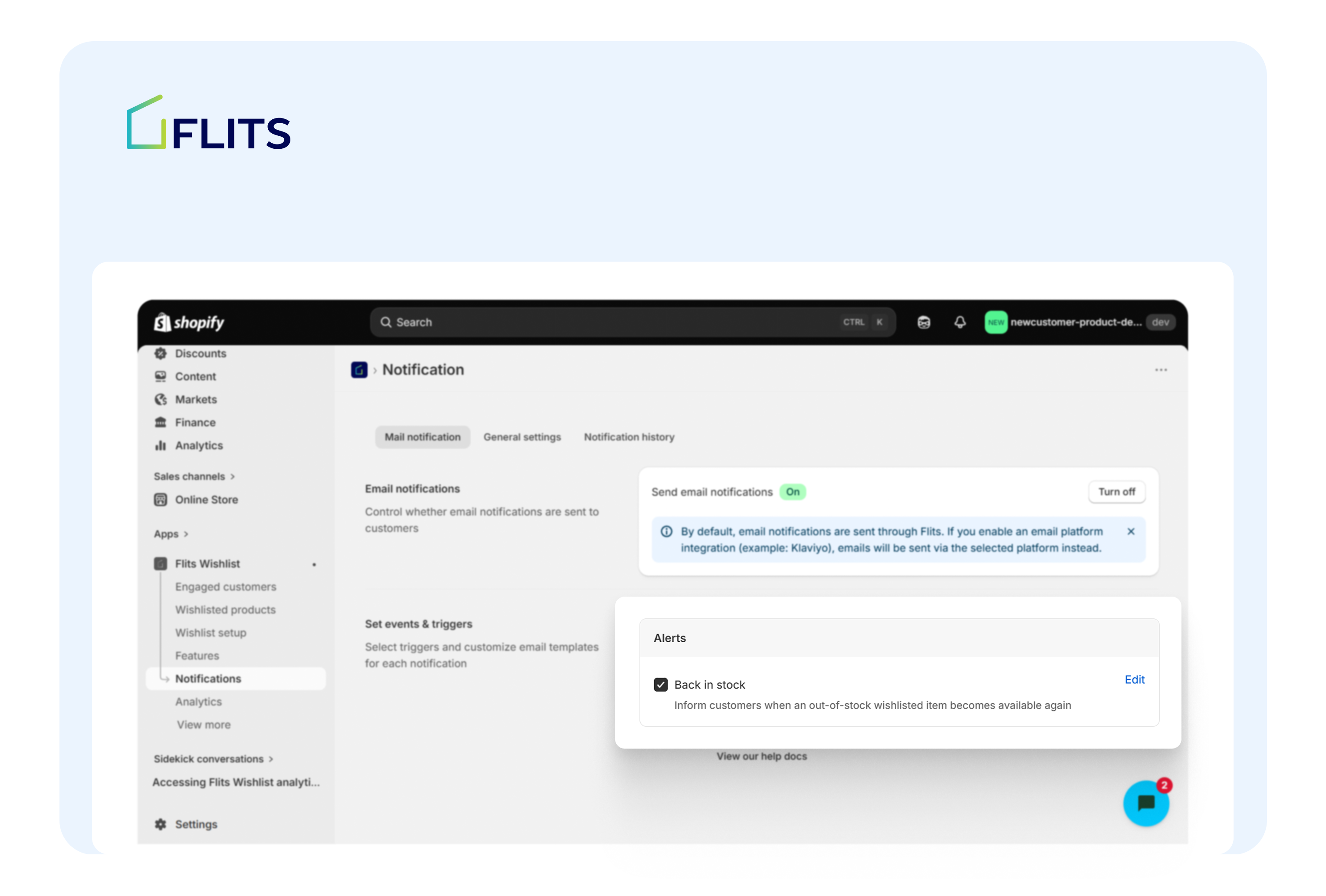
4. Time replenishment reminders to how fast a product actually runs out
Skincare and beauty products have a rough usable lifespan. A cleanser might last six weeks, a serum ten, a body lotion four. Most brands never use that information, even though it's one of the clearest windows for a repeat purchase.
Connecting wishlist activity to an email platform like Klaviyo lets you set replenishment reminders based on typical usage windows, not just generic "it's been a while" emails. A customer who wishlisted a serum ten weeks ago is more likely to be running low and ready to reorder than one who saved it yesterday, and timing the email around that window catches them closer to the moment they’re actually deciding.
5. Use wishlist data to spot which products create repeat demand
Not every product in a beauty catalog earns the same level of loyalty. Some get bought once and never again. Others get wishlisted and repurchased over and over, which is the clearest sign of a hero product.
Looking at which items show up repeatedly across wishlist saves, even from the same customers over multiple sessions, helps identify which products deserve more marketing spend, more inventory priority, and a spot in bundle offers. This is a more direct read on loyalty than raw sales numbers, which don't distinguish between a one-time trial purchase and genuine repeat interest.
6. Let guest shoppers save products before they've created an account
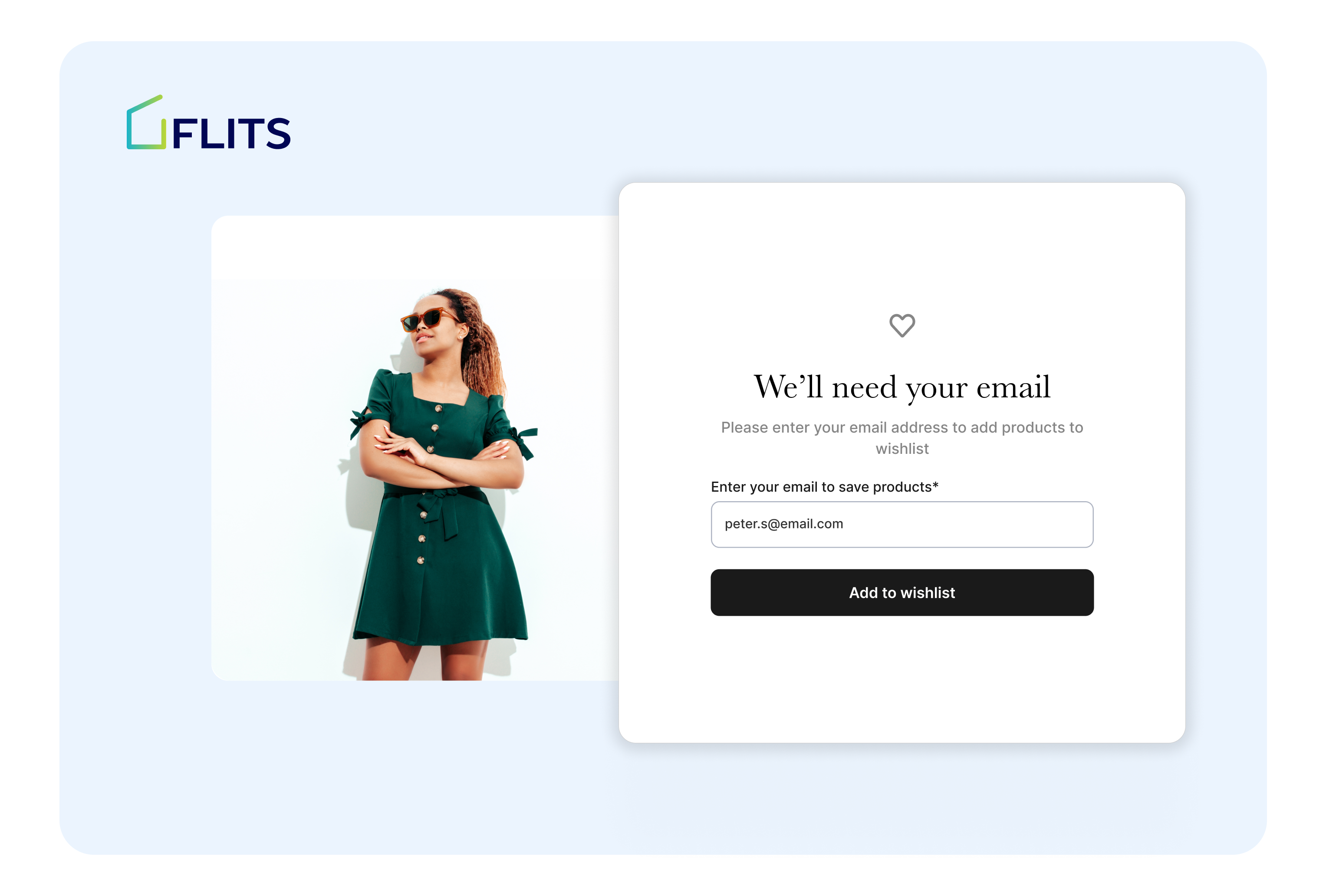
A first-time visitor testing out your skincare line often isn't ready to create an account. They might be comparing your serum against two others, or just browsing before payday. If they can't save anything without signing up first, that browsing session leaves no trace, and there's nothing to bring them back later.
Shopify guest wishlist support removes that requirement. They can save products immediately, and the account creation step can happen later, often right when they’re ready to check out or wants their saved items to sync across their phone and laptop.
7. Build shareable gift sets and routines for gifting occasions
Beauty is one of the most gifted categories in ecommerce, and gift buyers are often unsure exactly which shade, scent, or formula the recipient prefers. There are multiple types of Shopify wishlist and a shareable wishlist solves this from the recipient's side. They build their own list of what they want, and share the link with whoever's buying.
This also supports customers building a gift set for someone else's routine, where getting the shade or formula wrong means an unusable gift. A wishlist link shared over text, email, or social media turns a guessing game into a guided purchase.
8. Show wishlisted items during checkout as an easy add-on
A customer checking out with a moisturizer in their cart might also have a serum sitting on their wishlist from a previous visit. If that saved item isn't visible during checkout, they have to remember it exists and go find it separately, which most customers won't bother doing.
Surfacing wishlisted items in the mini-cart drawer or checkout flow puts that saved product back in front of them at the exact moment they’re already making a purchase decision. It turns a passive save into an easy add-on, without requiring a separate marketing push.
9. Set price drop alerts for customers waiting on a sale
Some beauty customers know exactly what they want and are simply waiting for a discount, a seasonal sale, or a bundle deal before repurchasing. Without a price alert, that wait has no natural end point, and the customer may forget or find the product discounted somewhere else first.
A price drop alert notifies them automatically the moment a wishlisted product goes on sale, at the point they’re most likely to buy. This tends to perform especially well around major sale periods, when a batch of wishlisted items drops in price at once and drives a concentrated wave of repeat orders.
10. Segment repeat-purchase campaigns by what customers have saved, not just what they've bought
Order history tells you what a customer already owns. Wishlist history tells you what they’re actively considering next, which is a stronger signal for planning what to email them about. A customer who's wishlisted three products from a new retinol line is a sharper target for a retinol restock or launch email than someone chosen only because they bought a cleanser months ago.
Building customer segments around saved products, alongside order history, lets marketing teams retarget for sales and repeat-purchase campaigns around active interest instead of guessing from past orders alone.
11. Track wishlist-to-repurchase conversion to see what's actually driving loyalty
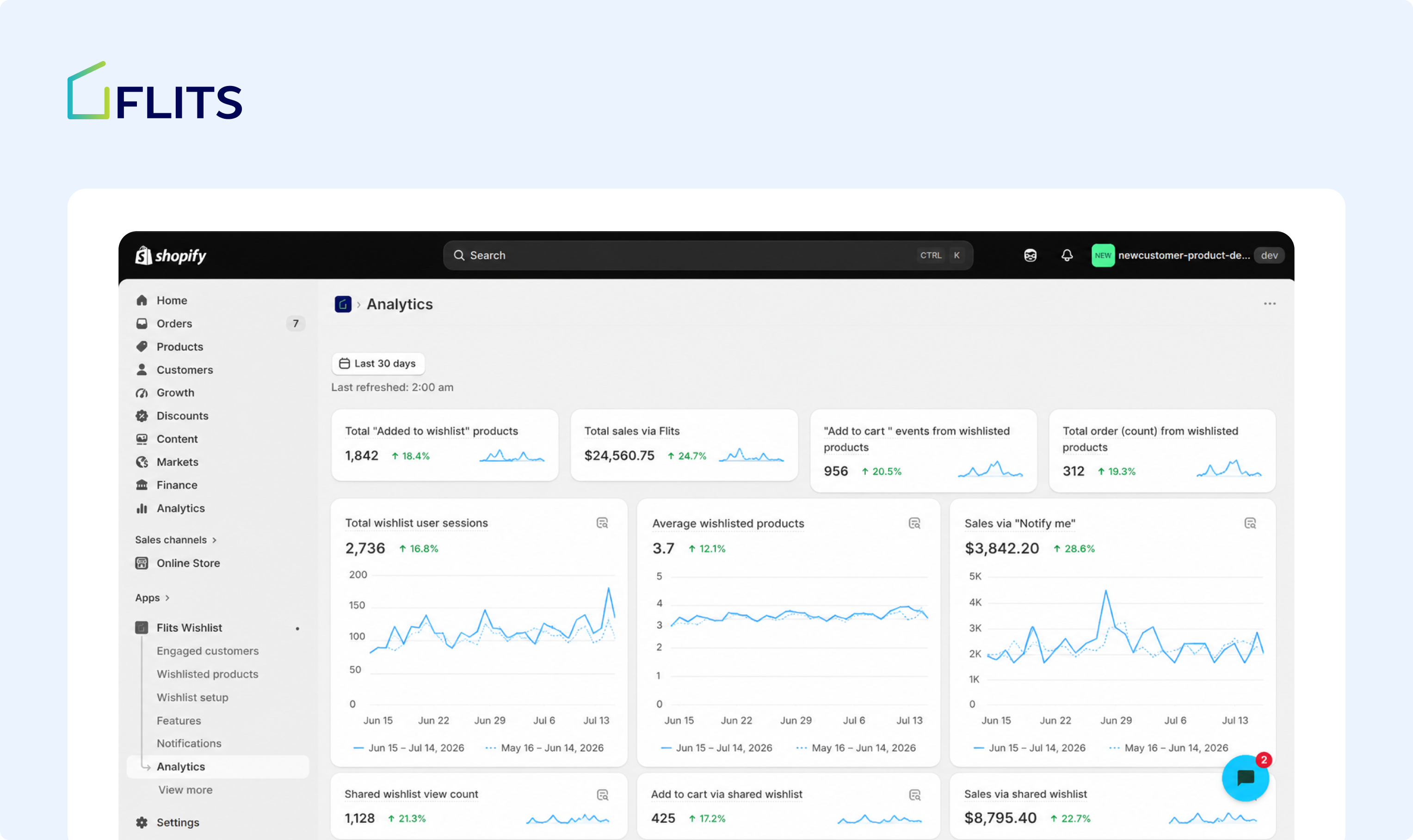
A save by itself doesn't tell you much. What matters is how many wishlisted items get repurchased, and how long that typically takes. Wishlist analytics that track saves, conversions, and average time-to-purchase turn the wishlist from a passive feature into a measurable part of your retention strategy.
This data is also useful for catching problems early. A product with a high save count but a low repurchase rate might have a price, formula, or packaging issue worth investigating before it shows up in churn numbers.
12. Keep saved routines visible in the customer account page
A wishlist buried three clicks deep gets forgotten between purchases, especially in a category where the gap between orders can stretch to weeks or months. Showing saved products directly in the customer account page keeps the routine visible every time they log in to check an order or update their details, not just when they remember to visit a dedicated wishlist page.
That visibility matters more in beauty than in categories with shorter purchase cycles, because the natural gap between visits is exactly when a customer is most likely to forget what they need to reorder.
13. Use an AI-built wishlist page that matches your store's aesthetic
Beauty and skincare brands lean heavily on visual identity, packaging, color palette, and photography all do a lot of the selling. A wishlist page that looks generic or mismatched from the rest of the store breaks that visual consistency at exactly the moment a customer is deciding to reorder.
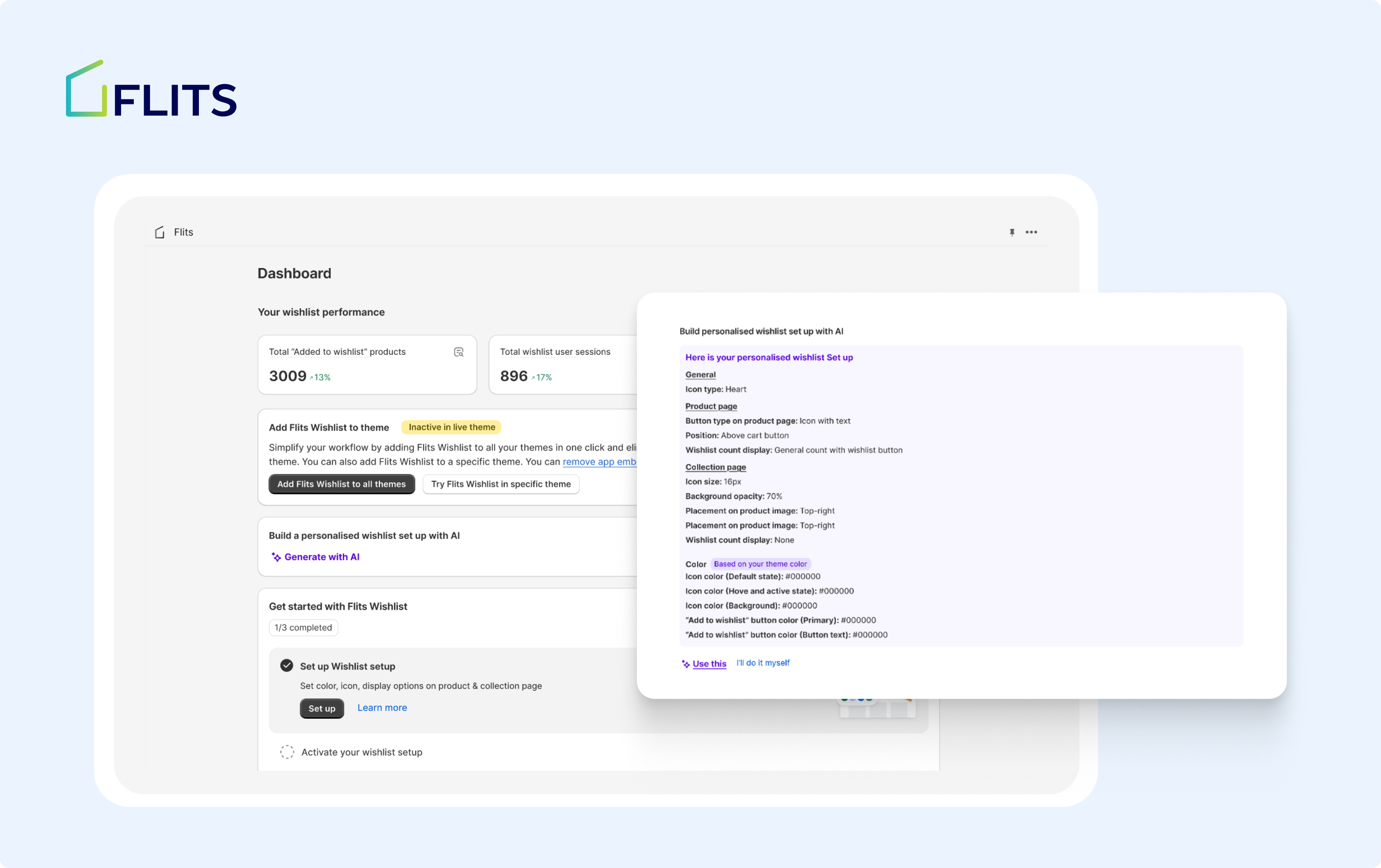
An AI-generated wishlist page and flow builder adapts the layout automatically to match your existing theme, so the saved-items page feels like a natural extension of your brand rather than a bolted-on feature.
14. Recover wishlist abandonment with a dedicated email sequence
A customer who wishlists a product but doesn't buy has shown clearer intent than one who just viewed it and left. Treating that save as a trigger for a follow-up sequence, rather than lumping it in with general marketing emails, targets exactly the customers closest to repurchasing.
A simple sequence works well here: a reminder a few days after the save, a restock or low-stock nudge if relevant, and a price alert if the item later goes on sale. Each step gives them a fresh reason to come back and finish the purchase they already started mentally.
Also Read: Capture Customer Intent With Flits Wishlist
15. Migrate existing wishlist data when switching apps
Brands hesitant to switch wishlist apps are often worried about losing the saved data their existing customers have already built up. If every customer's saved routine disappears during a migration, you're not just losing data, you're losing the repeat-purchase intent tied to it.
A proper migration, typically a CSV export handled by the new app's support team, preserves that data instead of wiping it. That means switching to a better wishlist setup doesn't cost you the months of saved routines and reorder intent your customers have already built.
Getting started
Driving repeat purchases through a wishlist depends on a few specific capabilities: guest wishlist support, variant-level saving for shades and formulas, back-in-stock and price drop alerts, Klaviyo integration for timed replenishment emails, and analytics that show which products are converting into repeat orders.
Flits Wishlist covers this full set on a single $19/month Unlimited plan, with no feature gates and no pricing that increases as your store grows. Beauty and skincare brands get the complete toolkit from day one, whether they're processing ten orders a month or ten thousand.
FAQ
Can a wishlist really improve repeat purchase rates for beauty brands?
Yes, when it's connected to timely follow-up, not left as a passive save button. The repeat-purchase impact comes from back-in-stock alerts, replenishment reminders timed to typical product usage, and price drop notifications that bring customers back at the right moment to reorder.
Why does shade-level wishlist saving matter for beauty and skincare?
Color cosmetics come in many shades, and a wishlist that only remembers the product, not the shade, creates a real risk of a mismatched reorder. Saving the exact shade or formula a customer selected removes that guesswork and reduces returns from wrong-shade repurchases.
How is a beauty replenishment reminder different from a generic marketing email?
A replenishment reminder is timed to how long a specific product typically lasts, a six-week cleanser versus a ten-week serum, rather than sent on a fixed schedule to everyone. That timing puts the reminder in front of the customer closer to the point they’re actually running low and deciding to reorder.
Should guest shoppers be able to use a wishlist without an account?
Yes. Many first-time beauty shoppers are comparing products or browsing before they're ready to buy, and requiring an account before they can save anything means losing that intent. Guest wishlist support lets them save first and create an account later.
Can wishlist data help decide which beauty products to restock or promote?
Yes. Products that get saved repeatedly, especially by returning customers, are a stronger signal of genuine repeat demand than raw sales numbers alone, which don't distinguish a one-time trial purchase from ongoing loyalty.
Is a wishlist useful for beauty gifting specifically?
Yes. Gift buyers are often unsure which shade, scent, or formula a recipient prefers. A shareable wishlist lets the recipient build their own list and send it to whoever's buying, which removes the guesswork that usually leads to gifting the wrong product.