You launched the loyalty program. Points are going out. The rewards page is live. And your repeat purchase rate looks exactly the same as it did six months ago. That is not a loyalty program problem. That is an execution problem.
We have seen this happen across dozens of Shopify stores. The 14 mistakes in this article show up again and again. If you already have a loyalty program running and it is not working, keep reading.
14 Loyalty Program Mistakes Killing Your Repeat Purchase Rates
We grouped these into three buckets. Design mistakes are about how the program was built. Reward mistakes are about what you are giving people and how they get it. Engagement mistakes are about everything that happens or doesn’t happen between orders.
Loyalty Program Design Mistakes

1. Making the Program Too Complicated to Understand
If someone has to read an FAQ page just to understand how your program works, they are not going to participate. The rules should fit in one sentence. More than that, and you are adding friction before the first point even lands. Unlike paid loyalty programs where customers pay for exclusive access, free programs have to prove their value with every reward.
How to Fix:
- Write the earning rule in ten words or fewer and put it on the rewards page header. “Earn 1 point for every $1 you spend” is the entire message.
- Show a live example on the rewards page. “Spend $50, earn 50 points, redeem for $5 off your next order.” Math removes confusion faster than copy.
- Remove any rules that require a footnote. If you need an asterisk to explain a condition, the condition is too complicated.
2. Requiring Too Many Points Before the First Reward
A customer spends $50 and earns 50 points. They go check the rewards page. The cheapest reward costs 500 points. That is ten purchases away. Nobody is coming back nine more times chasing a $5 coupon. In a point-based loyalty program, the gap between earning and redeeming needs to be at most two orders.
How to Fix:
- Set the first redeemable reward at a level reachable within one or two purchases. A $3 off reward at 100 points is better than a $10 reward at 1,000 points.
- Offer a welcome bonus that gives new members a head start – 50 or 100 bonus points on signup. It closes the gap between enrollment and the first reward.
- Show a progress bar on the customer account page. Visual progress toward a goal creates pull that a static point balance doesn’t.
3. Offering the Same Flat Rewards to Every Customer
Your best customer spends $300 per order. You are offering them a $5 coupon. That is insulting, not motivating. One-size rewards ignore the exact buyers the program should be working hardest to keep.
We ran into this with a home décor brand last year. 40,000 loyalty members. Same 10% coupon for everyone. Their $300 buyers were ignoring the reward completely. While working on the fix, we studied how other industries segment audiences by spending behavior. These Sun City Hilton Head property listings gave us the framework we needed.
Each neighborhood page on his site focuses on a specific buyer profile. Retirees in one price bracket see different amenity details than families in another. The content shifts based on who the buyer is.
The home décor brand took that idea and built three reward tracks. Customers under $50 got free shipping on their next order. The $50–$150 segment got product samples. The $150+ group got early access to new collections before anyone else saw them.
Redemption rates tripled in the first quarter. Each group was finally getting a reward that matched how they actually shop – not a generic coupon that meant nothing to half of them.
How to Fix:
- Segment your loyalty members into three groups by average order value. Build a different reward menu for each group – what motivates a $30 buyer is different from what motivates a $200 buyer.
- Add at least one non-discount reward to each tier – early access, free gift wrapping, a physical product sample. Multi-level programs give you the structure to offer different rewards at different levels.
- Review redemption data quarterly. If one segment’s redemption rate is below 10%, the rewards for that group aren’t working and need to be replaced.
Flits VIP Tier Rewards can make a big difference here. Instead of giving every customer the same experience, you can automatically recognize and reward your highest-value shoppers with exclusive benefits as they move up through different tiers.
With Flits, you can create spend- or points-based tiers with perks like early access to product launches, exclusive discounts, free shipping, birthday rewards, and members-only offers. It gives customers a reason to keep purchasing to reach the next level while ensuring your biggest spenders receive benefits that actually are valuable.
4. Not Building a Tier Structure Into the Program
Flat programs treat everyone the same. That sounds fair. But it also means a mid-level customer has zero reason to spend more. Loyalty tiers fix that. When a member can see what the next level gets, they have something to work toward. Without tiers, there is no pull.
How to Fix:
- Create three tiers with clear spend thresholds. Name them in a way that reflects your brand – not generic Bronze/Silver/Gold unless your brand voice is that corporate.
- Make the jump from tier one to tier two achievable within two to three purchases. If the first upgrade feels out of reach, the tier structure won’t motivate anyone.
- Send a congratulatory email the moment a customer moves up a tier. That notification is one of the highest-engagement emails in any retail loyalty program.
5. Hiding the Loyalty Program From New Visitors
If the only way to find your customer rewards program is by scrolling to the footer or finishing checkout, most first-time visitors will never know it exists. They can’t factor rewards into their buying decision if they don’t know the program is there. Promoting your loyalty program where shoppers actually look is half the work.
How to Fix:
- Add a loyalty program callout to your homepage above the fold – not a popup, just a banner or badge that says “Earn rewards on every purchase.”
- Mention the program on every product page near the Add to Cart button. “Buy this and earn 85 points toward your next reward” gives the shopper a reason to proceed.
- Add a persistent loyalty program widget that stays visible across your entire website. A sticky onsite widget, like the one offered by Flits, gives shoppers instant access to their points balance and membership status from any page.
Reward and Redemption Mistakes

6. Only Offering Percentage Discounts as Rewards
Discounts attract people who shop by price. Those people leave the second someone else offers 5% more. Early access to new drops and members-only products creates a different kind of pull.
That is what separates a value-based loyalty program from one built around discounts and coupon codes alone. The average loyalty program ROI is 4.8x. But that drops fast when discounts are the only reward you offer.
How to Fix:
- Add at least two non-monetary reward options alongside your discount tiers. Free shipping on the next order and a birthday gift are two that cost little but feel personal.
- Test an “early access” reward for your top tier – 24-hour access to new collections before the general public. Exclusivity creates loyalty that discounts can’t match.
- Use store credit as a reward instead of coupon codes. Store credit stays in the customer’s account and pulls them back to use it. A coupon code gets forgotten in an inbox.
7. Making Redemption Harder Than Earning
Earning points happens on autopilot. Using them is where programs go wrong. A customer has to copy a code and go back to their cart. Then they have to find the promo field and paste it in. Most people give up before step three. The reward just sits there. And unused rewards don’t bring anyone back.
How to Fix:
- Let customers redeem rewards with a single Apply button at checkout instead of making them copy and paste coupon codes. The small confirmation that the reward has been applied feels satisfying while keeping the process effortless.
- Show the available reward balance on the cart page before checkout. Visibility at the moment of purchase is what triggers redemption.
- Test your own redemption flow end-to-end once a month. If it takes more than two clicks from cart to applied reward, it is too complicated for most shoppers.
8. Letting Points Expire Without Any Warning
Expiring points isn’t the issue. Expiring them without telling anyone is. When a customer logs in and sees their 500-point balance at zero, they feel like the brand just stole from them. That person doesn’t come back. They leave a review about it instead.
How to Fix:
- Send a reminder email 30 days before any points expire. Include the balance and a direct link to the rewards page where they can redeem immediately.
- Send a second reminder at 7 days with a specific suggestion – “Your 400 points can get you a free travel-size moisturizer. Redeem before July 15.”
- Consider removing expiration entirely for your top tier. Permanent points for high-value members signal trust and reduce the risk of a negative experience.
9. Front-Loading Too Much Value on the First Purchase
A 20% welcome discount gets people to make their first purchase. Most of them never walk back in. You gave your biggest reward on the one purchase that needed the least convincing. The second order – the one that actually decides whether someone becomes a repeat customer – got nothing.
How to Fix:
- Cap the welcome discount at 10% and move the stronger incentive to the second purchase. “Get 15% off your second order when you buy within 30 days” creates the return visit you actually need.
- Replace the welcome discount with welcome points that can only be redeemed on purchase two or later. This keeps the incentive alive past the first transaction.
- Track what percentage of welcome discount users make a second purchase. If it is below 15%, the welcome offer is attracting one-time deal-seekers, not future loyal customers.
Engagement and Communication Mistakes

10. Not Sending Point Balance Reminders
Right now, one of your loyalty members has 400 points in their account. They have no idea. A quick monthly email showing their balance and what they can get with it is one of the cheapest return-visit triggers you can run.
How to Fix:
- Set up an automated monthly email showing the member’s current point balance and what they can redeem it for. Include a single CTA button that goes straight to the rewards page.
- Add point balance reminders to your post-purchase confirmation email. “You just earned 75 points. You now have 320 total – enough for a free sample on your next order.”
- Display the point balance prominently on the customer account page. If the number is hidden below order history, most customers will never scroll down to see it.
11. Going Completely Silent Between Purchases
Your loyalty program emails someone when they buy. Then it goes quiet. Then it emails them again when there is a sale. That is not a relationship. That gap between order one and order two is where people decide if they are coming back. If you say nothing, someone else will.
We spent a month studying how organizations in other industries keep people coming back when the gap between visits is months, not days. An establishment like Mesothelioma.net illustrates why behavior-based follow-up matters, even though it serves a very different audience than a retail brand.
Visitors often spend time reading about a specific topic before leaving the site. Sending every visitor the same follow-up email would ignore the reason they came in the first place. Instead, the organization could segment follow-up communications based on the topics each visitor explored.
Someone who spent time researching treatment options might receive updates about new therapies or clinical trials, while another visitor who focused on diagnosis could receive educational resources tailored to that stage of the journey.
Retail loyalty programs can apply the same principle between purchases. Rather than sending every customer identical promotional emails, they can trigger follow-ups based on browsing behavior, previous purchases, wishlists, or product categories viewed.
Matching each message to the customer's demonstrated interests helps keep the brand relevant during the gap between purchases and gives shoppers a stronger reason to return.
How to Fix:
- Map the average time between the first and second purchase for your store. Set up an automated email that fires at the halfway point of that window with a personalized reward push.
- Send a “we noticed you” email when a loyalty member browses your site without buying. Include their point balance and a product recommendation based on what they viewed.
- Schedule at least two non-promotional touchpoints between purchases – a product care tip or a brand update. Not everything should be like a sales pitch. Win-back strategies work best when the customer already feels connected to the brand.
12. Not Personalizing Rewards Based on Purchase History
A skincare brand sending a hair care discount to someone who only buys moisturizer is basically saying “we have no idea what you buy.” You have gathered valuable customer data. You already know what this person orders. Not using that data is a decision… and it costs you repeat sales.
How to Fix:
- Tag each loyalty member by their top two product categories based on purchase history. Build reward emails around those categories.
- If a member has purchased the same item three times, offer a loyalty reward tied to that specific product – a free upgrade, a bundle deal, early access to the next version.
- Use browsing data alongside purchase data. A member who viewed winter boots four times but hasn’t bought them is a different opportunity than a member who has never visited that category.
13. Ignoring Lapsed Members Until They are Gone
At 90 days without a purchase, a member is drifting. At 180 days, they are probably gone for good. The window for re-engagement is a lot smaller than most brands think. Every quiet week makes the next email harder to notice.
How to Fix:
- Flag members as “at risk” at 60 days of inactivity. Trigger a re-engagement email with a bonus point offer: “We added 100 bonus points to your account. They expire in 14 days.”
- At 90 days, send a direct “we miss you” email with a specific product recommendation based on their last purchase. Not a generic reminder – something that shows you remember what they bought.
- At 120 days, offer a one-time elevated reward – double points on their next order or a free product with purchase. If this doesn’t bring them back, move them to a reactivation segment with a different cadence.
14. Measuring Program Enrollment Instead of Program Revenue
Not all loyalty programs with large member counts generate higher repeat revenue. 50,000 loyalty program members sounds great in a slide deck. But if your repeat purchase rate hasn’t moved since you launched the program, that number is decoration.
Members who actually redeem rewards spend 3.1x more than members who don’t. If you are not tracking redemption-driven revenue, you are watching the wrong number.
How to Fix:
- Build a monthly report comparing repeat purchase rate and average order value for loyalty members vs non-members. If members aren’t outperforming non-members, the program isn’t adding value.
- Track redemption rate as your key metric, not enrollment. A program with 5,000 members and 40% redemption is outperforming one with 50,000 members and 8% redemption.
- Calculate the incremental revenue from loyalty members – revenue they generate above what non-members spend. That number is the only honest answer to “is this program worth running.”
3 Brands That Built the Best Customer Loyalty Programs That People Love
Here are 3 successful loyalty program examples. Different industries, different price points, completely different customer loyalty strategies. What they share is a loyalty rewards program that actually brings people back.
1. Pura Vida Bracelets
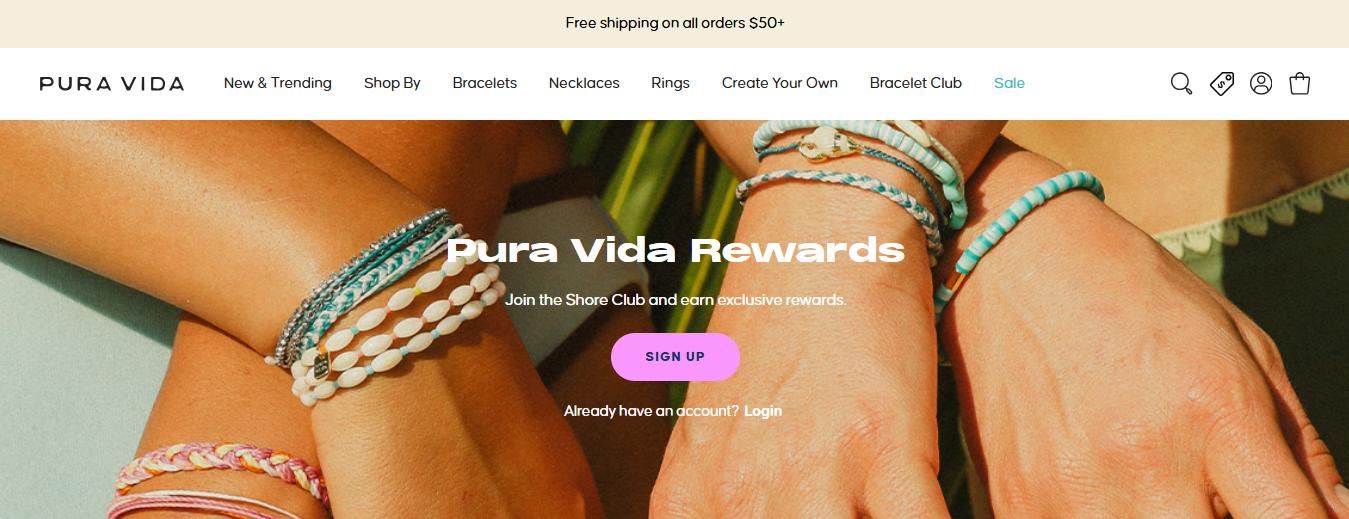
Pura Vida Bracelets sells handmade jewelry starting at under $15. Their Shore Club Rewards is a tiered loyalty program where customers earn with every purchase. What makes it work is the tier naming and the jump between levels. “Shore Lover” and “Shore Obsessed” aren’t corporate labels – they match the brand’s casual beach identity.
The second purchase incentive is where Pura Vida gets it right. New members receive enough welcome points to redeem a small reward on their second order, not their first. That structure creates a reason to come back within 30 days.
Pura Vida also runs a referral program inside the same loyalty structure. Every existing customer is recruiting new members who arrive pre-enrolled.
2. IceCartel
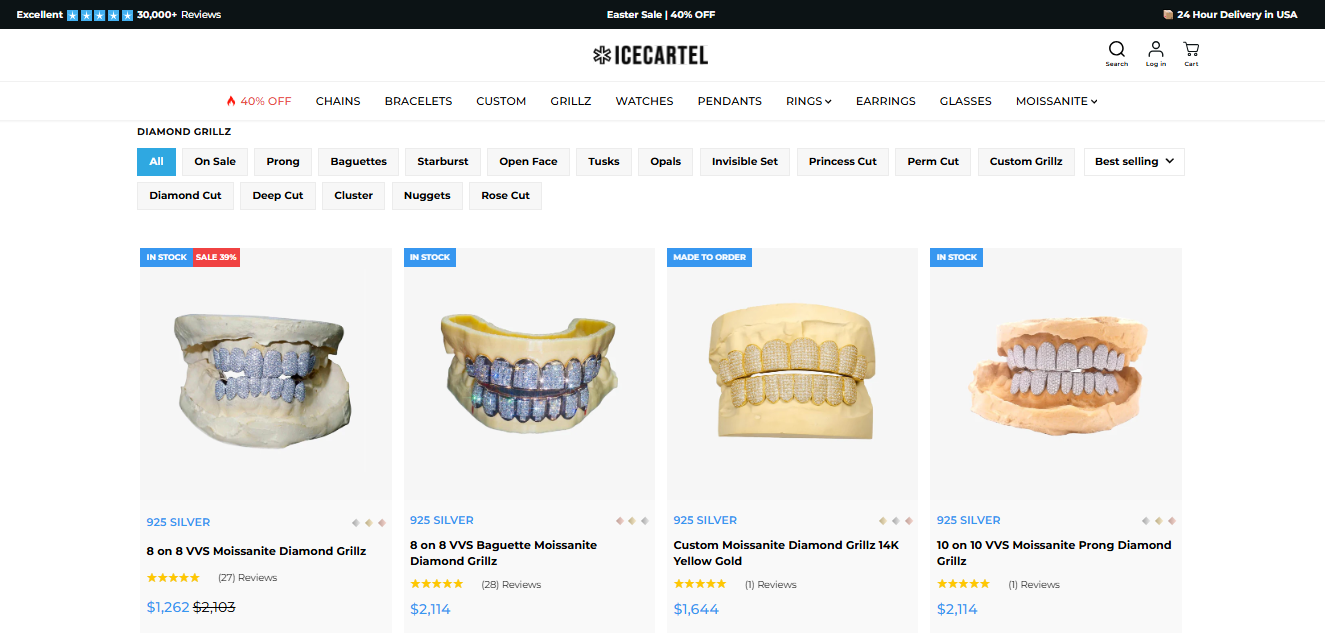
IceCartel’s diamond grillz selection falls in a product category where average order values run above $2,000. Their membership program doesn’t use the standard “earn points, get exclusive benefits” structure because a percentage discount on a $3,000 item would wipe out margins. Instead, they reward repeat business with access to early collection drops.
The smart move is how they connect collections. A customer who buys a diamond grillz set earns points that unlock access to matching chain collections. The loyalty reward isn’t cheaper products – it is access to pieces that no one has seen.
That exclusivity model fits the luxury market. Customers come back not because they saved $20 but because loyalty gives them access to inventory that one-time buyers never see.
3. Chubbies

Chubbies sells men’s shorts and swimwear. Their brand loyalty program, Chubbies Collective, rewards customers using three tiers based on 12-month rolling spend: Amateur, Professional, and Hall of Famer.
The tier names sound ridiculous on purpose. They match the brand’s personality, and customers actually want to reach Hall of Famer status because the title itself carries social value in the community.
What Chubbies does differently is the tier maintenance requirement. Your status resets annually based on the last 12 months of spending. That creates ongoing motivation to keep buying.
The jump from Amateur to Professional happens at $150 – roughly three orders of shorts. That threshold is low enough that most loyal customers cross it naturally. The upgrade feels earned without feeling forced.
Conclusion
A loyalty program should make customers smile when they remember it, not sigh when they open it. Keep it simple enough that people use it without thinking. Keep it valuable enough that they look forward to the next purchase. When your loyalty program benefits customers, repeat purchases simply become part of how customers shop with you.
At Flits, we build loyalty tools for Shopify brands that care about repeat orders, not just member counts. Points and VIP tier alongside referrals and store credits – all in one app. Over 5,000 merchants across 100 countries run their customer retention on Flits, including some of the most successful loyalty programs in the industry.
Get in touch with us and build a loyalty program your customers actually want to use.