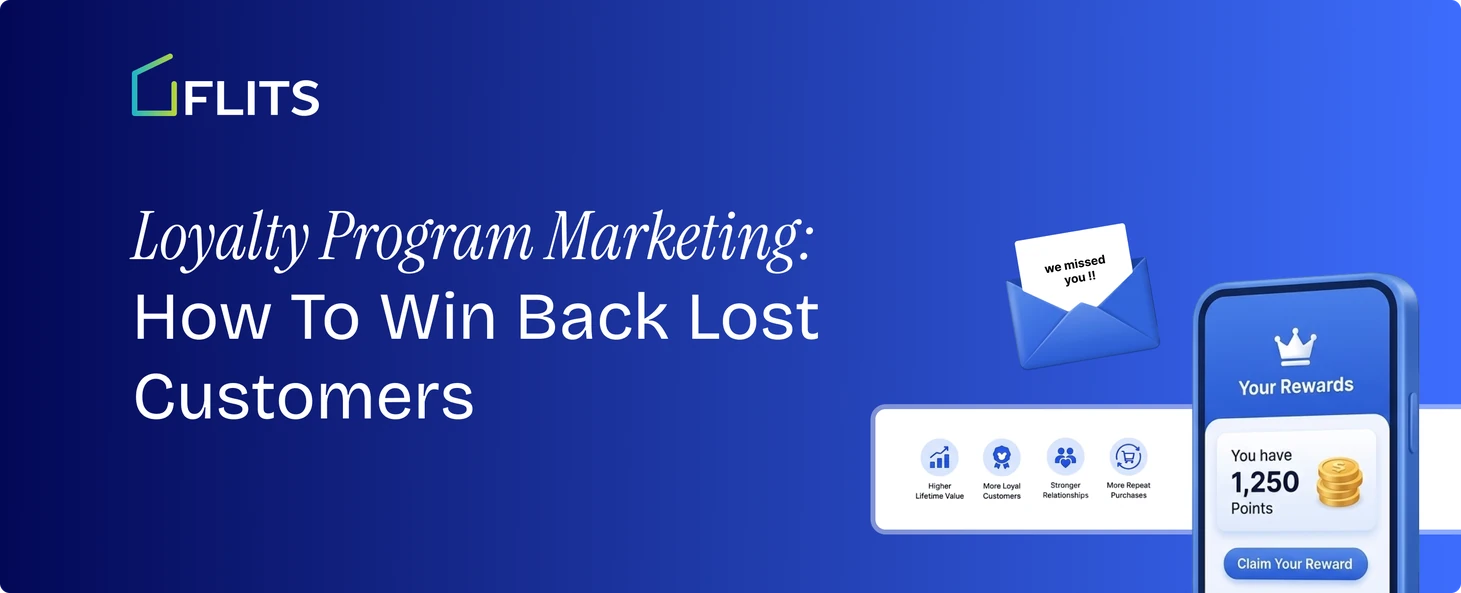
Every store has them. Customers who used to order regularly… then just stopped. They didn't rage-quit or leave a nasty review – they just disappeared. Most brands shrug them off and chase total strangers instead. That is a big mistake, because those lapsed shoppers already bought from you once, and loyalty program marketing is the cheapest way back.
So here's the plan. First, 11 ways to point your loyalty program straight at the people who slipped away. Then how to tell which of them are actually worth chasing, and how to match the right offer to each.
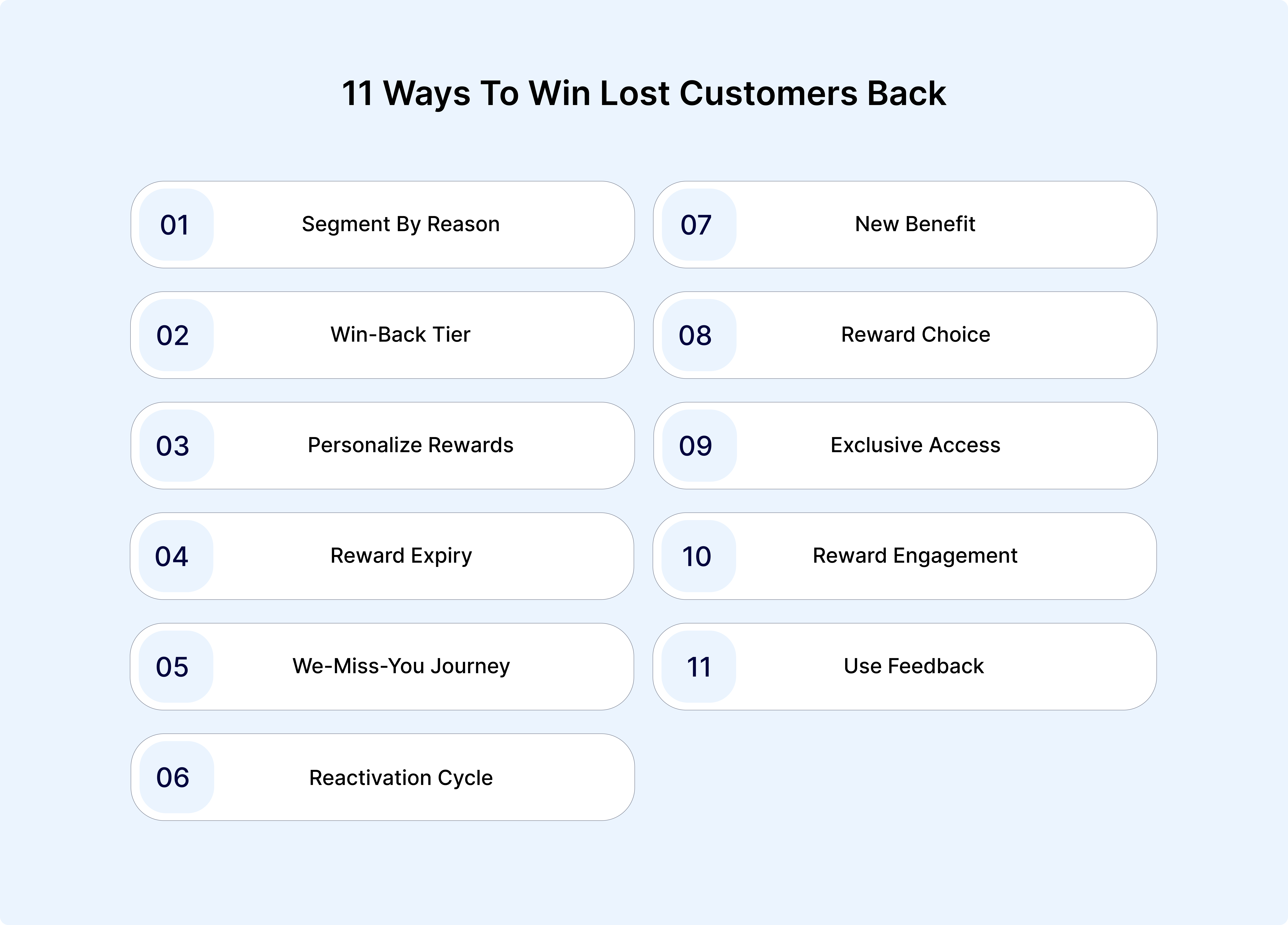
11 Loyalty Program Marketing Strategies That Win Lost Customers Back
Each of these 11 loyalty program marketing strategies tackles a different part of the problem, so don't just pick one. Someone who left needs a very different customer loyalty strategy than a first-timer.
1. Segment Customers Based on Why They Became Inactive
People don't all leave for the same reason. So sending the same message to everyone treats completely different situations like they are the same. A shopper who got a broken order needs to hear something very different from one who simply forgot you existed. Before any offer goes out, group people by why they actually drifted.
- Split lapsed members by the last reason they contacted your support team about.
- Separate one-time buyers from the former regulars who slowly went quiet on you.
- Tag anyone who left right after a refund or a delivery that went wrong.
- Group people by the category they bought, since intent differs sharply by product.
2. Create a Dedicated Win-Back Loyalty Tier
A normal loyalty tier rewards people for spending more. A win-back tier changes that. It hands someone who stopped spending a real reason to start again.
Treat returning customers as their own group with their own perks, and you are telling them coming back counts, instead of dumping them back at zero as nothing happened. This is one of the clearest ways loyalty programs benefit customers beyond simple discounts.
- Build a comeback tier that lapsed members enter the moment they come back.
- Load it with perks that clearly beat what a brand-new loyalty program sign-up would receive.
- Show them how little it really takes to climb back to their old status.
- Keep the tier time-limited so coming back sooner rather than later genuinely pays.
Quick real-world note, because a win-back tier only does its job if lapsed customers actually know it is there. That is the gap Flits closes on Shopify. Our VIP tier rewards let you build this exact kind of comeback tier yourself, with whatever perks and thresholds you want, and no developer in sight.
And our loyalty program widget appears on every single page of your store, sticky and sitewide, so a returning shopper always sees their points balance and how close the next reward is.
That visibility matters because loyalty program members spend more when rewards stay visible. A win-back tier people sign up for once and then forget is useless. The rewards do the pulling, and the widget makes sure nobody misses them.
3. Personalize Rewards Around Past Purchases
A generic 10%-off code throws away everything you already know about somebody. Their whole order history is right there in your store. Build a customer rewards program around what they actually bought and what they will predictably need next, and it comes off like you paid attention rather than a mass discount blasted at everyone.
- Offer bonus points on the exact category they used to buy from most.
- Time the reward to roughly when their last purchase would normally run out.
- Recommend the natural next item for them, not a random store bestseller.
- Name their old favorite product directly inside the win-back reward message itself.
4. Use Reward Expiration to Create a Return Deadline
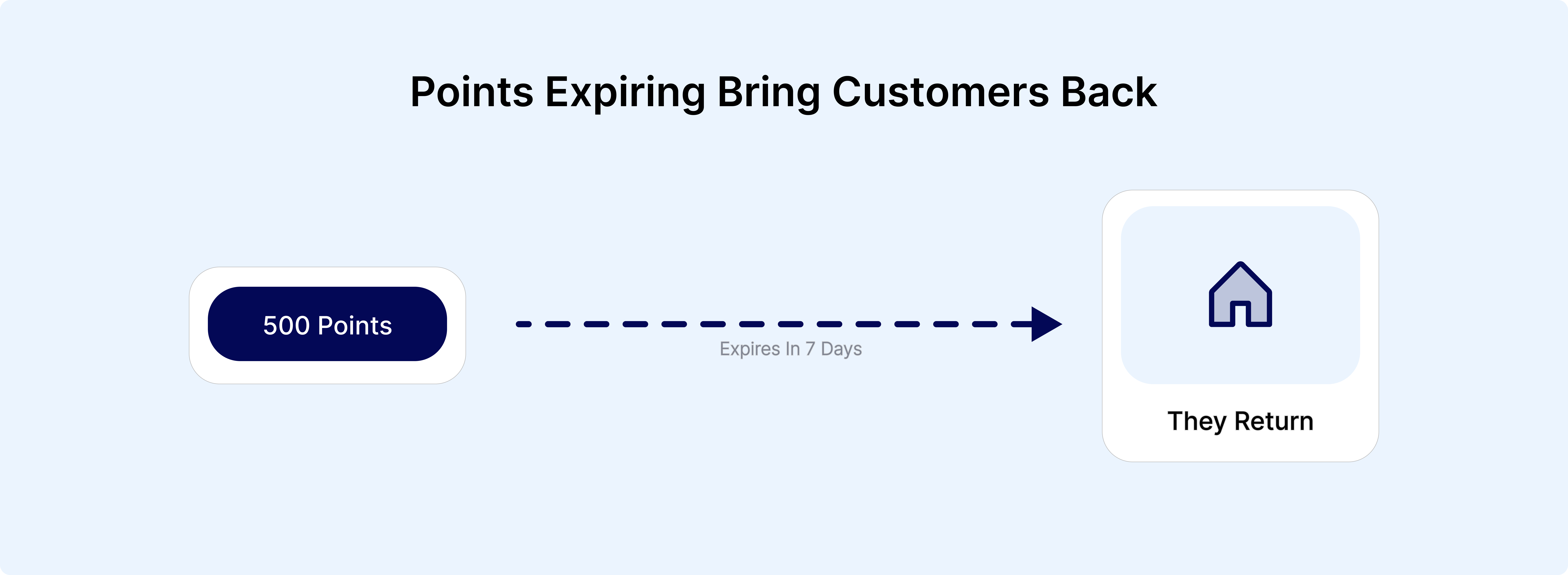
An open-ended reward carries zero urgency. So a lapsed customer files it under someday and never touches it. A deadline changes the whole calculation. When points or a credit are about to vanish, ignoring them means losing something they already hold, and people hate losing what is theirs far more than they enjoy some vague future gain.
- Give returning-customer points a clear and visible expiry date right from the start.
- Send expiry reminders at 7 days out and then again at 24 hours.
- Set your expiry and redemption rules so they still protect your margins.
- Show the exact points balance they stand to lose if they wait.
5. Build a Personalized "We Miss You" Journey
One win-back email almost never works. A short sequence over a couple of weeks, shifting its tone and its offer as it goes, creates a personalized customer journey where you have several shots at getting through to someone in the right mood.
A strong win-back flow reactivates 2 to 5% of lapsed recipients, and the best ones reach 5 to 10%. This is exactly why the sequence beats a one-off every time.
- Open with a soft check-in that carries no discount or offer attached.
- Escalate to a real reward only if that first gentle note flops.
- Add a birthday reward whenever the date happens to line up.
- Close the whole sequence with one final offer, clearly marked last chance.
6. Introduce a New Loyalty Benefit Worth Returning For
Sometimes people wandered off because the customer experience or the program stopped being worthwhile. So giving the same old rewards just reminds them why they left. A genuinely new benefit resets the story. It gives a lapsed customer a reason to look again, since there is finally something on the table that wasn't around when they walked.
- Launch a benefit that simply didn't exist during their active buying period.
- Announce it directly to lapsed members as a fresh, concrete reason to return.
- Add a gamified perk that turns earning points into a small game. Make it obvious how customers earn points toward the rewards they actually want.
- Tie the new benefit to a behavior that goes beyond just spending.
7. Let Loyalty Members Choose Their Own Rewards
A reward you picked for someone might be totally useless to them. Letting them choose fixes that on the spot. You know it matters to returning customers when they pick their own perk. And that simple act of choosing pulls them back in as a participant rather than a passive target. Customer satisfaction is more valuable than increasing the reward.
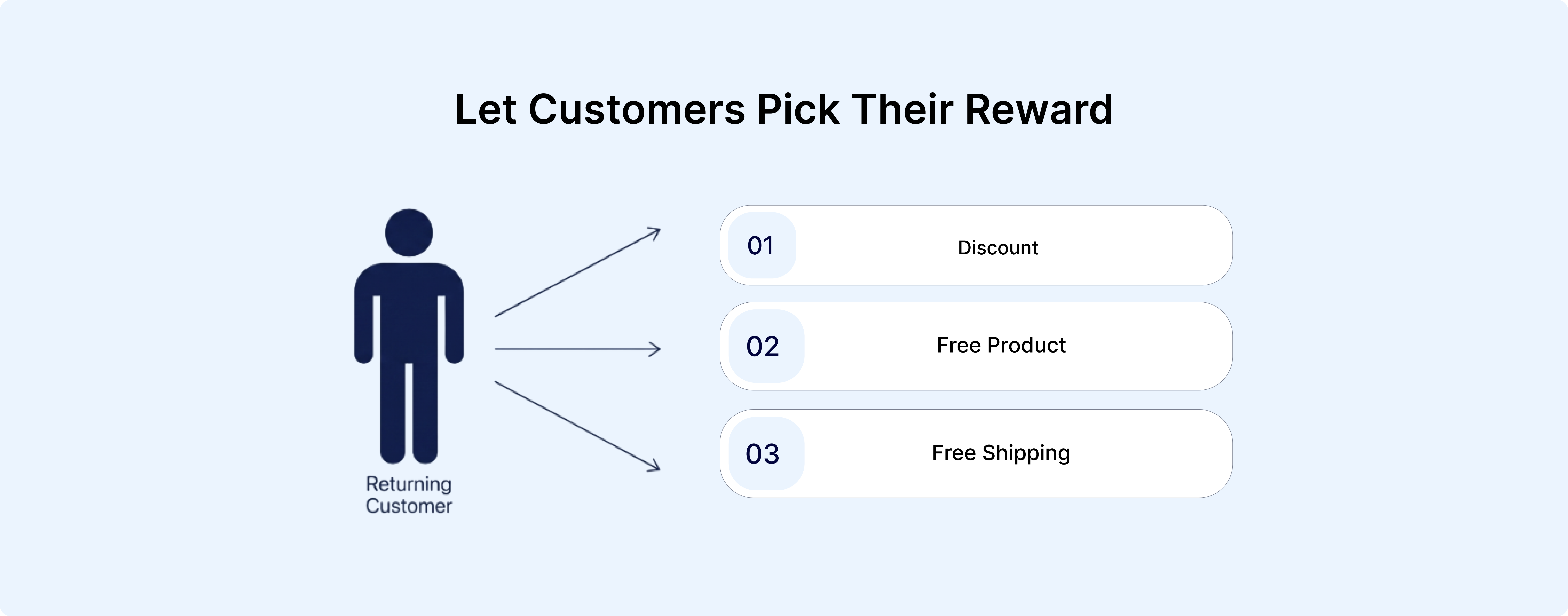
The reward does not even have to be a physical product. Some brands let members redeem points for practical digital perks too, such as premium downloads or access to a free YouTube downloader, because people value different things. The point is giving customers a choice that feels genuinely useful to them.
- Offer a menu of rewards that all sit at the same points cost.
- Encourage members to put their points toward a product or a free-shipping perk.
- Set up a flexible reward menu rather than forcing one fixed offer.
- Let them bank points toward a bigger reward they get to choose.
8. Use Exclusive Benefits to Rebuild the Customer Relationship
A discount is really just you saying, please come back. Exclusivity says something else entirely – that they still belong here. Those work completely differently. That sense of belonging strengthens brand loyalty far more than another coupon.
Handing a lapsed customer something not everyone gets treats the relationship as worth rejoining, not a transaction you keep having to bribe your way back into.
- Invite lapsed VIPs to a product drop before the general public sees it.
- Reserve a members-only item that only returning customers are able to unlock.
- Give early access or extended sale access to your past retail loyalty program members.
- Frame the invitation as a standing perk, not a one-off goodwill favor.
The tricky bit with exclusivity: a members-only perk only feels special if it is something people cannot get anywhere else, and most brands just default to another discount code. The reward needs to show that it belongs to a specific group, not just anyone with a credit card.
That is why some loyalty programs turn to limited-run branded merchandise instead of another coupon. Take these custom-knit branded socks as an example. Because the design and branding are created for one organization rather than pulled from a standard catalog, they can be reserved for a particular tier of members or a special win-back campaign.
The item itself is almost secondary. What matters is that it becomes a visible marker of membership. A returning customer receives something they could not simply add to a cart on their own, which reinforces the idea that they are rejoining a community rather than redeeming another offer.
That is the principle worth borrowing. Whatever exclusive benefit you choose, make sure it is something that genuinely feels reserved for returning members. The more difficult it is to get outside the program, the more effectively it strengthens the relationship you are trying to rebuild.
9. Reward Engagement Before Asking for Another Purchase
Try to engage customers who already left with a hard sell, and you will just lose them a second time. Rewarding customer engagement first changes the order around. You give a returning customer a reason to interact and feel noticed before you ever mention money. This rebuilds the habit and the goodwill that a straight purchase request tends to torch.
- Award points for a profile update or a genuinely written product review.
- Recognize a returning customer publicly before you try to pitch anything at all.
- Reward small actions, like following you on social media or joining your customer community online.
- Celebrate a milestone they already reached instead of immediately pushing another sale.
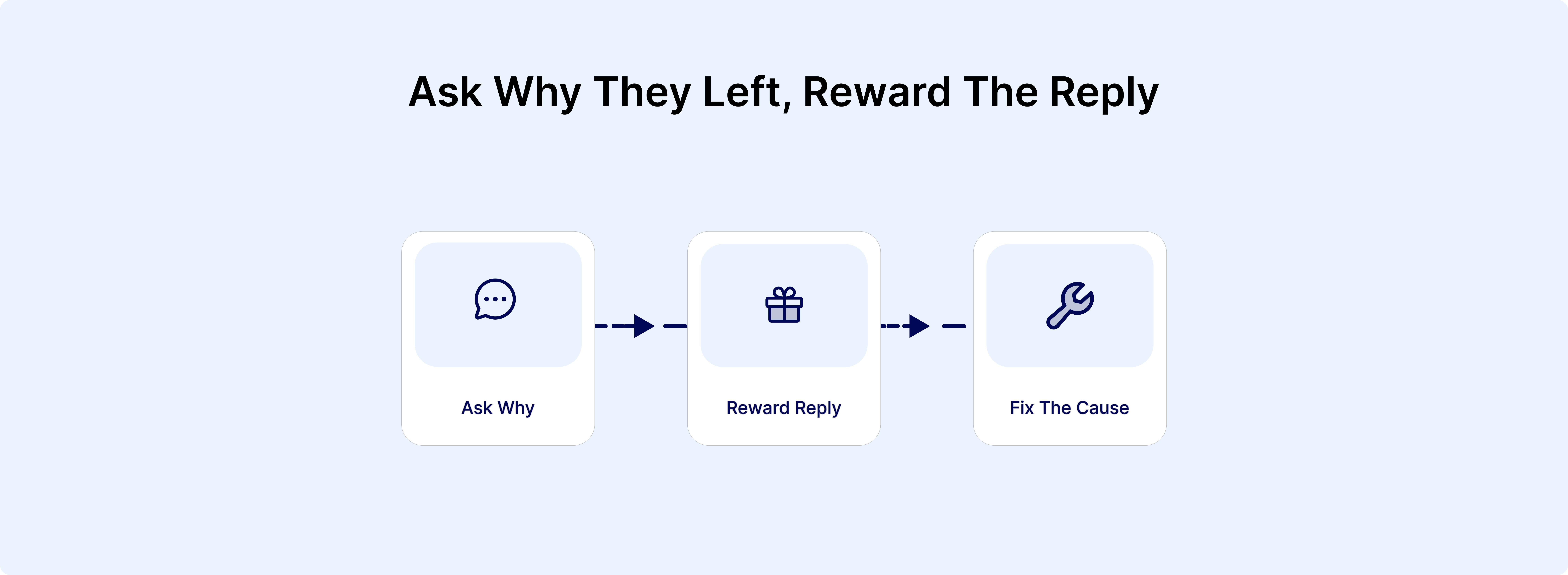
10. Use Customer Feedback to Fix Why They Left
Every lost customer is sitting on the exact reason they left, and hardly any brand bothers to ask. A win-back that opens with a real question does double duty. It shows you actually care why they went, and it hands you the information you need to stop the next batch leaving for the very same reason.
- Ask one simple, direct question about why they actually stopped buying from you.
- Reward the reply with points, not just a quick and polite thank-you.
- Route each answer straight to the team that can genuinely fix the issue.
- Follow up personally whenever someone flags a real and genuinely fixable problem.
11. Build a Reactivation Cycle That Prevents Future Churn
Winning someone back once is a pretty hollow win if they lapse again three months later. The actual goal is a system that spots the drift early and re-engages people on its own, so a one-time rescue turns into a repeat customer.
Otherwise, you are just running the same rescue on the same people forever. The best customer loyalty programs keep introducing reasons to come back.
- Trigger re-engagement automatically at the very first sign that orders are slowing.
- Move reactivated customers into a proper nurture flow rather than total silence.
- Track each person's normal buying flow and act the moment they break it.
- Give them a reason to return between future purchases, not only right after one.
One of the biggest gaps in most reactivation systems is that they only exist after a purchase. Anyone who showed serious intent but never completed the next step disappears into silence, even though they were already interested enough to engage. That is a missed opportunity, because those people usually need follow-up, not another acquisition campaign.
Let's take this business-for-sale platform. Buying a business is a long process, so many people gather information, stop halfway, then return later to finish. Instead of treating that saved listing as the end of the interaction, it can become the start of a reactivation cycle.
Someone who saved a café for sale could later receive updates if the asking price changes, similar businesses come onto the market, or the listing is close to being sold. A buyer who viewed multiple listings in one industry could be brought back with newly listed businesses that match those same criteria rather than a generic newsletter.
The same thinking works in any business. Build your reactivation system around the signals people leave before they buy, not just after they become customers. Someone who was interested enough to browse, save, compare, or enquire is much easier to bring back than someone starting from zero.
How to Spot the Lost Customers Worth Winning Back: 5 Proven Ways
Not every lapsed customer is worth going after, and offering all of them just wastes budget. The good news is that focusing on existing customers runs 5 to 10 times cheaper than acquiring a new one, so the whole skill in loyalty program marketing is aiming at the right people. Here are five ways to find them.
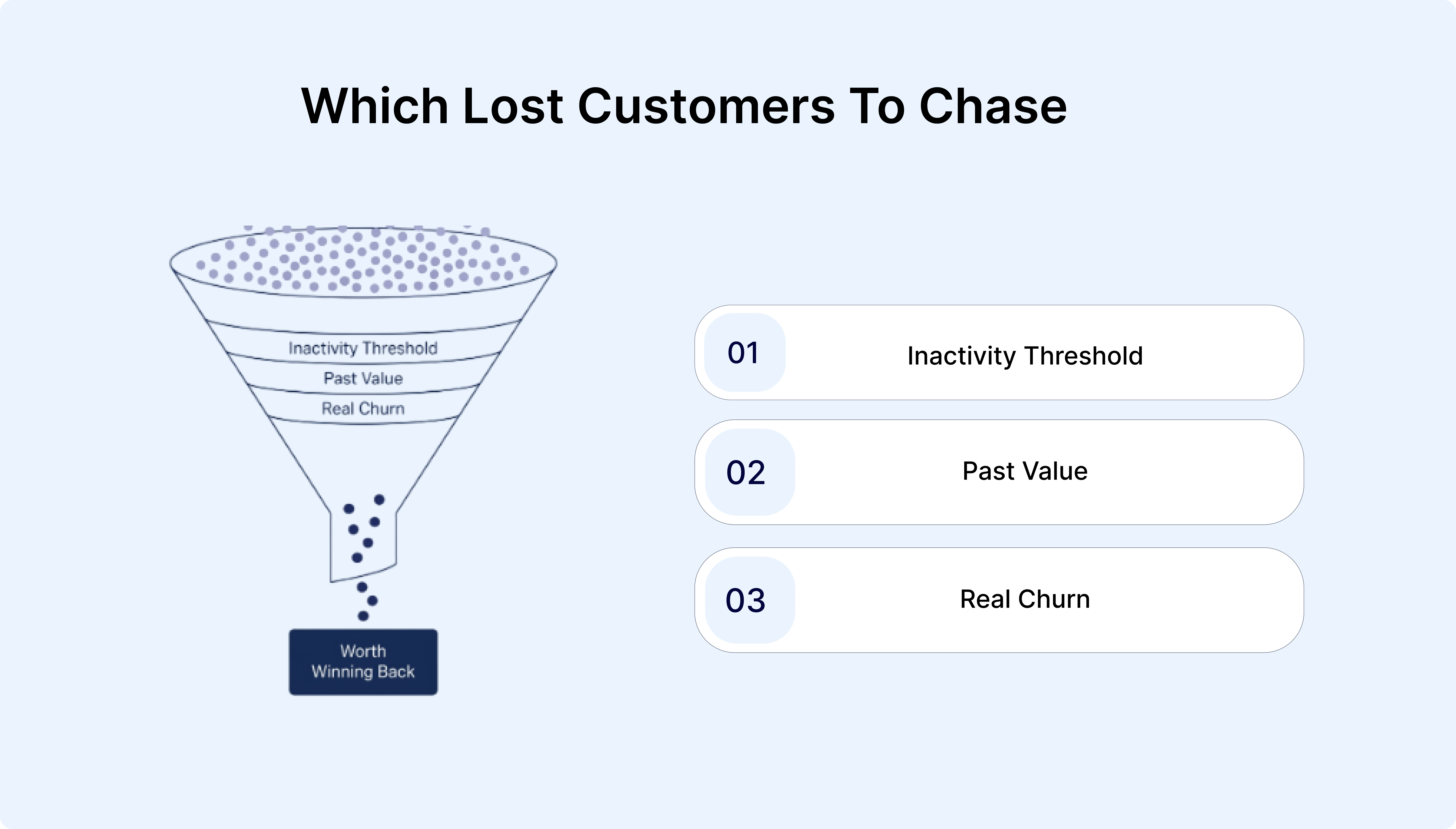
1. Set a Clear Inactivity Threshold for Each Customer Segment
Lapsed doesn't mean anything until you pin it to a normal buying cycle. A coffee subscriber gone quiet for eight weeks is a genuine red flag. A furniture buyer at eight weeks is behaving completely normally. Set the threshold per category first, so you see real drift instead of chasing people who were never due to reorder yet.
2. Compare Past Purchase Frequency With Current Inactivity
The gap matters way more than the calendar does. Someone who ordered every month and has now been silent for four is a far louder alarm than an occasional buyer at the same point. Measure each person's silence against their own old pattern, not a store-wide rule, and the ones genuinely slipping away rise to the top.
3. Prioritize Customers With High Historical Customer Lifetime Value
A lapsed customer who spent thousands over two years deserves far more attention than a one-time bargain hunter who bought once on a coupon. Rank the win-back list by what people were worth while active, and save your best offers for the accounts that move revenue.
4. Separate Voluntary Churn From Changes in Customer Circumstances
Someone who stormed off over a broken order is a totally different project from someone whose need simply paused. A parent who stopped buying baby gear has aged out – they haven't churned. Splitting the deliberate leavers from the circumstantial ones tells you who you can realistically win back, and who you should just let go.
5. Calculate the Revenue Potential of Reactivating Each Customer
Reactivation tends to pay off harder than people expect. Roughly 47% of reactivated customers go on to spend more than they did before, so a comeback isn't only clawing back old value. Use the customer data to work out the likely repeat value of each segment, then let that number decide how much you are willing to spend winning them back.
How to Identify the Right Customer Loyalty Program Win-Back Offer
The offer has to actually fit the customer, or you will either overpay or leave them cold. Matching the incentive to the real reason someone lapsed is where successful loyalty program marketing starts doing what it is supposed to do. So here is when each type of loyalty program strategy works best.
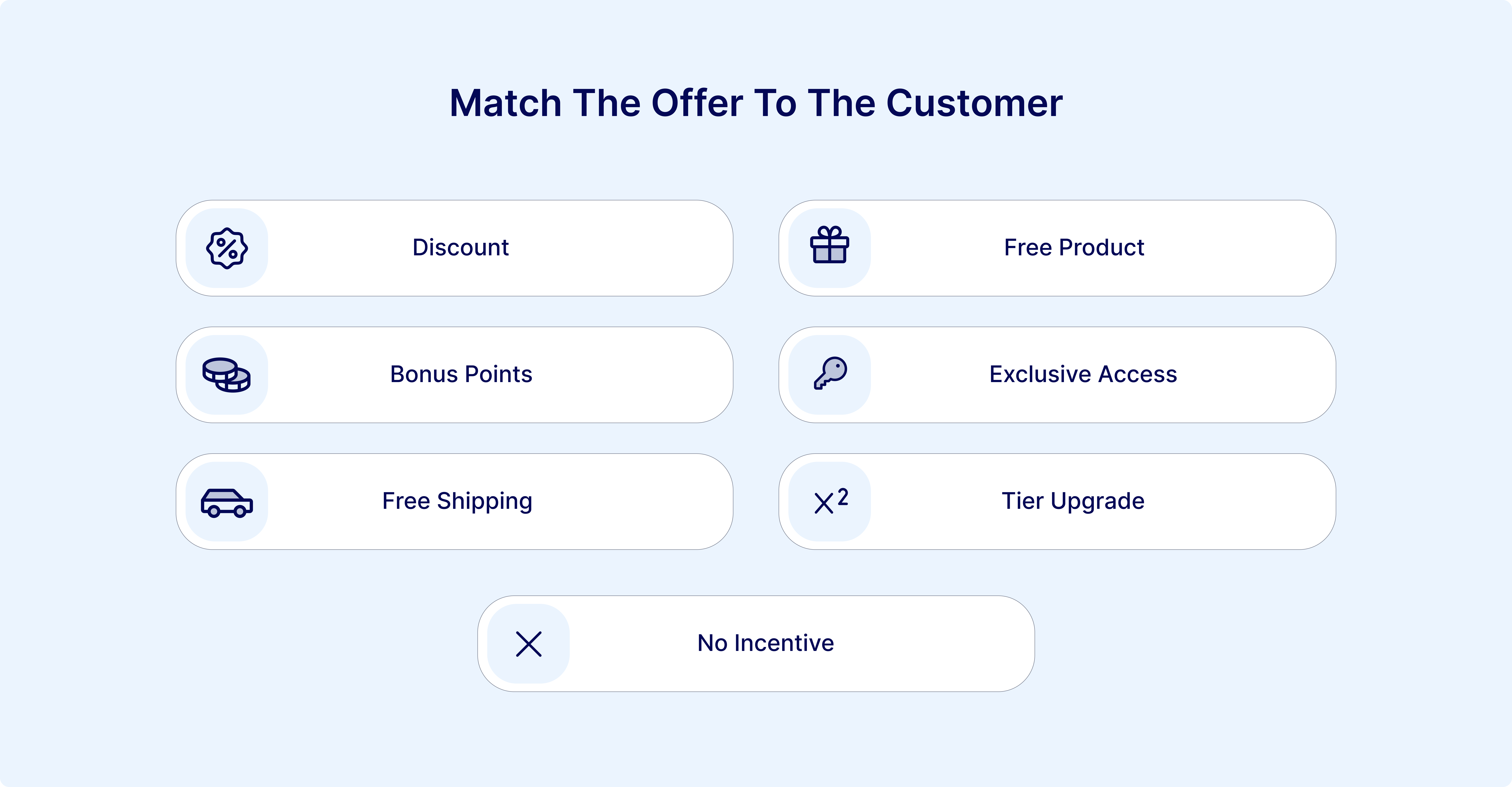
1. When to Use a Discount
The obvious choice, and the one to save for when price was the thing that actually pushed them out.
- They only ever checked out with a coupon code or during a sale.
- They left a full-price cart sitting there right before going quiet.
- A direct competitor just undercut you on the exact product they bought.
2. When to Use Bonus Points
Points pull people back into the rewards program without teaching them to sit around waiting for markdowns.
- They still have an unspent points balance sitting in their account.
- You want the comeback running through the program, not a sale.
- They were a reward or two away from unlocking something good.
3. When Free Shipping Makes More Sense
Free shipping wins when the delivery fee, not the product price, was the real friction all along.
- Their old carts consistently stalled the moment shipping got added.
- You sell lower-priced items where a shipping fee feels almost insulting.
- They live somewhere your delivery rates happen to run highest.
4. When to Offer a Free Product
A freebie works when the whole point is getting them to experience something all over again.
- You launched something genuinely new since the last time they bought.
- A free sample could nudge them into a higher-value category.
- The item costs you little but is honestly hard to say no to.
5. When to Offer Exclusive Access
Exclusivity is for customers who always cared more about status than about saving a few dollars.
- They were a former VIP or one of your high-frequency regulars.
- You have a limited drop or members-only launch coming up soon.
- Discounting would cheapen a premium brand you are working to protect.
6. When to Use a Tier Upgrade
A tiered loyalty program upgrade re-engages the most loyal customers who were still climbing the program when they stopped. The same thinking also applies to paid loyalty programs that include premium member perks.
- They were one tier below a genuinely worthwhile perk.
- Their old status has since lapsed and getting it back feels good.
- You would rather reward the return with standing than another markdown.
7. When to Avoid Incentives Entirely
Sometimes the best offer is no offer at all, just a good reason and a gentle push.
- They left over a problem that no discount is ever going to fix.
- A restock or a product update is honestly reason enough alone.
- Discounting now would just train a loyal customer to wait for deals.
Conclusion
Winning a lost customer back was never about the biggest discount. It is about the right reason at the right moment. Your loyalty program marketing already holds both – the history to personalize with and the rewards to motivate with. Point it at the people who drifted, and win-back becomes a system. The goal is not only to recover customers but to create loyal customers.
This is exactly what we built Flits for. We give Shopify brands the loyalty program and store credit to turn a lapsed customer into a returning regular, VIP tiers and all, out of one app with no code required. More than 5,000 merchants run it to keep their best customers coming back. Start free now.