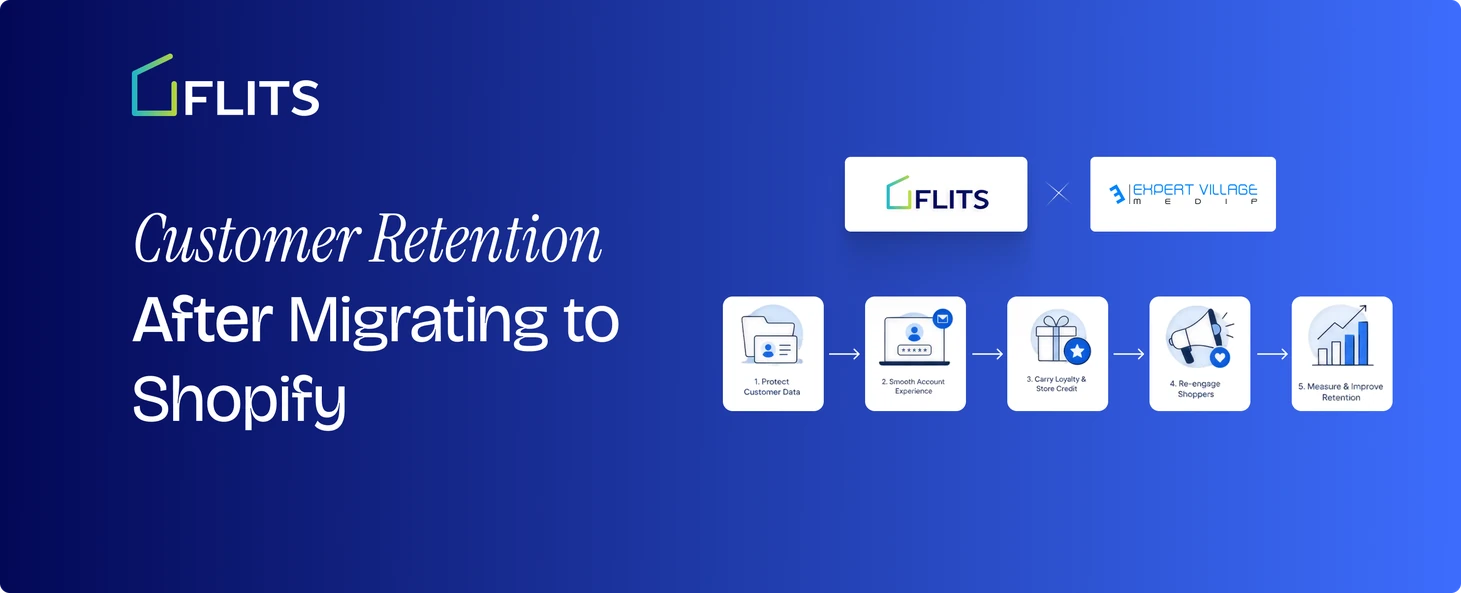
Most migration checklists obsess over the technical move: themes, apps, redirects, DNS, the go-live window. Customer retention rarely makes the list. That is exactly why so many stores quietly lose shoppers in the weeks after they replate form, long after the "migration successful" high-five.
A migration does not just move your store. It moves your customers, and they do not always come along willingly. The homepage they trusted looks different. The login they used every month suddenly asks them to reset a password. The rewards they had been saving are nowhere to be found. None of this throws an error. Customers simply hesitate, and some of them never come back.
If you are planning a move to Shopify, retention deserves a seat at the table from day one, not a scramble after launch.
Why a Migration Puts Customer Retention at Risk
Returning customers run on muscle memory. They know where the login lives, they expect their addresses to be saved, they assume their order history is one tap away, and they remember the store credit sitting in their account. Break any of those small certainties and you have handed a loyal shopper a reason to pause.
A few things tend to go wrong during a replatform, and each one chips away at customer retention:
- Passwords do not carry over. Shopify cannot import old password hashes for security reasons, so every returning customer is forced to reset their login on their next visit. That extra step, if it arrives without warning, is enough to lose a distracted shopper.
- Order history goes missing. When past orders do not map correctly, customers lose the ability to reorder or track what they bought. For repeat-purchase brands, that history is the relationship.
- Loyalty and store credit balances get reset. Someone who had earned 4,000 points or a $25 credit expects it to still be there. When it vanishes, it does not feel like a technical hiccup. It feels like a broken promise.
- The account page feels foreign. If the new account experience is thinner than what customers were used to, the store stops feeling like theirs.
The tricky part is that none of this shows up as a crash. The churn is silent, which is why it so often gets missed until the returning-customer numbers dip a quarter later.
Protect Customer Data Before You Move
The single biggest retention lever in any migration is a clean data transfer. Customer records, tags, addresses, order history, and especially loyalty and store credit balances all need to land in the right place on the new store.
This is the point where a migration stops being a copy-and-paste job. Legacy data rarely maps one-to-one onto Shopify’s structure, and the edge cases (partial refunds, historical discounts, old subscription records) are where balances and history quietly break. Getting it right usually means working with experienced Shopify experts who have moved stores before, whether through a purpose-built migration tool or a hands-on data transfer, and who know where the details tend to fall through the cracks.
Two things are worth planning well ahead of go-live. First, decide how you will handle the forced password reset, because it will happen to every customer. A friendly account-activation email that explains the move, rather than a cold "reset your password" prompt, turns a friction point into a reassurance. Second, confirm that loyalty and credit balances are exported and re-imported with an audit you can actually check, customer by customer if the list is small enough.
Rebuild the Account Experience Customers Expect
Returning shoppers judge a new store by one quiet question: does it still feel like mine? A big part of the answer lives on the customer account page.
The default Shopify account page is functional but sparse. Brands that rely on repeat business usually want more: visible order history, one-tap reorder, saved details, a wishlist, and rewards on display. Retention apps such as Flits are built to rebuild that richer customer account experience after a move, so loyal customers land somewhere familiar instead of somewhere stripped down.
The goal is continuity. A customer who could see their points, their saved items, and their past orders before the migration should be able to see all of it after, without relearning anything.
Carry Loyalty and Store Credit Across Without Losing Momentum
Loyalty programs work because they compound. Every point a customer earns is a small reason to come back. A migration that resets those balances does not just lose data; it resets the habit you spent months building.
Treat the loyalty and store credit transfer as a retention priority, not an afterthought. Export the balances, import them, verify them, and then tell customers they are intact. A short "your rewards moved with you" message does real work here. It reassures the exact people who are most valuable to keep, and it turns a risky moment into a touchpoint that actually strengthens loyalty.
Win Back the Customers Who Do Not Return Right Away
Even with a clean move, some customers will not come back on their own. That is normal, and it is fixable if you plan for it instead of waiting.
A simple re-engagement sequence goes a long way. Start with the account-activation email so returning shoppers can log in without friction. Follow up with a gentle nudge to anyone who has not visited since launch, and consider a small store credit incentive for your highest-value past buyers. Wishlist and back-in-stock reminders give lapsed shoppers a concrete reason to return rather than a generic "we miss you."
Segment by past value if you can. The customer who ordered monthly for two years deserves a warmer, more personal win-back than a one-time buyer, and that focus is where customer retention efforts pay off the most.
Measure Customer Retention After Go-Live
You cannot protect what you are not watching. Once the new store is live, keep an eye on the metrics that actually reflect whether customers are sticking around: returning customer rate, repeat purchase rate, time between orders, and account logins.
Compare the 60 to 90 days after launch against the same window before it. A dip is not automatically a failure, but it is a signal worth chasing down. Often it points to something specific and fixable, like a confusing login flow or a rewards balance that did not transfer for a segment of customers. Catching it early is the difference between a temporary wobble and permanent churn.
Retention Is Part of the Migration, Not a Cleanup Afterwards
The stores that hold onto their customers through a platform are the ones that treated the move as a customer experience project, not only a technical one. Protect the data, keep the account experience familiar, carry the rewards across, and plan the win-back before you need it.
Get those pieces right and a migration becomes something better than a survival exercise. It becomes a fresh, faster store that your best customers actually enjoy coming back to. For more on building a customer account and loyalty experience that supports long-term retention, the Flits blog is a good place to keep reading.